



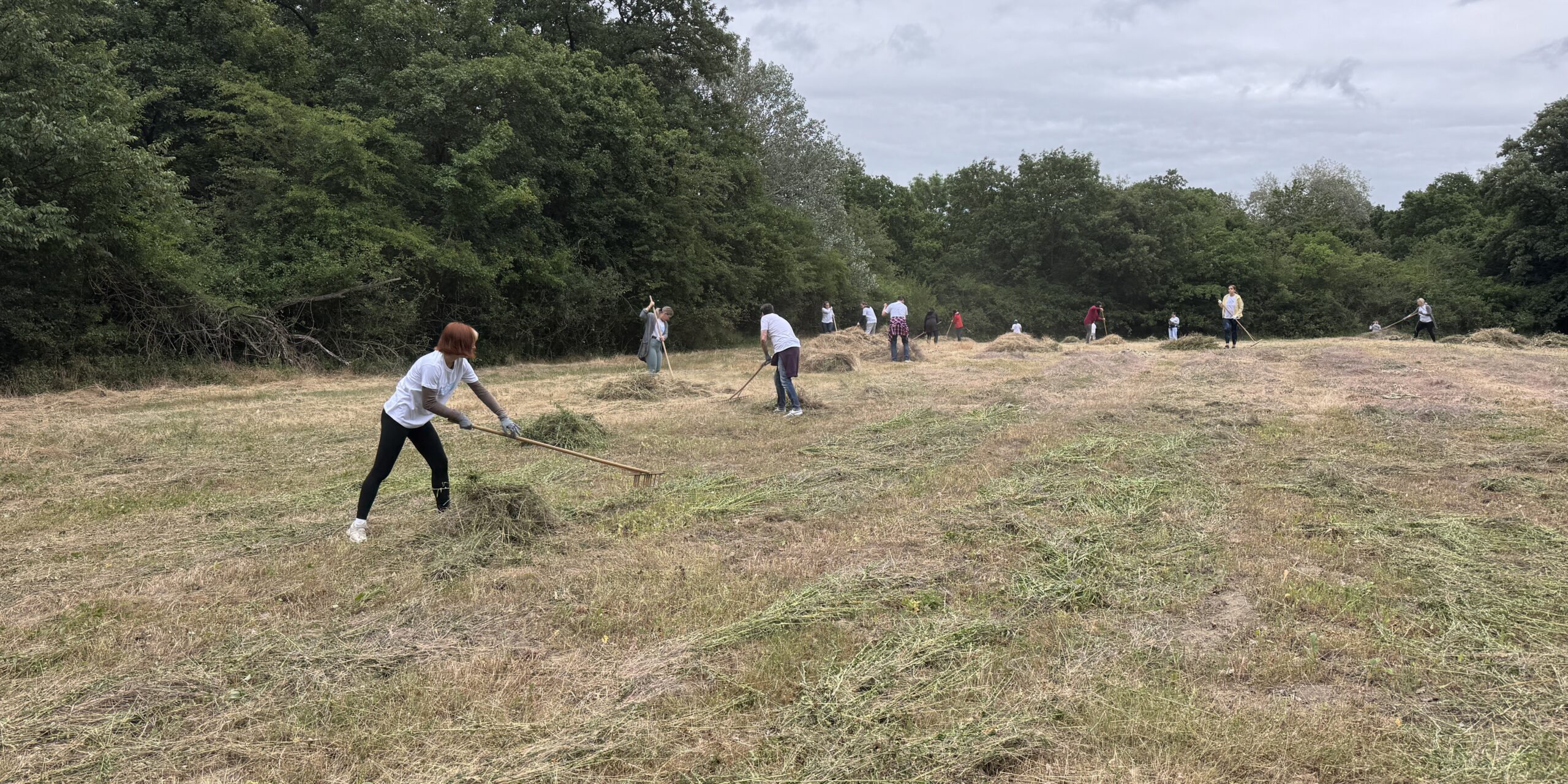
Clearing meadows of encroaching woody vegetation, raking mown grass or helping plant protected plant species – these are just some of the tasks where an extra pair of enthusiastic hands always comes in handy.
This year, volunteer groups joined us for 11 different activities as part of the LIFE Diverseed project. Together, we raked mown meadows, expanded meadow habitats, cleared encroaching woody vegetation, removed invasive Canadian goldenrod, and transported and spread freshly cut hay. Through these efforts, we help restore species-rich meadows and create space for native meadow plants to return and thrive.
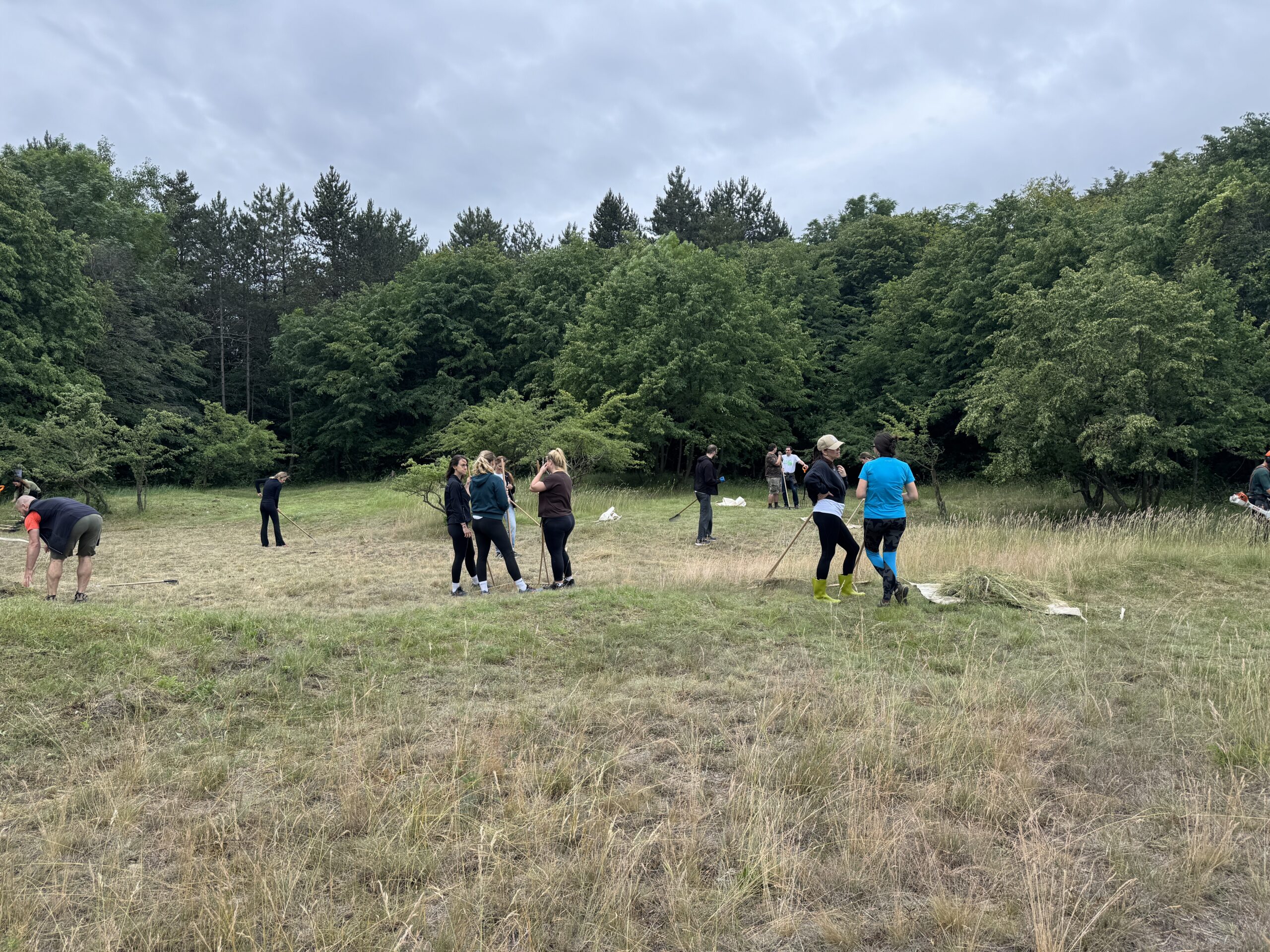
One of the most demanding tasks was transporting and spreading freshly cut hay. In the morning, one group of volunteers helped mow the meadow and prepare the hay. In the afternoon, another group spread the fresh hay at a second site. The hay came from a species-rich meadow and was transported to a nearby site that was once a meadow but was later used as arable land. Today, it is gradually becoming overgrown with invasive Canadian goldenrod. We are working to restore this site through regular mowing and raking, which help suppress goldenrod and limit its spread. At the same time, we want to encourage native meadow plants to return by introducing seeds from the donor meadow – a method known as seed bank restoration. This helps native plants re-establish themselves and compete with goldenrod. There is reason to be hopeful: orchids still occasionally appear at the site, and a small remnant of the original orchid-rich meadow survives nearby.
This is the second year we have used this method, and we are keen to see how the site responds and whether we can gradually restore its species diversity.
There is still plenty of work ahead as part of the LIFE Diverseed project, with many more opportunities to help nature. If you would like to get involved, visit our Volunteering page to find out how you can join us!