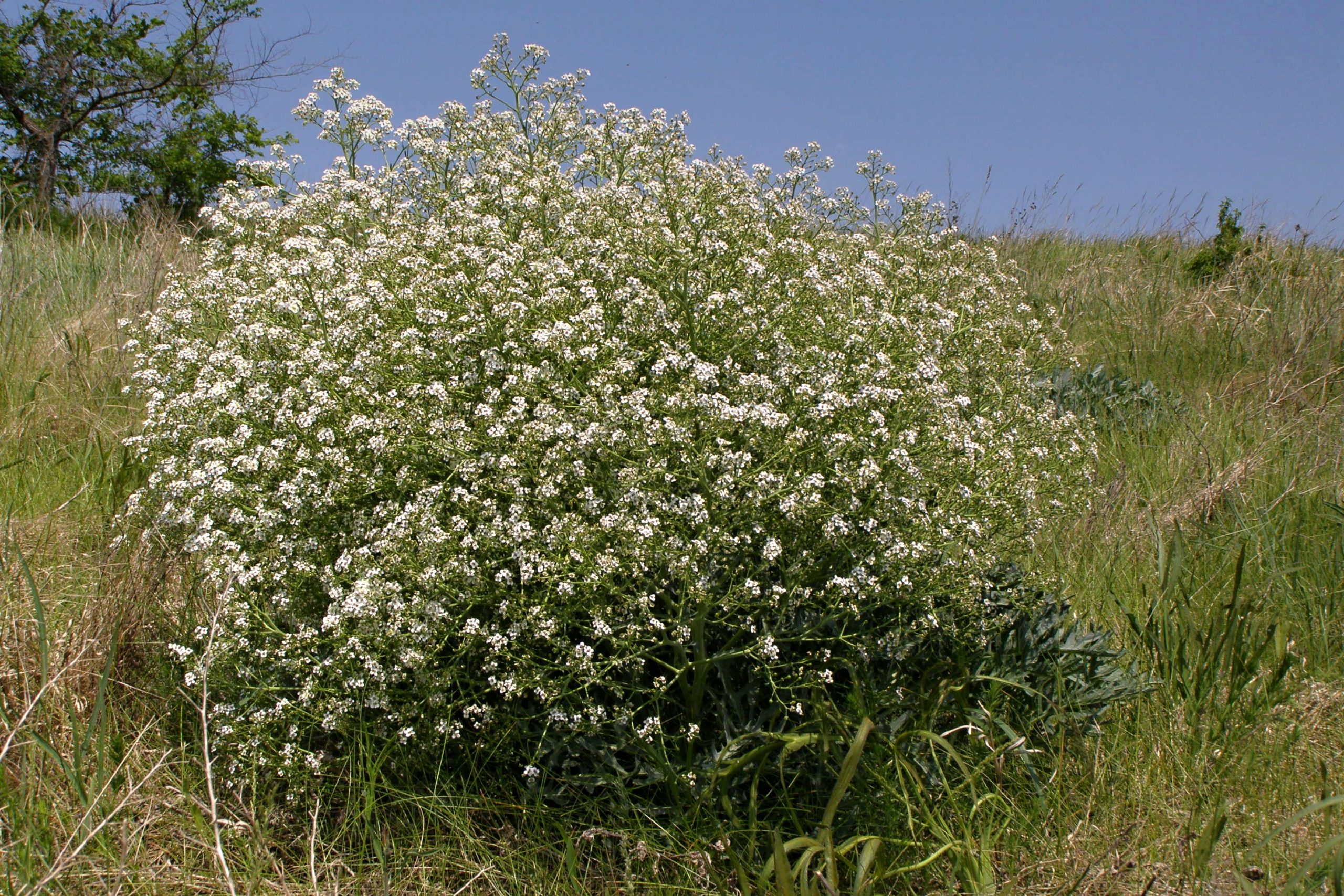




We restore flowering sides
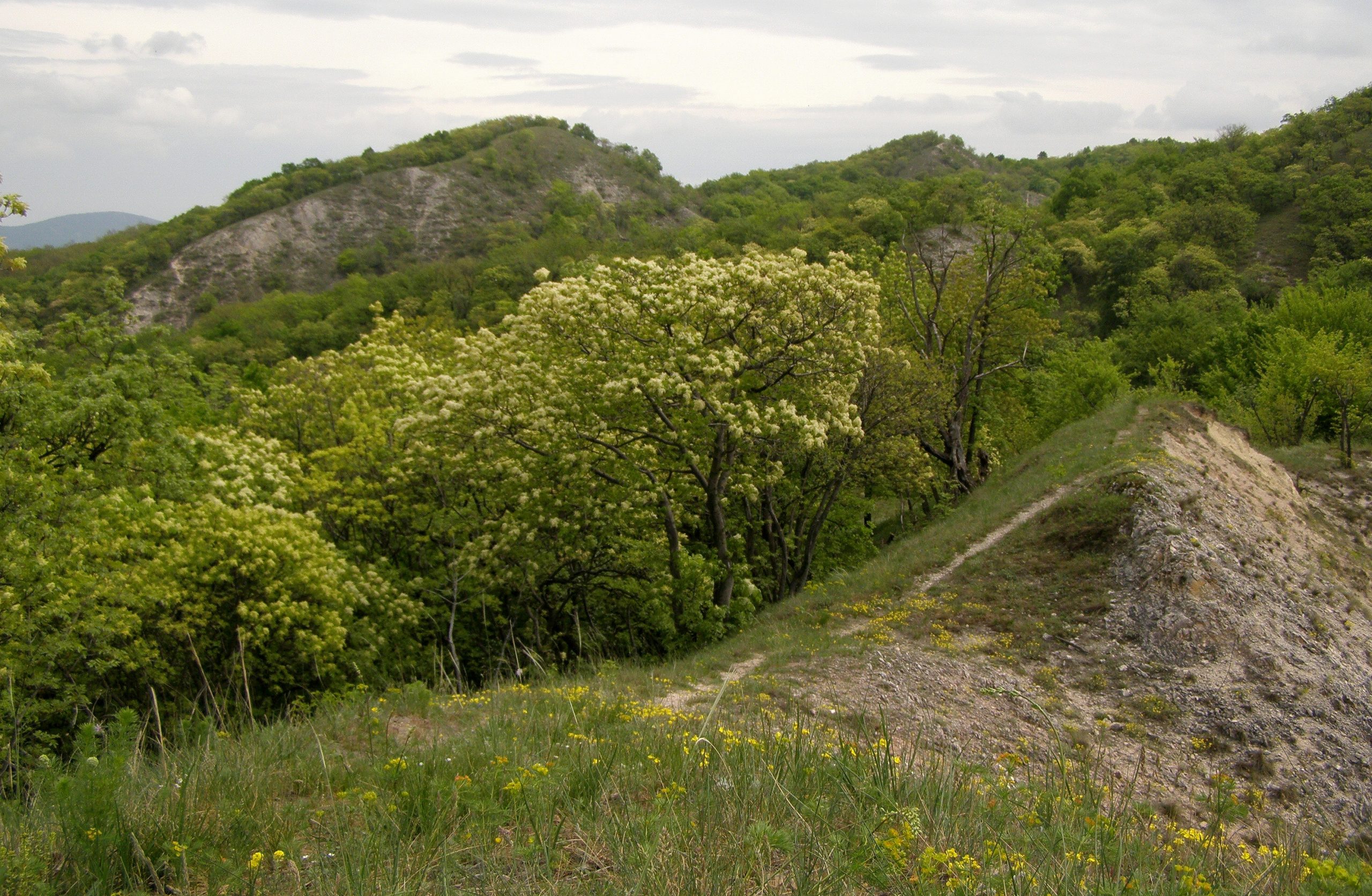
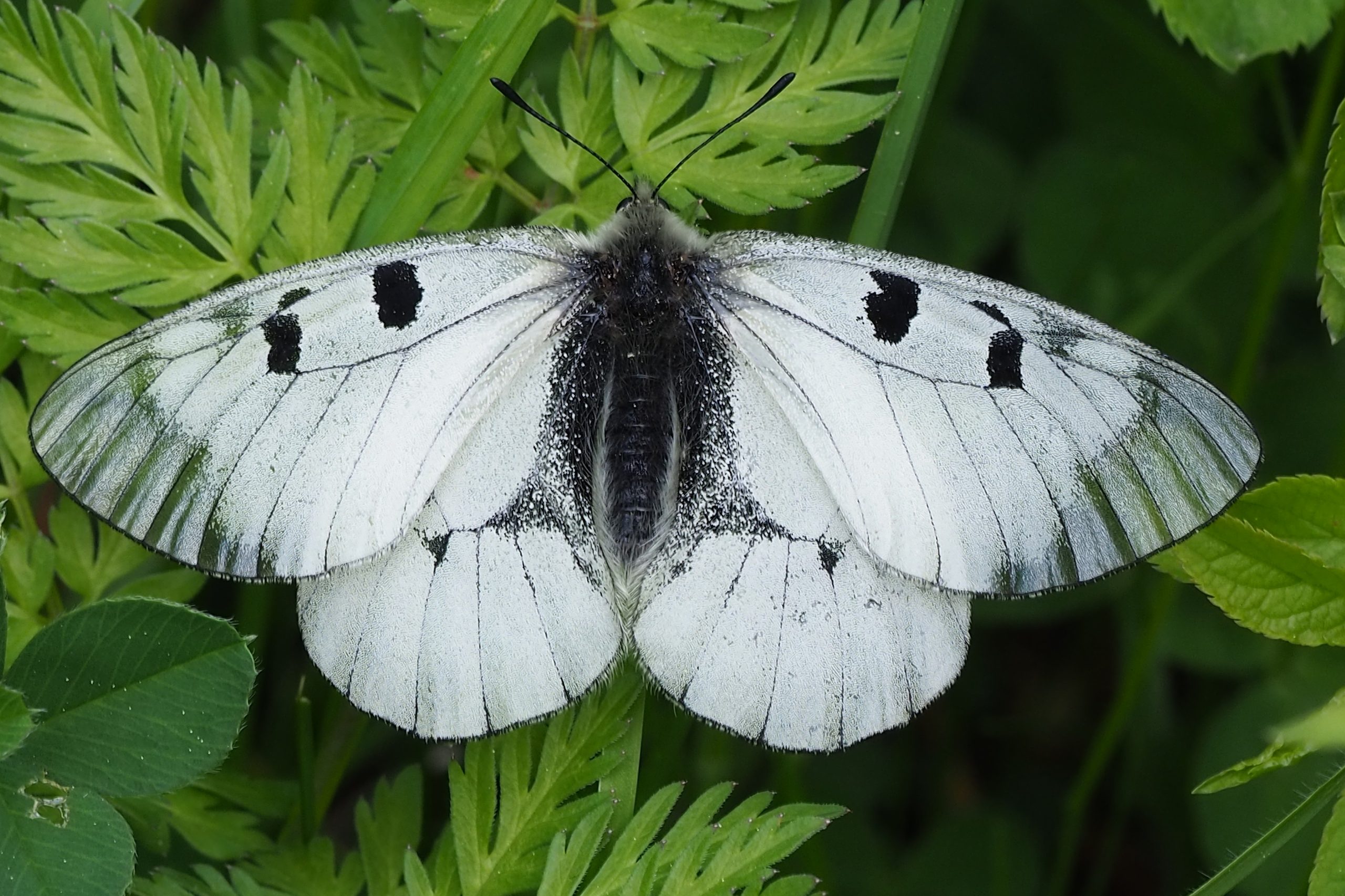
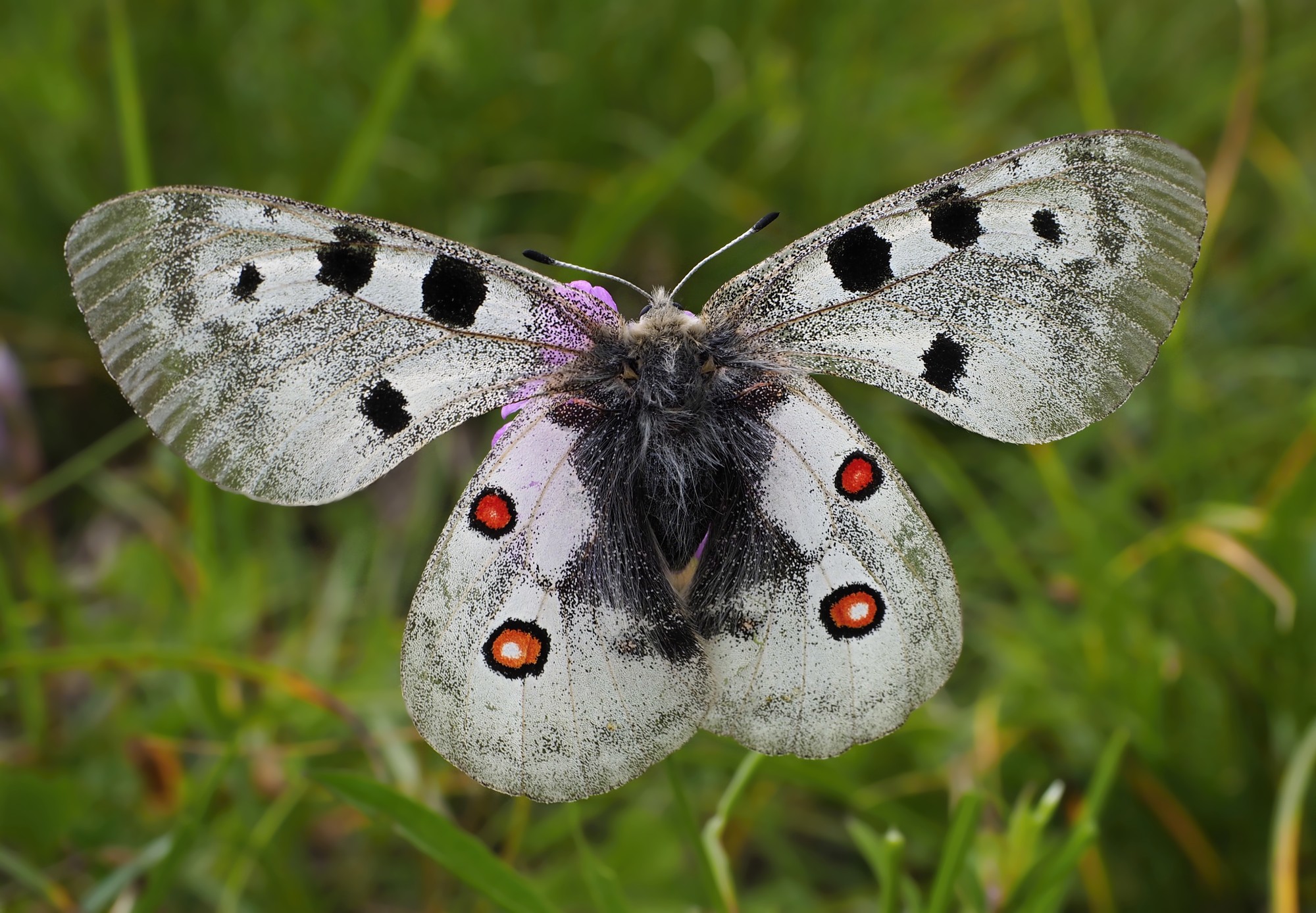
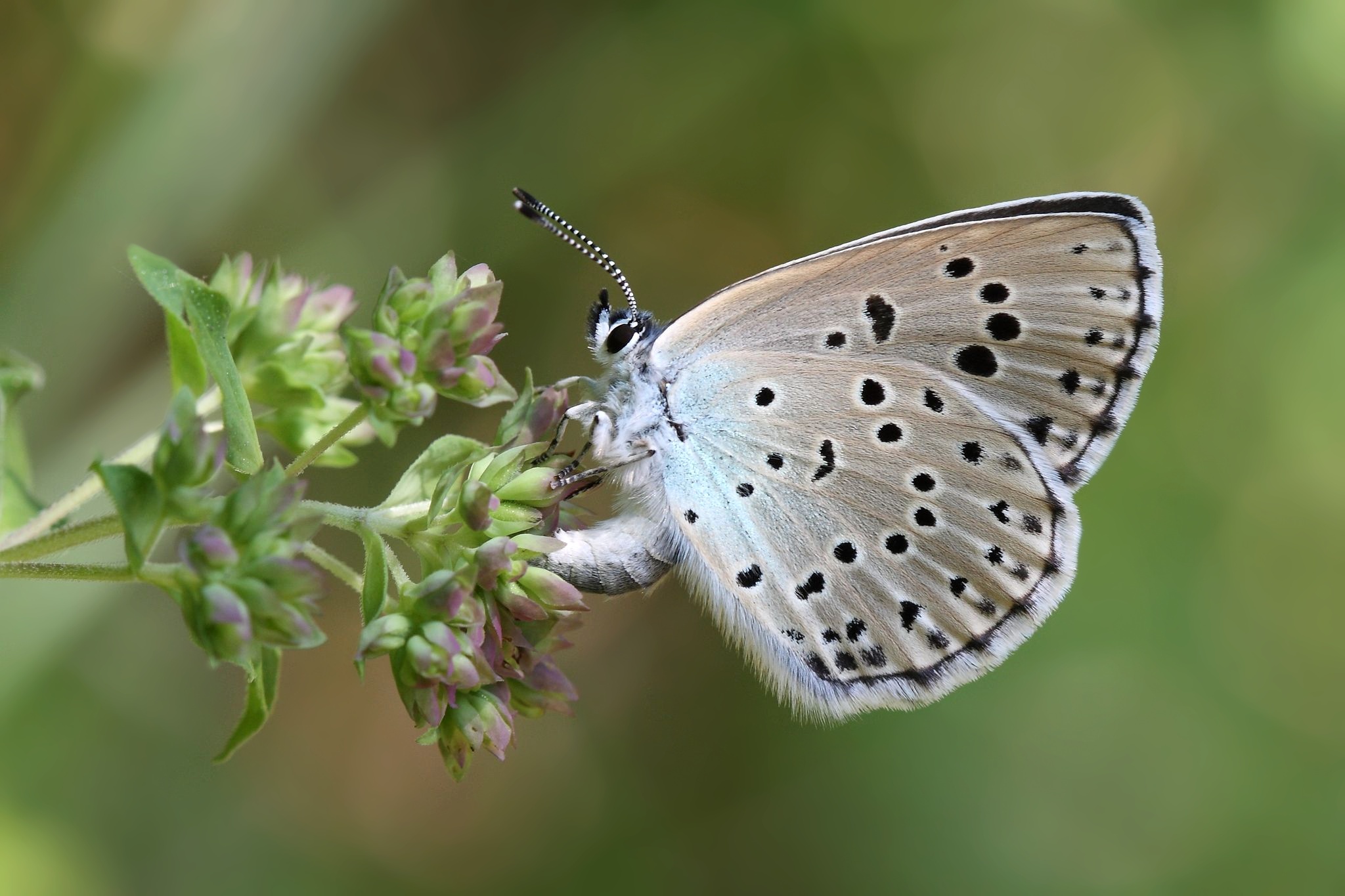
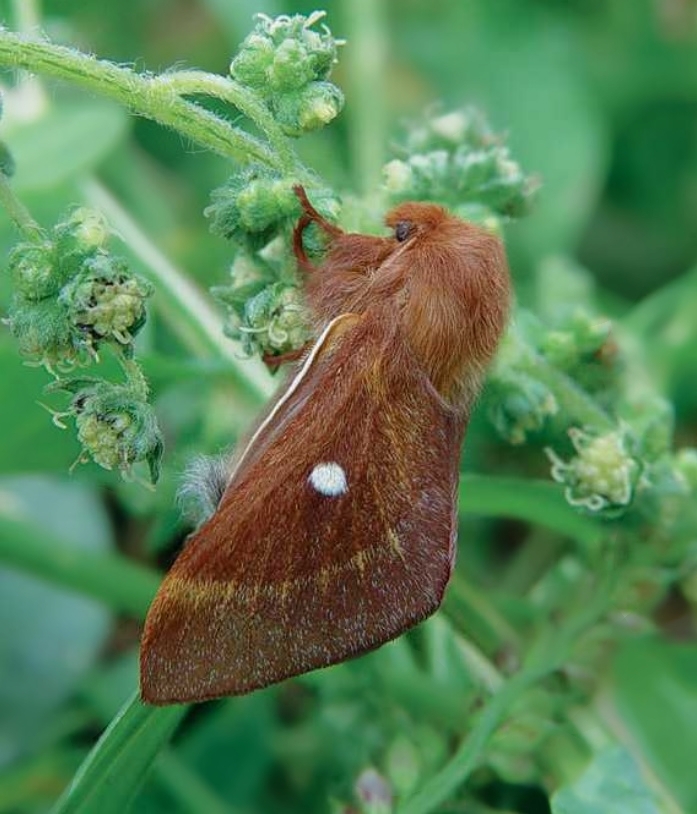
The LIFE endemic PANALP project is focused on the restoration of drought-loving grassland communities, which are currently threatened by encroaching trees, invasive species and the planting of non-native trees. The restoration of these biotopes takes place by appropriate removal of woody plants and subsequently by the restoration of sustainable traditional management (grazing and mowing), which has been missing here for several decades. This brings benefits not only for the target habitats and species, but also for local farmers, with whom we cooperate in the restoration of management. In Slovakia, the project is taking place in 17 areas of special conservation interest located in western part of the country from the Small Carpathians to the Strážovské vrchy, in Hungary in another 7 areas. The goal of the project in Slovakia is also to improve the status of populations and habitats of rare species of European importance. Among the plants, the endemic taxa are Lumnitzer’s clove (Dianthus praecox subsp. lumnitzeri) and the highly endangered moravian tephroseris (Tephroseris longifolia subsp. moravica). The target species of invertebrates are the great capricorn beetle (Cerambyx cerdo), the eastern eggar (Eriogaster catax), the large blue (Maculinea arion), the mountain apollo (Parnassius apollo) and the clouded apollo (Parnassius mnemosyne). In Hungary, the targets are rare endemic plants – the Sadler’s ferula (Ferula sadleriana), the dolomite flax (Linum dolomiticum), the pannonian nutmeg (Vincetoxicum pannonicum) and the continental steppe species of crambe (Crambe tataria).
The partners of the project are the State Nature Protection of the Slovak Republic, for locations in Hungary the Duna–Ipoly National Park Administration and the Pilisi Parkerdő Forest Administration.
We thank the administrations of the Ponitrie PLA, the Biele Karpaty PLA, the Malé Karpaty PLA, the Strážovské vrchy PLA, the Záhorie PLA, the Duna–Ipoly National Park Administration, the Pilisi Parkerdő Forest Administration and the local farmers, foresters and landowners for their help with the implementation of the project.
For more information about project species, habitats, but also methods of their restoration, or for navigation in your own efforts in similar locations, you can consult our colleagues:
Mário Duchoň, duchon@broz.sk, tel. number: +421 915 165 677
Pavol Littera, littera@broz.sk, tel. number: +421 948 177 555
- News & Activities
- Basic information
- Target species
- Project area
- Aktivity
- Výsledky
- Návody a príručky
- Partners
- Personnel


Restoration of grazing is progressing also in the vicinity of Dobrá Voda
Dobrá Voda is one of the few villages that lie hidden in the middle of the massif of the Little Carpathians. In the past, most of their territory did not provide a very suitable environment for people to farm other than forestry, and so they settled rather on the edges of this mountain range. What…

We have expanded an oasis of life near Považská Bystrica
Above Podmanín, at the piedmont of Manínec and Veľký Manín in the Strážovské vrchy, lies a small, open hillside that, at first glance, may seem dry and lifeless. But appearances can be deceiving—these warm, sunlit slopes are bursting with life. Hundreds, perhaps even thousands, of warm-requiring species thrive here, including rare insects, plants, lichens, fungi,…

Hrehorkové revives thanks to traditional grazing. Will the butterfly king return?
Hrehorkové, a Site of Community Importance (SCI), is one of the youngest protected areas in the Biele Karpaty. Located on the sunlit limestone slopes near the village of Mikušovce (Ilava district), it was designated as a protected area in 2018, covering 12 hectares. By then, however, the once-open landscape had become overgrown with shrubs and…
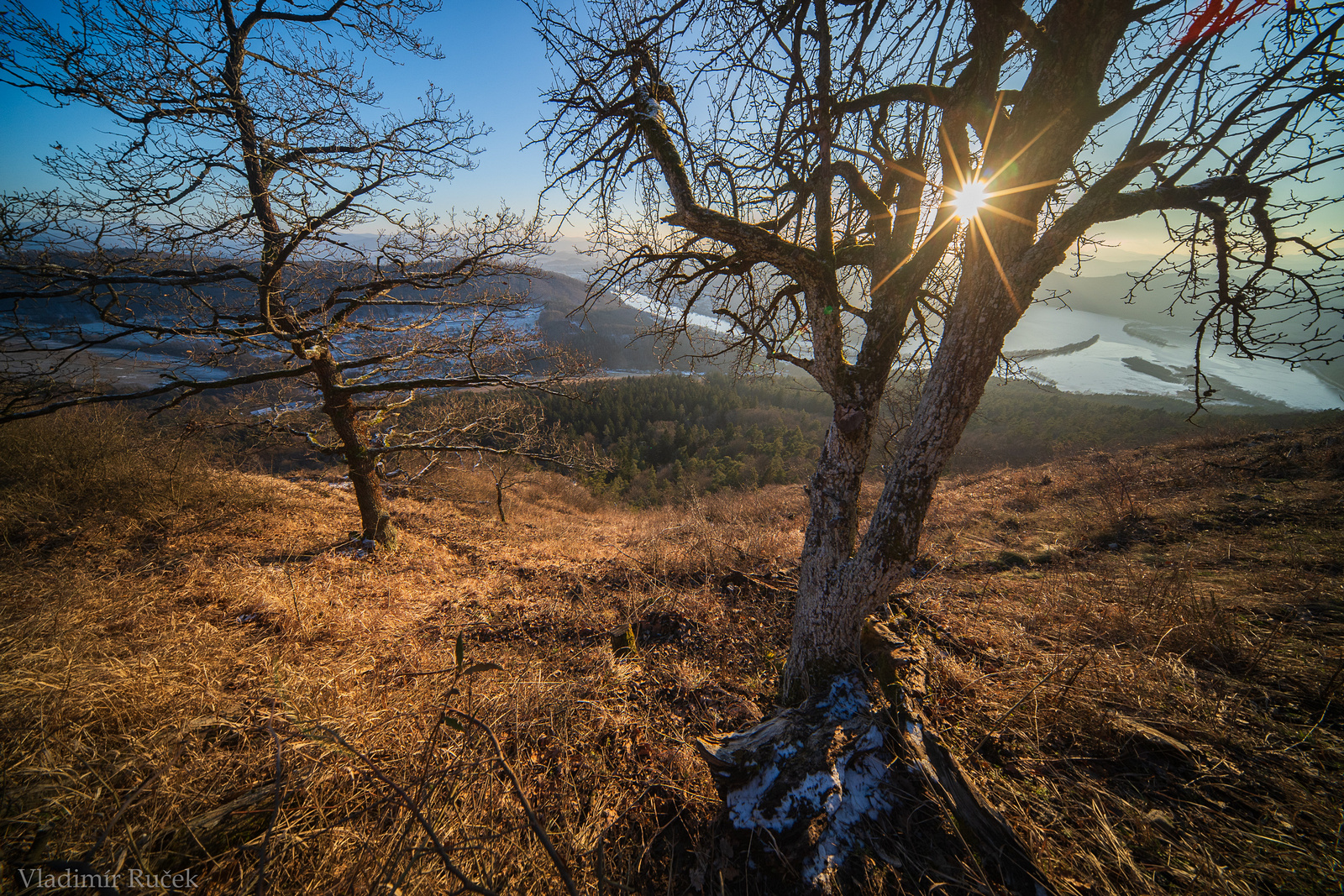
In the Javorníky Mountains, on Klapy, we helped the rare Apollo butterflies and pasque flowers.
Just as humans have carved their own paths through nature, nature, too, has created its own unique routes. The southern edge of the Javorníky Mountains is home to the Pieniny Klippen Belt, a stunning limestone ridge that stretches from Myjava, across the Polish Tatras, through Humenné, and all the way to Romania. These rocky formations…
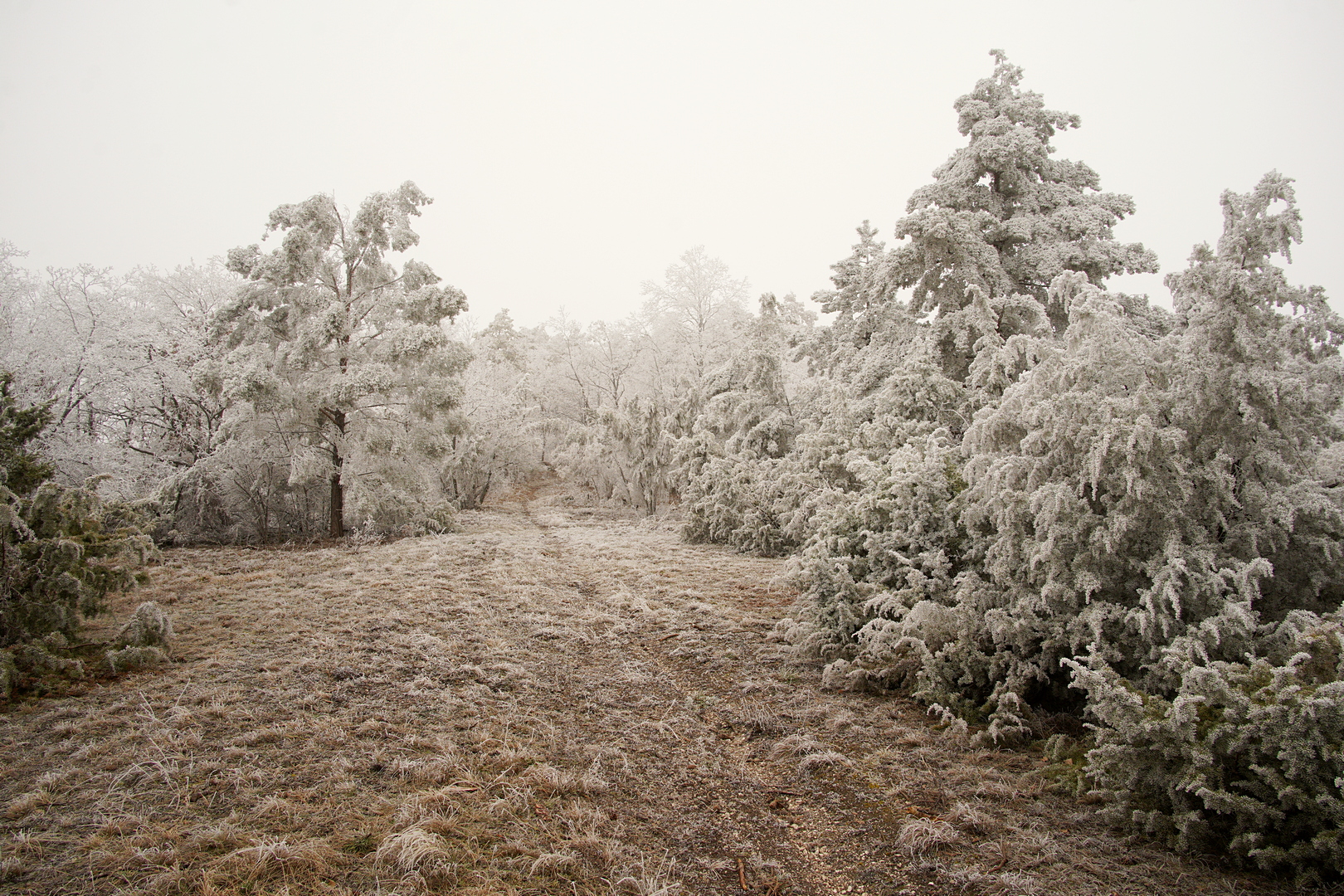
We are restoring rare steppe habitats in Horná Pustá Ves
The quiet settlement of Horná Pustá Ves is hidden away in the northern part of the Brezovské Karpaty, within the Prašník municipality. Surrounded by the limestone peaks of the Malé Karpaty, this area has a rich natural and cultural history. People settled here as early as the Paleolithic era, evidenced by the remains of an…
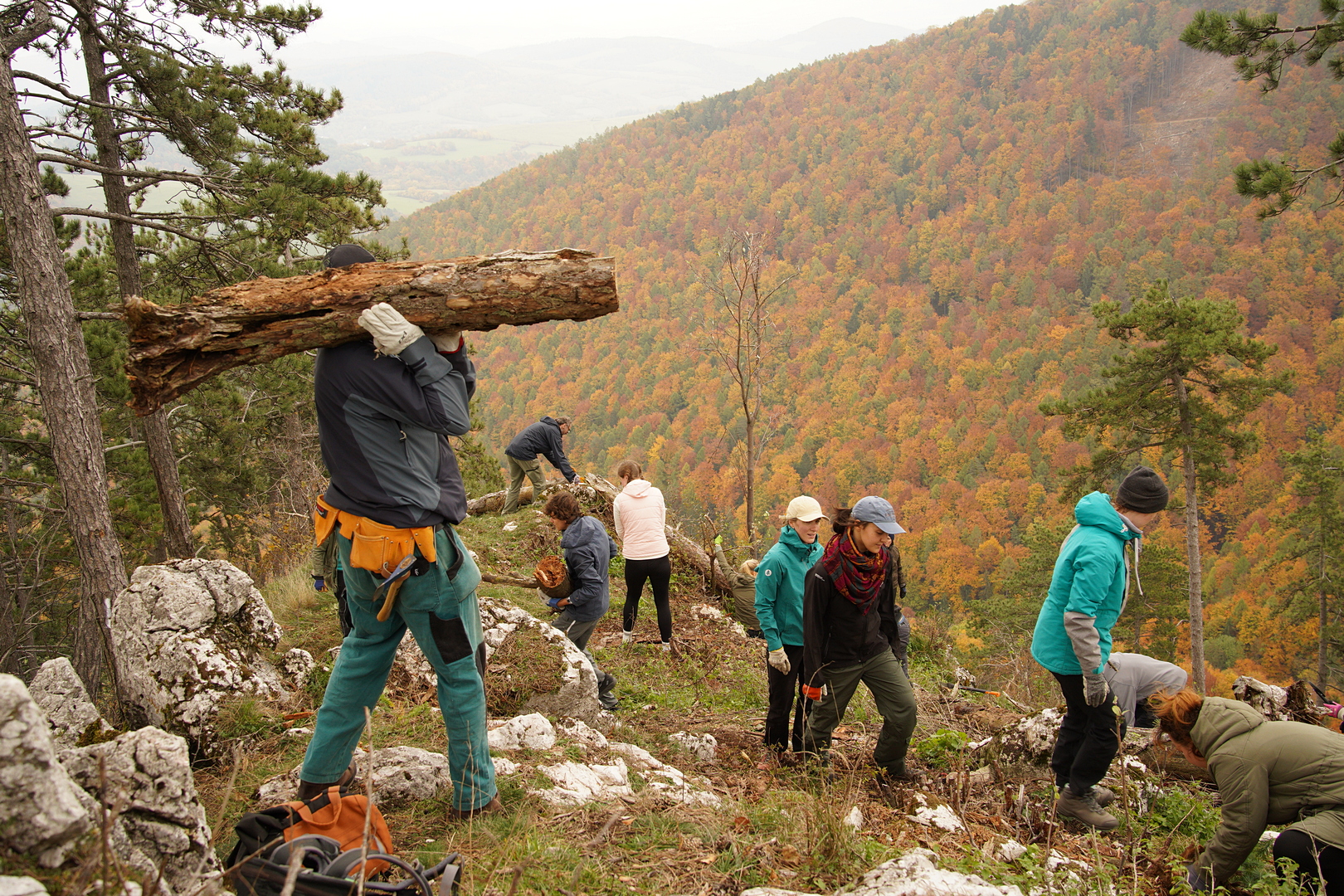
The Czechoslovak conservation weekend in White Carpathians contributed to saving the rocky steppes
Although we do not commemorate October 28 as a national holiday in Slovakia, the legacy of the first common republic is still alive for many of us. This also applies to Czech conservationists from the JARO Group or scientists from the Faculty of Natural Sciences of Charles University. They decided to spend their extended October…

We restored grazing under the second largest peak of White Carpathians
As part of the LIFE Endemic Panalp project, we are successfully continuing the restoration of flowering meadows and traditional pastures. Most recently, thanks to the project, after many decades, farm animals are grazing again in the saddle below Chmeľová, which is the second highest peak of the White Carpathians. It is interesting that a very…

We hosted a restoration camp in Smolenice
During the last week of August, we hosted an international youth camp at Molpír near Smolenice village in Small Carpathians. It was organized by the association Strom života (Tree of Life) and almost 30 young people from Slovakia, Finland, the Netherlands and Greece came to it. With our joint efforts, we managed to clean more…

We hosted a restoration camp in Smolenice.
During the last week of August we hosted an international youth camp on the Molpír hill near Smolenice. It was organized by the Tree of Life association and nearly 30 young people from Slovakia, Finland, the Netherlands and Greece came to participate. Together we managed to clear more than a kilometre of corridor, where we…

Rare plant species are returning to the restored hillsides
Our project LIFE Endemic Panalp, aimed at the protection of several endemic species and habitats of dry grasslands, has recently moved into the second half. So, what did we achieve during the first one? First of all, in the Strážovské vrchy, Považské Inovec, Malé and Biely Karpaty, we restored a total of more than 80…
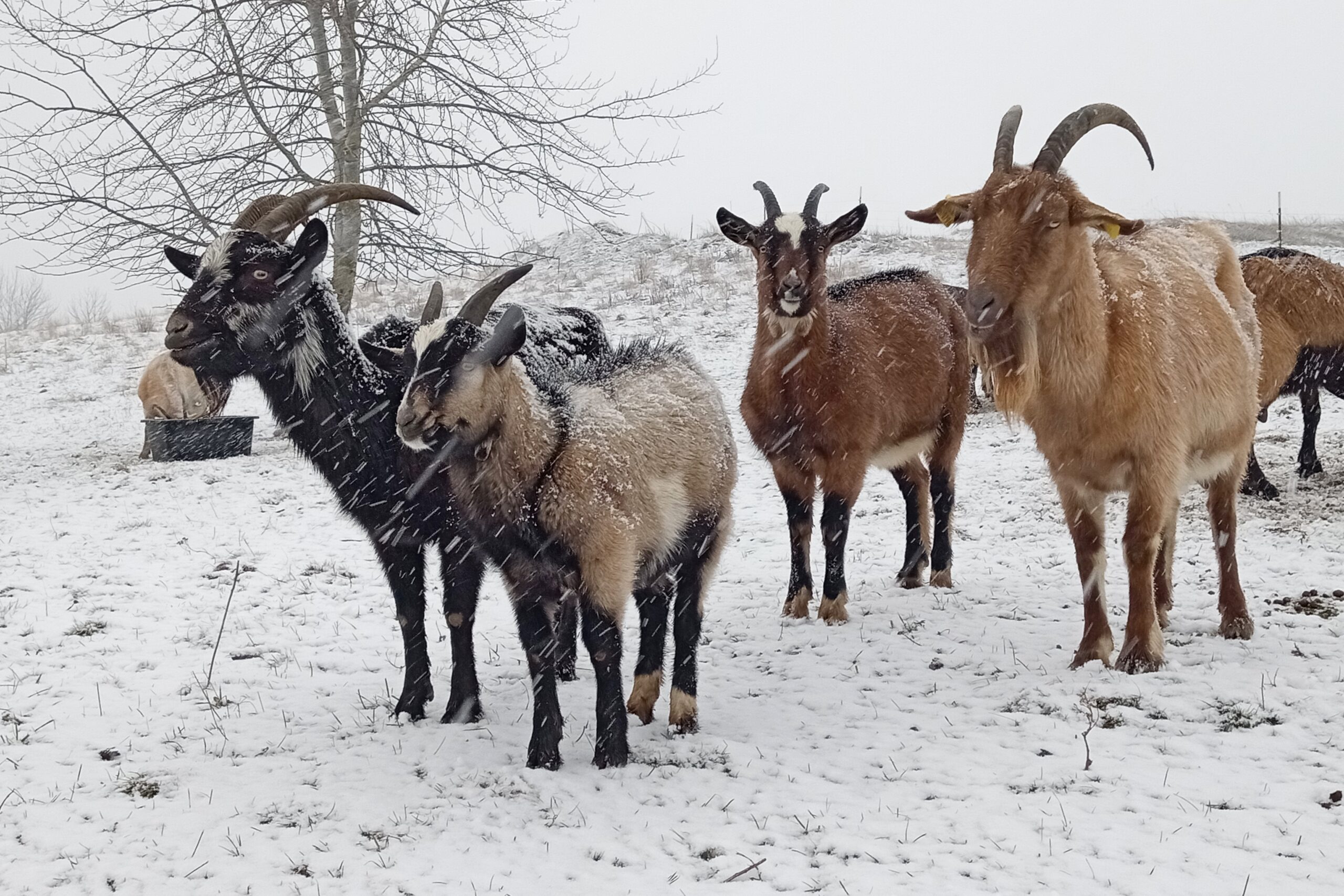
We implement winter and early spring grazing. What are its benefits?
If you are looking for a blossoming cherry in May (at least here in Slovakia), you will find it in the White Carpathians in the protected area Vršatské bradlá. And with it also living mowers – a herd of goats and a few sheep. Grazing started exceptionally here already in April in two reserved plots.…
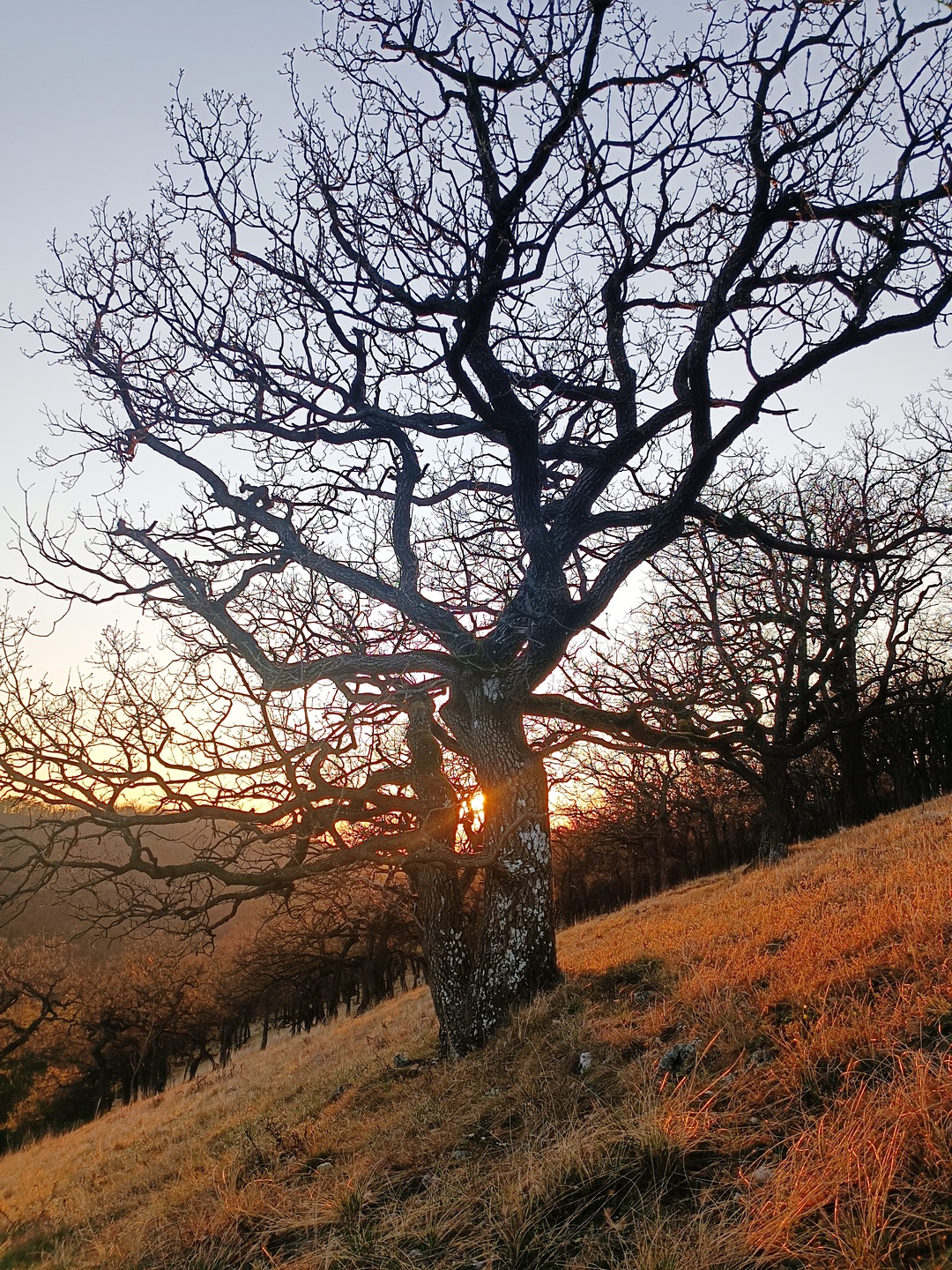
We are restoring the forest steppe near Plavecký Peter
In the middle of the forests around Plavecký Peter village in the Small Carpathians, you can find the remains of rare grassland areas on stony slopes with beautiful solitaries of oaks, interspersed here and there with viburnums or hawthorns. In many places, however, this original beauty was literally swallowed up by artificially planted non-native black…

The voluntary weekend (not only) for the mountain apollo turned out great!
The team of the LIFE Panalp project spent the third Saturday of March on the cliffs of Vršatské bradlá protected area. Here we were joined by approximately 30 volunteers who wanted to help us to save one of our most endangered butterflies – the mountain apollo. Together, we managed to clear the sawed-off branches on…
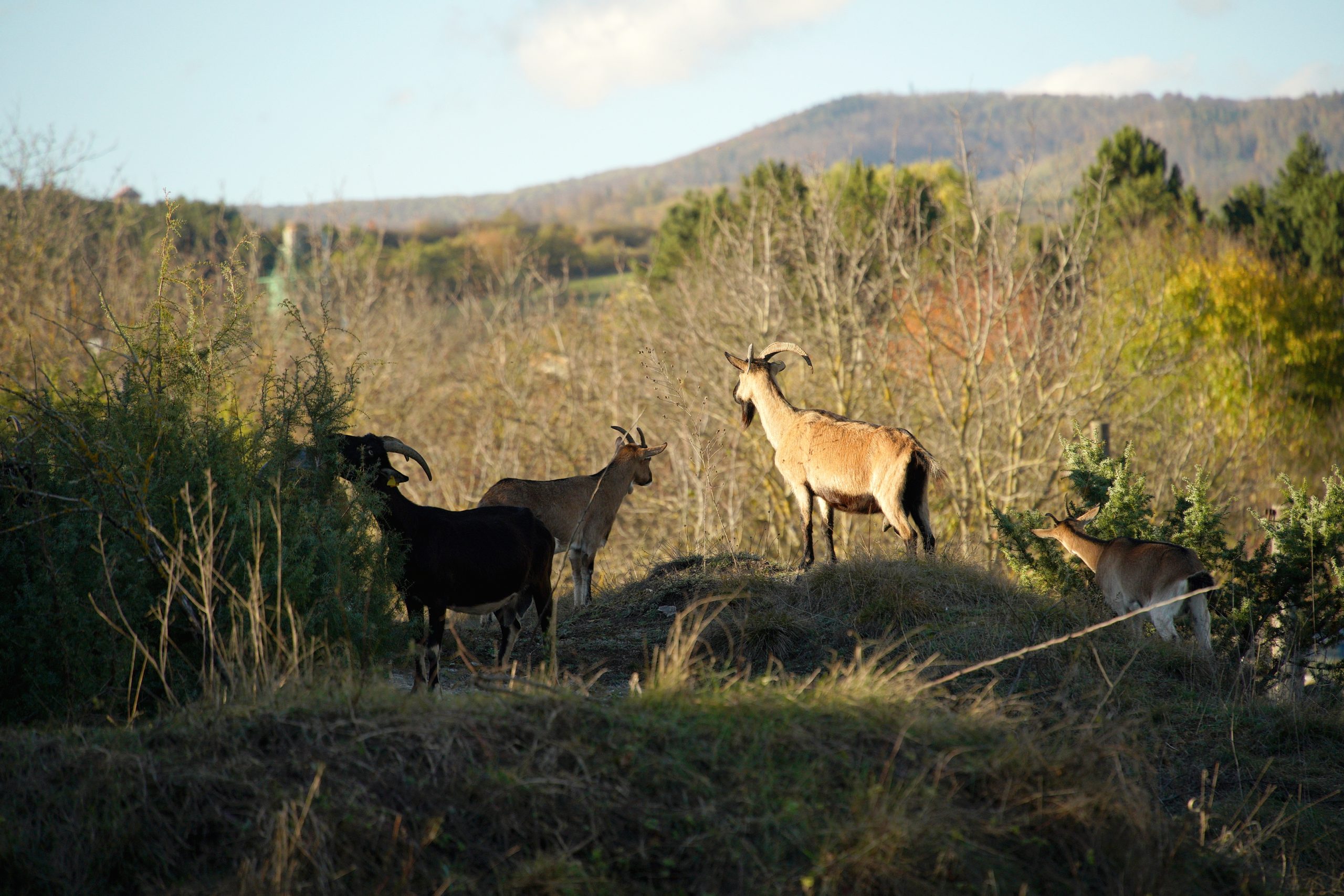
Together with a local shepherdess, we take care of the protected area near Topoľčany
One of the more than a hundred locations where we have restored grazing so far is the Dolné lazy protected area. It is located at the southeastern foothills of Považský Inovec above the small village of Závada. It consists of famous orchid meadows with a lot of junipers, which gradually disappeared in the shade of…
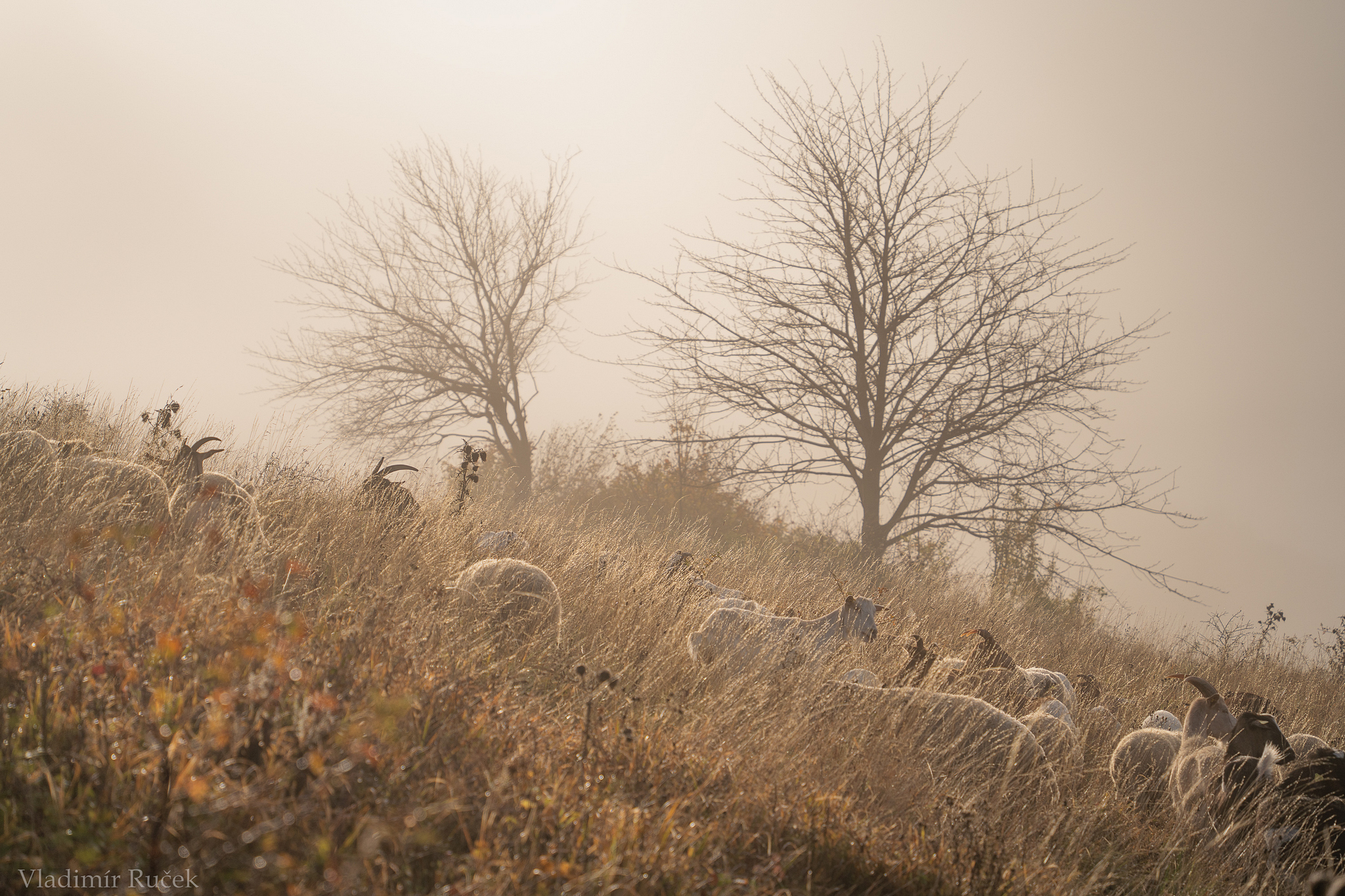
Together with local farmers, we are successfully restoring grazing in Zliechov
Our LIFE Endemic PANALP project is approaching its halfway point, and we are very happy that we are succeeding in fulfilling one of its main goals – the restoration of traditional grazing on rare drought-loving grassland habitats in the Small and White Carpathians and the Strážovské vrchy. In the last-named mountain range we have returned…

We are restoring pastures and flowering hillsides on the prehistoric Molpír hillfort
The last Thursday of September was spent by the team from our LIFE Panalp project in Smolenice, where Toyota employees and we prepared the ground for the restoration of grazing on the Molpír hillfort. Together, we managed to peel the bark off the stakes along the entire route of the fence, install insulators on them…
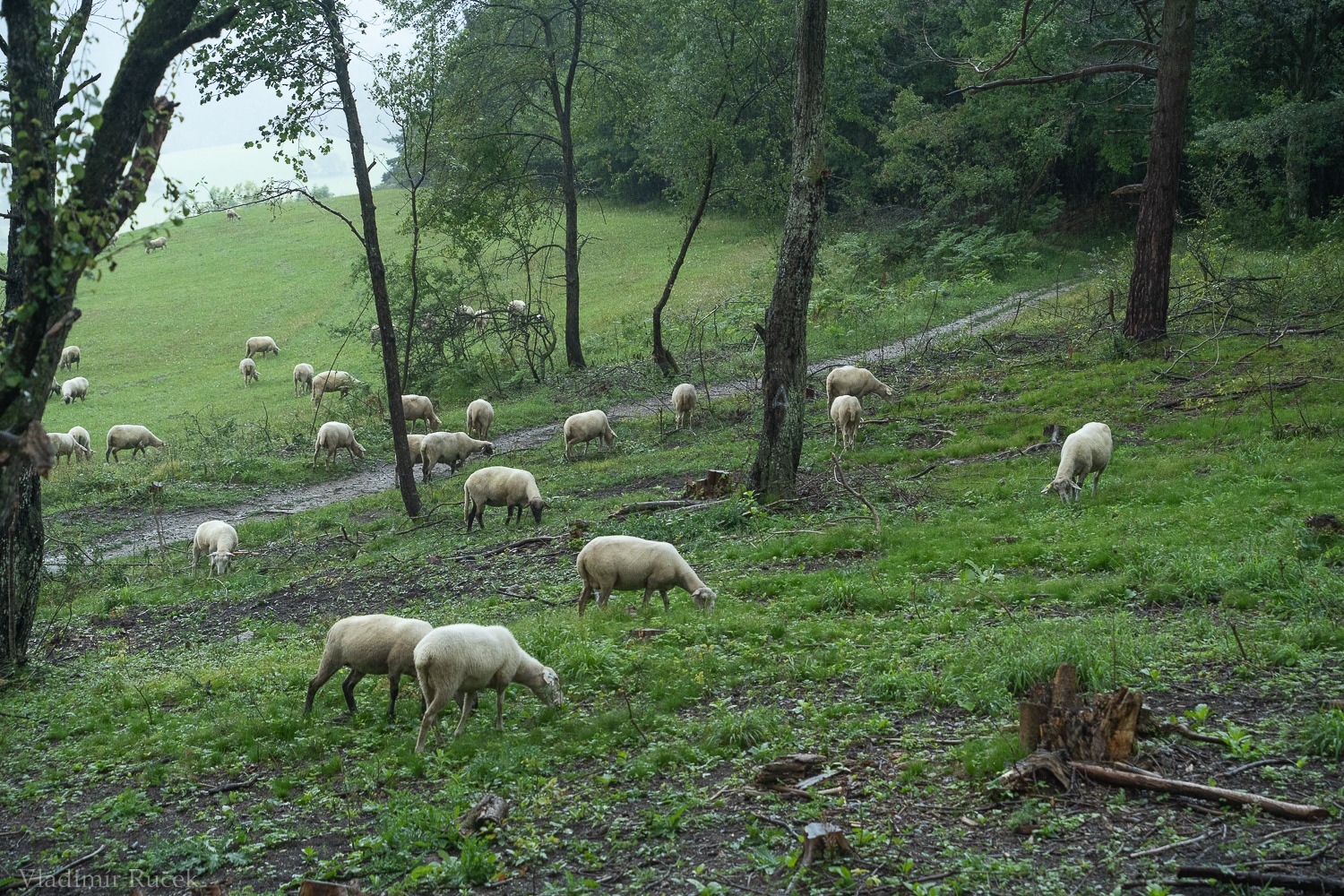
Restoration of pasture habitats in Súľov
The Súľov hills are famous not only because of picturesque sceneries of rock gates and towers, but also because of a wealth of rare flora and fauna. Among other things, they were known among botanists in the past as a famous botanical site.
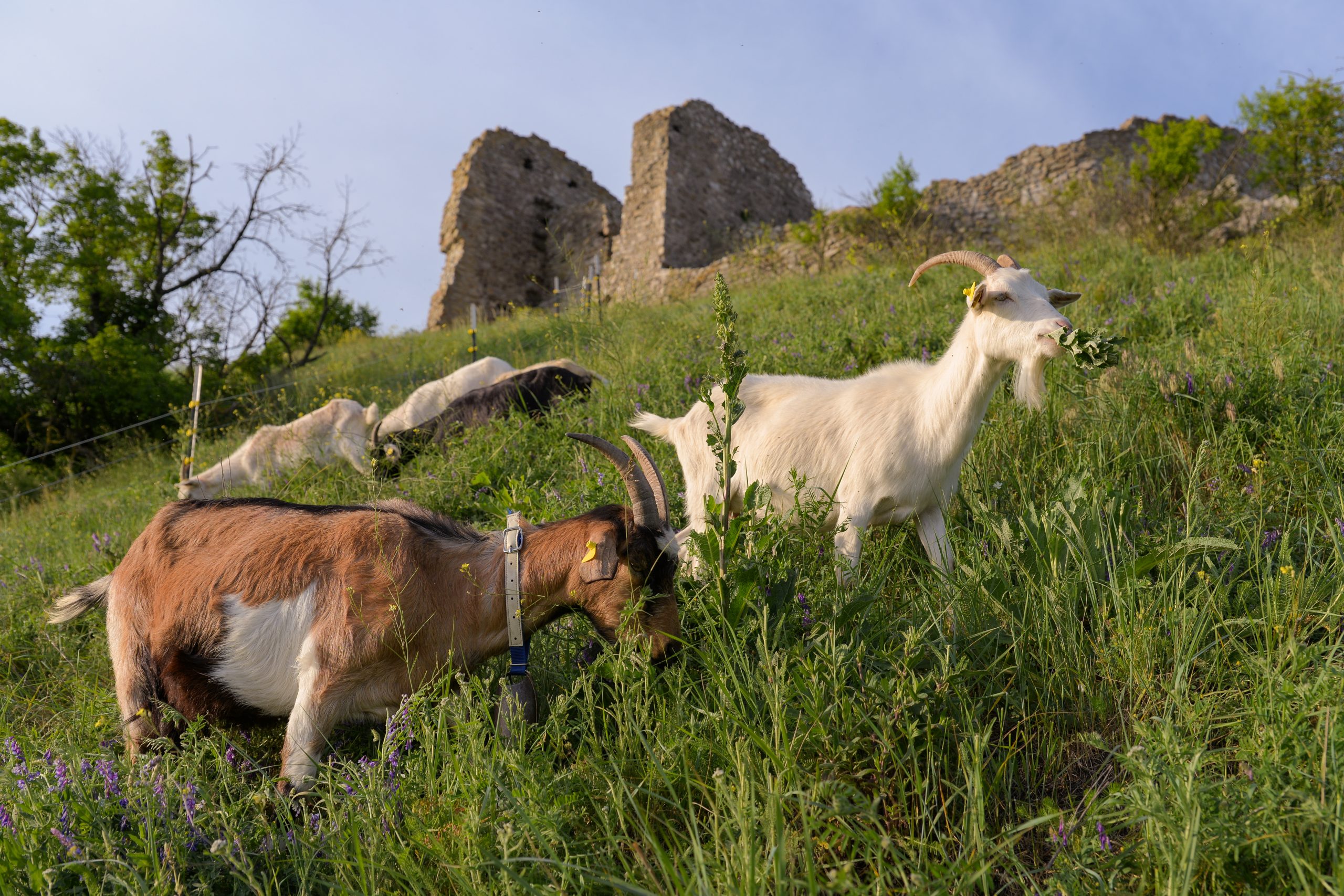
When grazing is succesfull
For several years now, we have successfully grazed sheep and donkeys at Devín Castle, and this year we managed to expand the pasture to the Devín castle Rock - which is located in the southern part, directly under the walls.
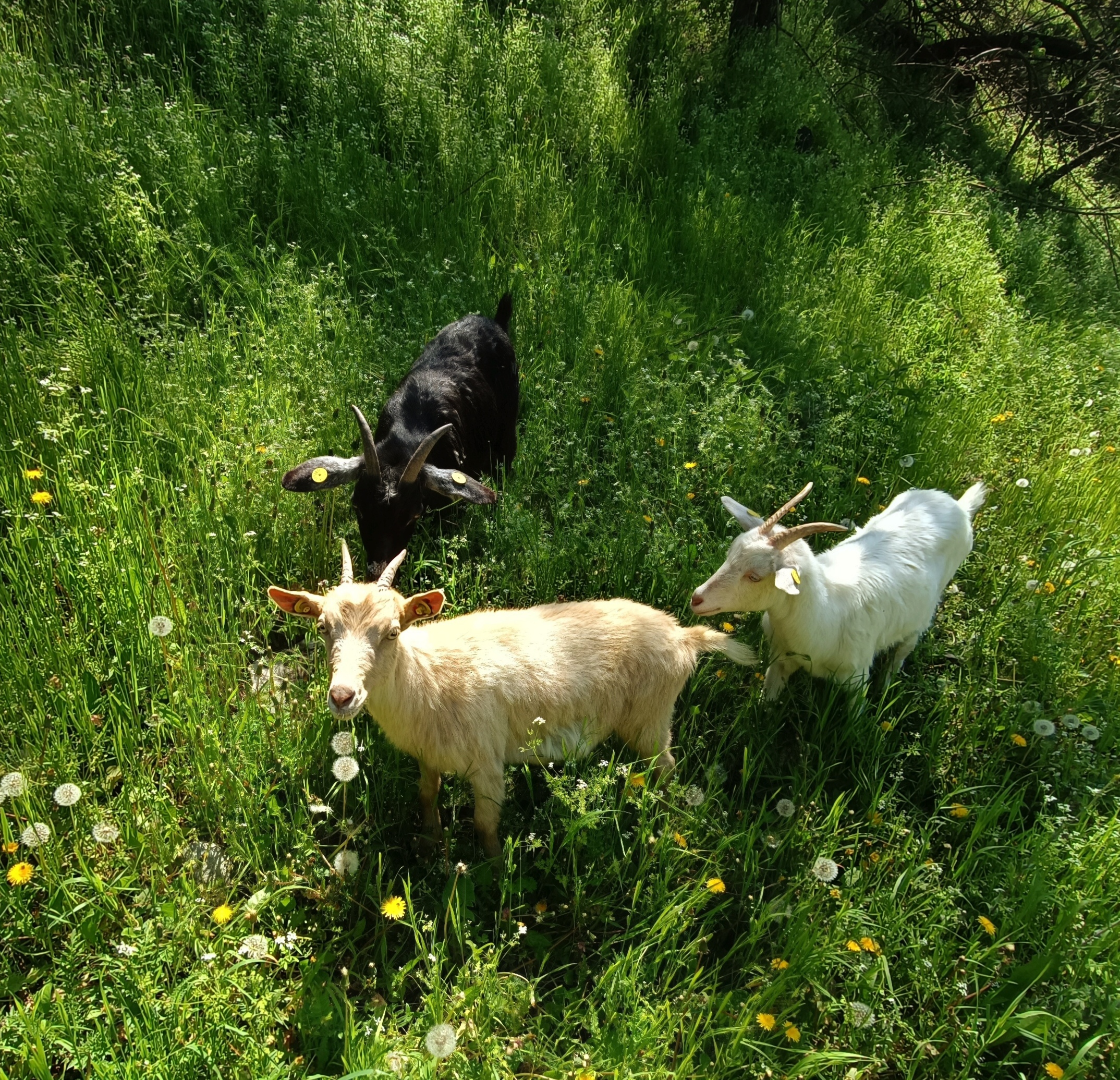
Goat grazing on the Devín castle rock
In addition to the successful activities in the Strážovské vrchy, as part of the LIFE Panalp project, we also started to restore rare grass habitats in the Samll Carpathians. In the westernmost Slovak mountain range, this spring, in cooperation with the Museum of the City of Bratislava, we started grazing on the Devín Castle Rock.
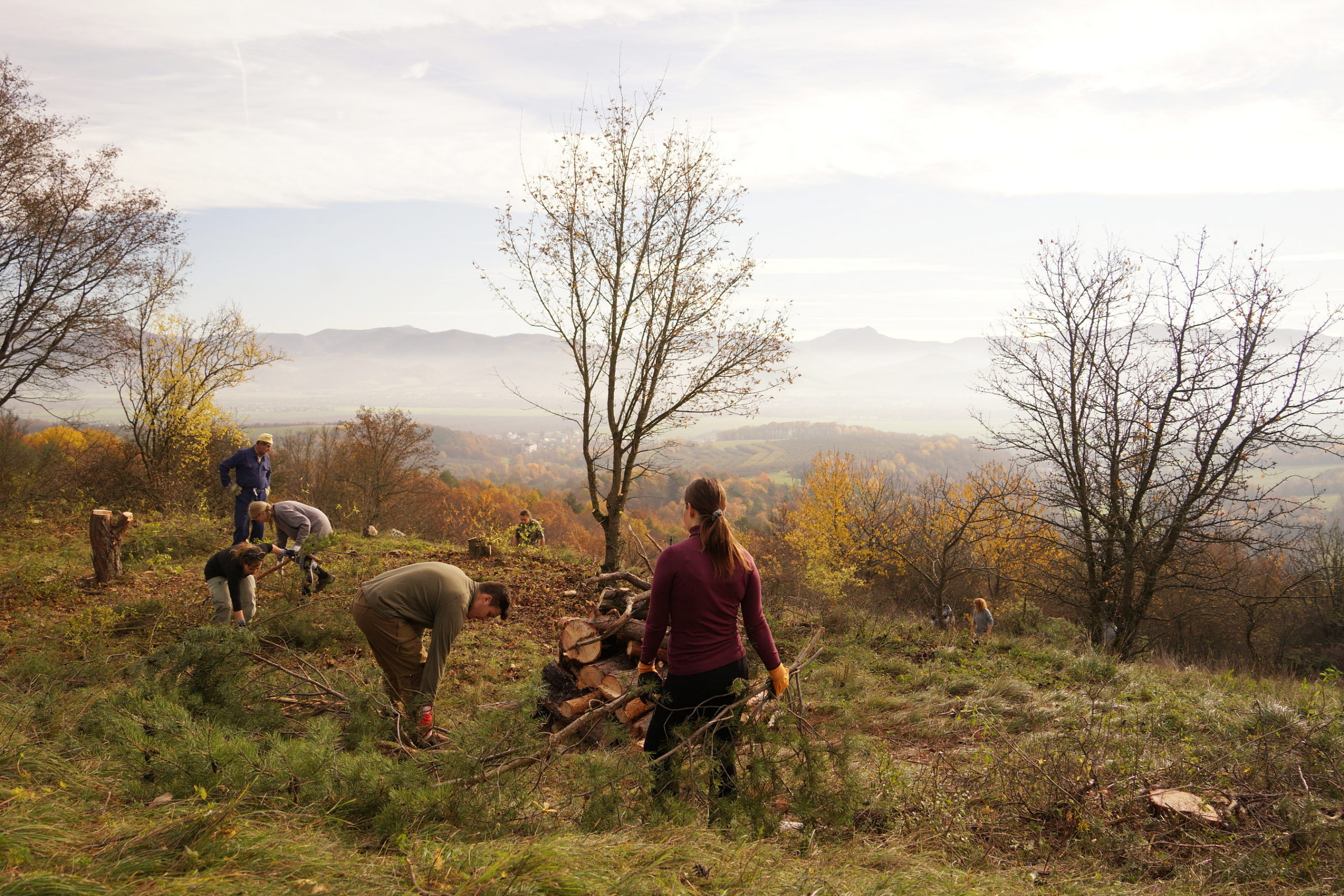
We have taken a small step for humanity in the White Carpathians, but a big step for nature
Grazing restoration is one of the golas of the project LIFE Panalp, from which the weekend activity was financially supported. In White Carpathians we are grazing goats in more localities already so we started now also in Babiná and we hope that the butterfly king will be atracted back to the locality.
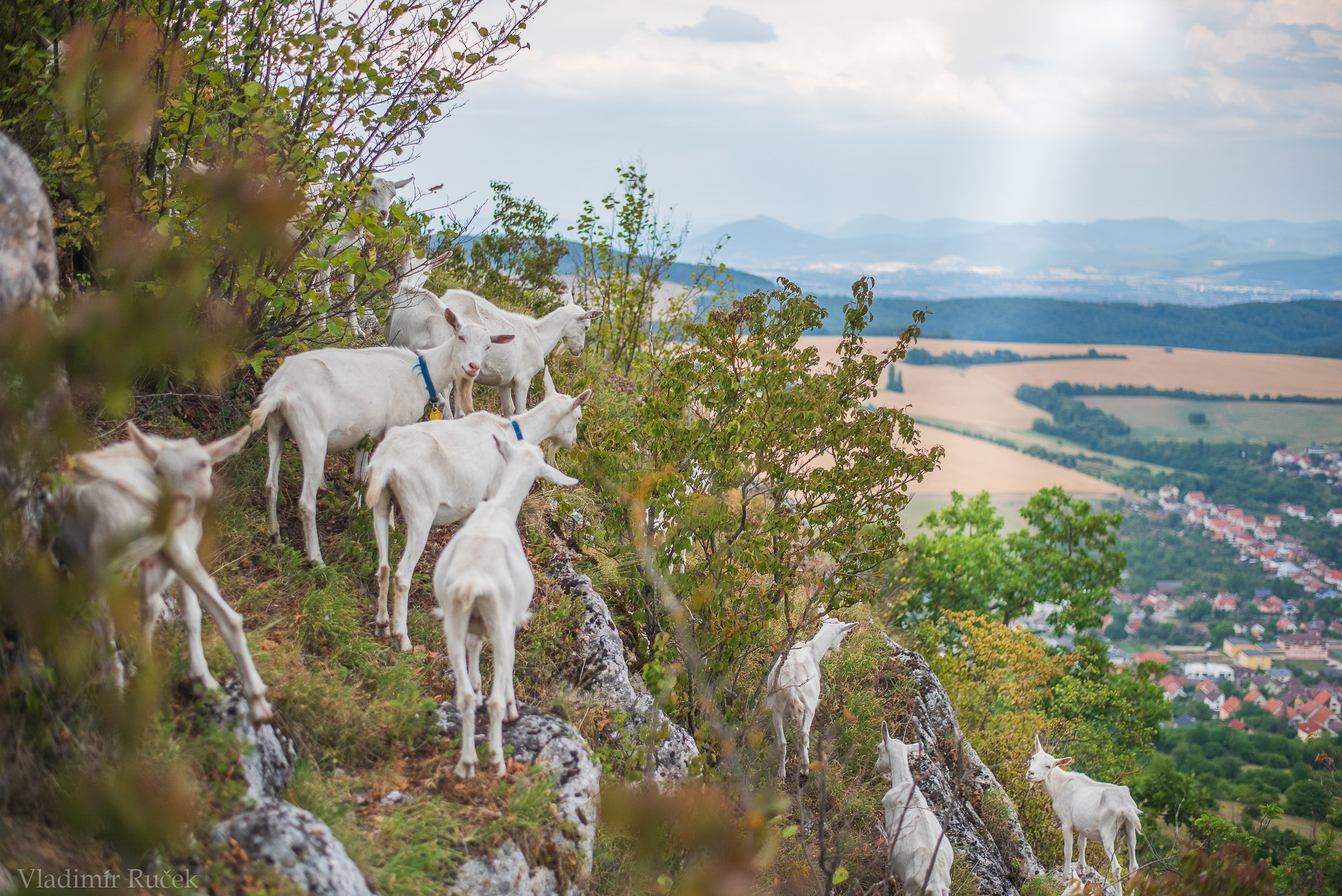
We started grazing on Krasín hill
Krasín hill starts to look like it used to, thanks to our grazing restoration.
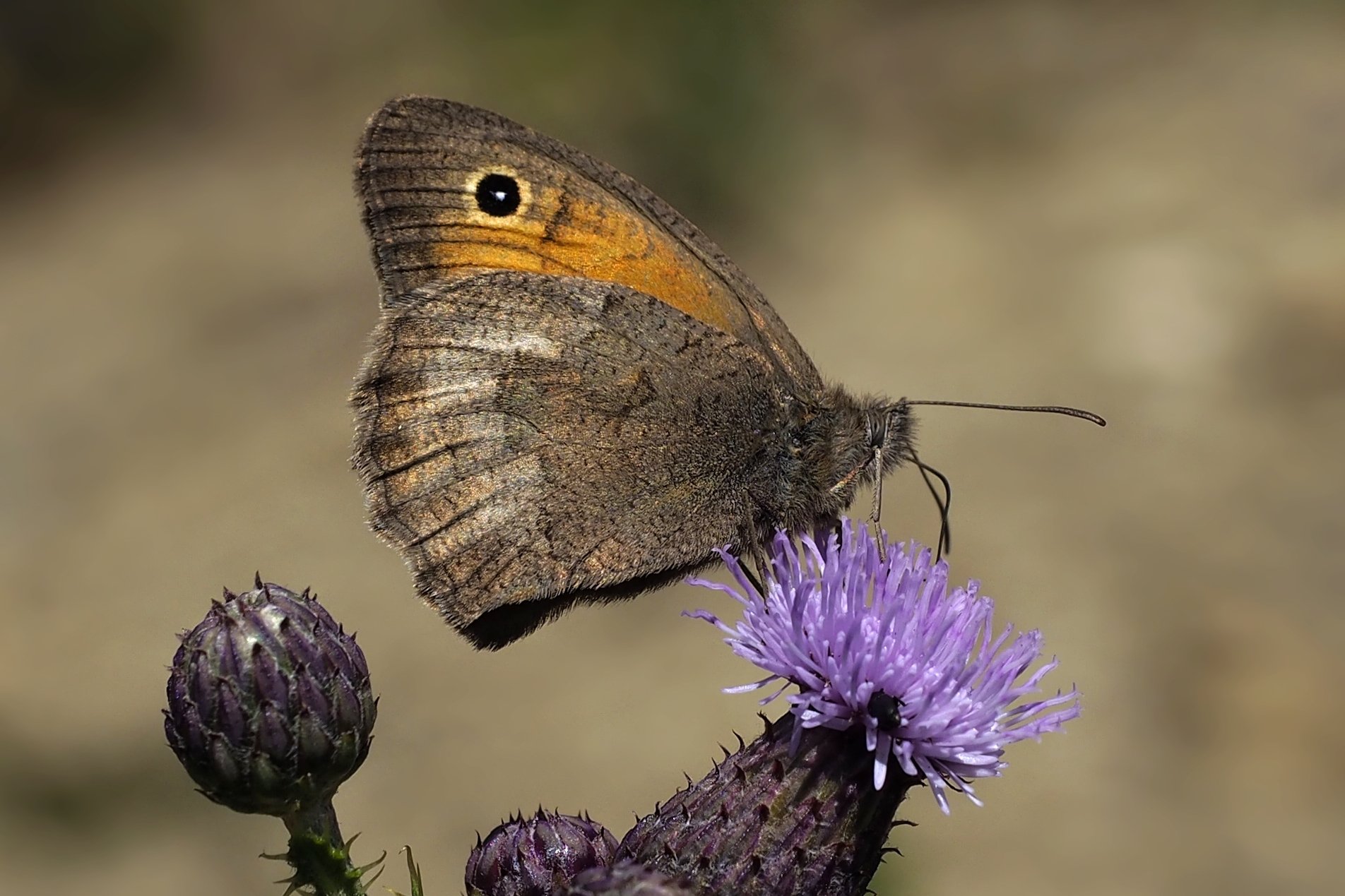
Dry-lovers or who likes the dry?
There are habitats which can stand dry weather much better than others. We call them drough-loving habitats or xerotherms.

Beauties of diverse landscape
The Slovak mountains hide small treasures, which many have no idea that they exist in our country. They are wild orchids, and it is the Strážovské and Súľovské vrchy that can boast one of the highest species diversity in Central Europe.
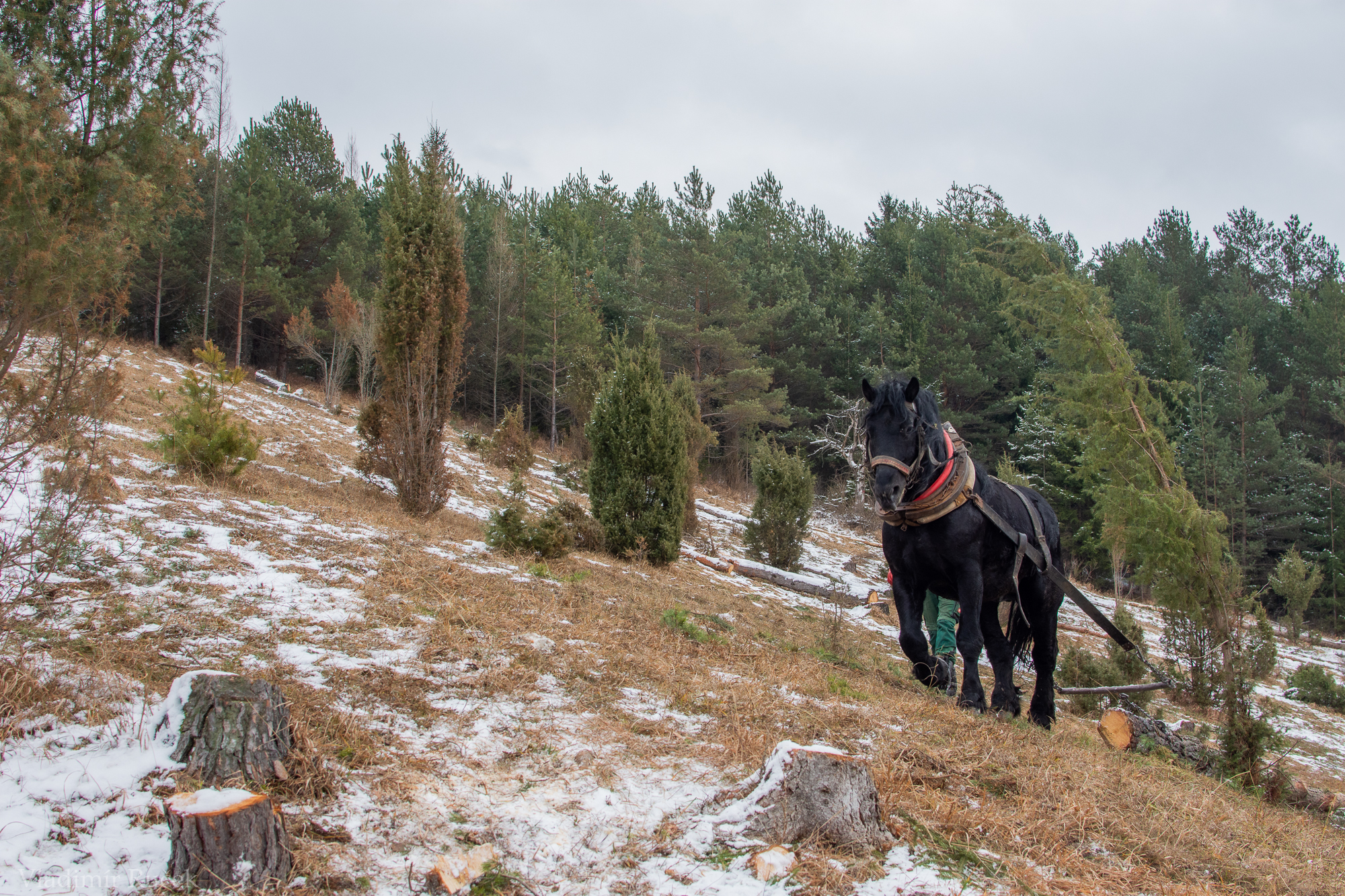
Restoration of Svarkovica protected area in cooperation with PLA Strážovské vrchy administration
Pine trees and spruce trees gradually overgrew even the territory of Svarkovica prtected area. The shading and acid fallout of needles increasingly changed the ecological factors of the environment, and without human intervention, the rare habitat and the species bound to it would gradually disappear even from this hotspot of biodiversity.
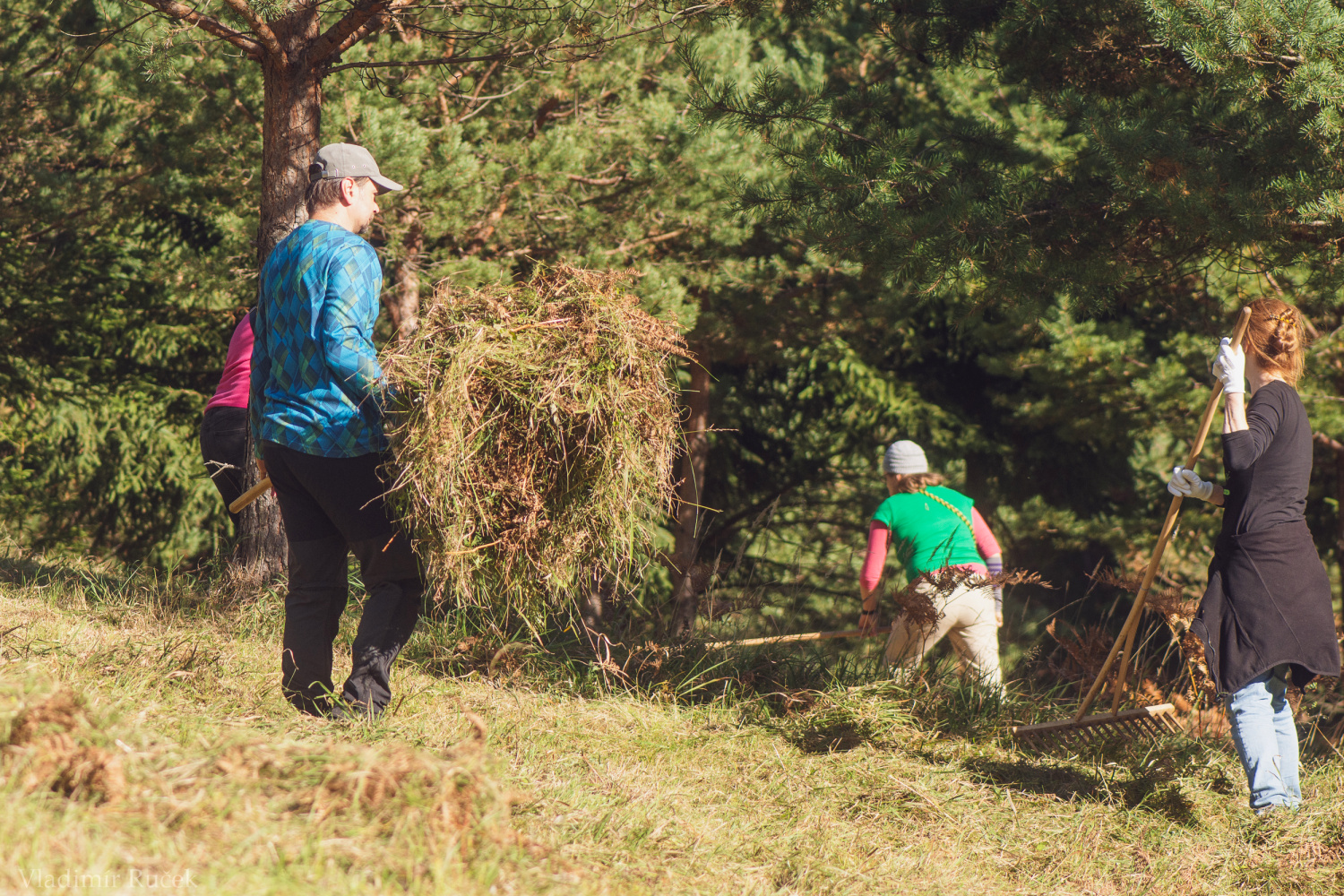
Working with volunteers to clean up sites
One of the goals of the LIFE PANALP project is the involvement of volunteers in nature conservation. In this way, event participants will not only help nature, but also learn a lot about active care of target habitats and species. Information thus reaches the public through the experiences of individuals. We have therefore organized several brigades in autumn 2021.
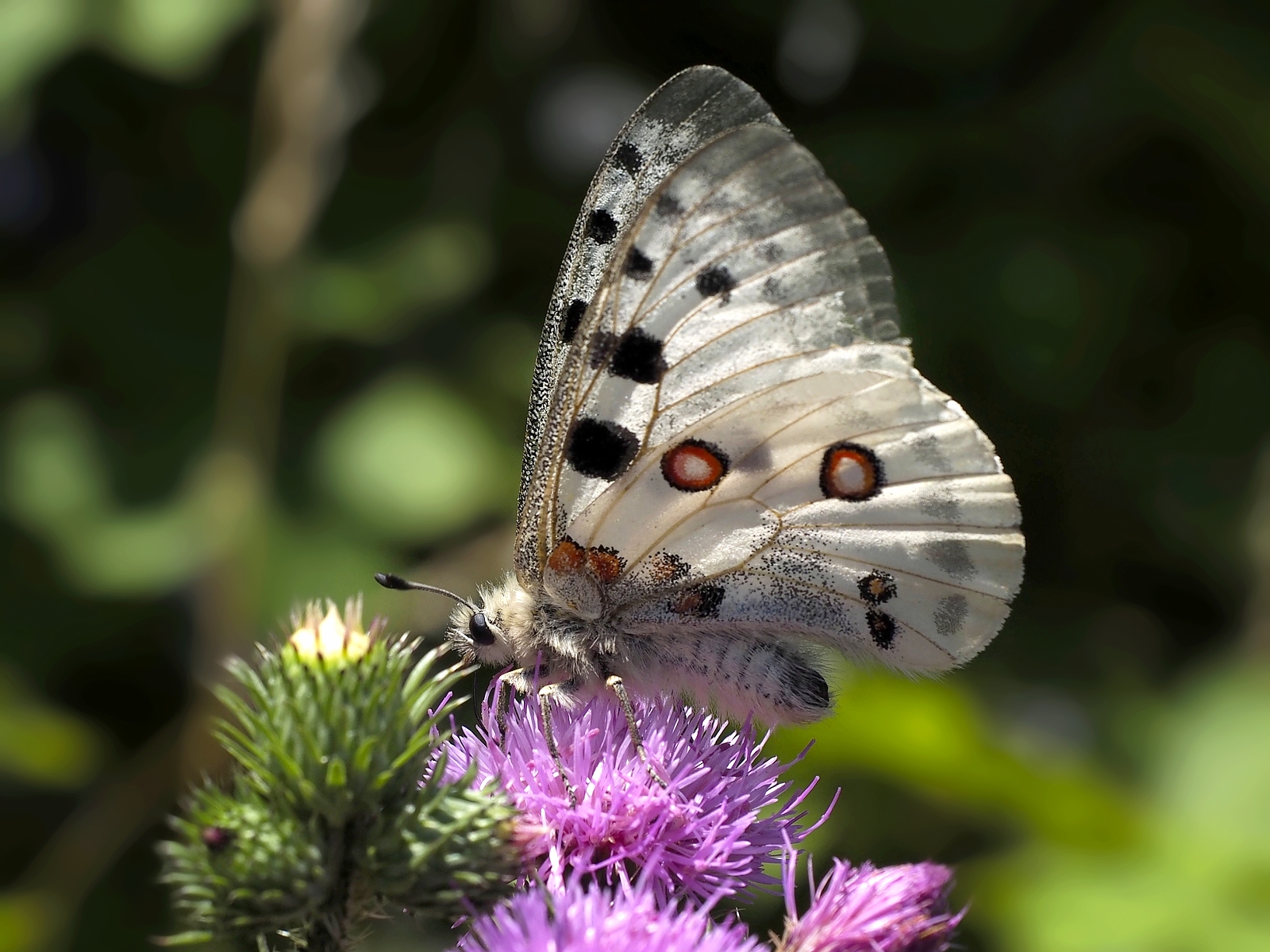
At the location in Strážovské vrchy, we helped a mountain Apollo butterfly (Parnasius apollo)
At the site of the maountain Apollo, one of our rarest butterflies, we cleared approximately 1 hectare of debris from invasive trees. Since this light-loving species of butterfly requires sufficient space with nutritious and nectar-producing plants. We believe that this intervention will greatly help the maintenance of this species in the territory and, among other things, will also support other species of rare plants and insects.

Saving habitats with current and former DINPD staff
On 23 October 2021, an enthusiastic team of current and former DINPD staff members and their relatives devoted their Saturday morning to hands-on nature conservation at the Szársomlyó site of the LIFE endemic PANALP project. They cut down overgrown bushes and smaller trees on the most Southern habitat of the rare and vulnerable Vincetoxicum pannonicum.
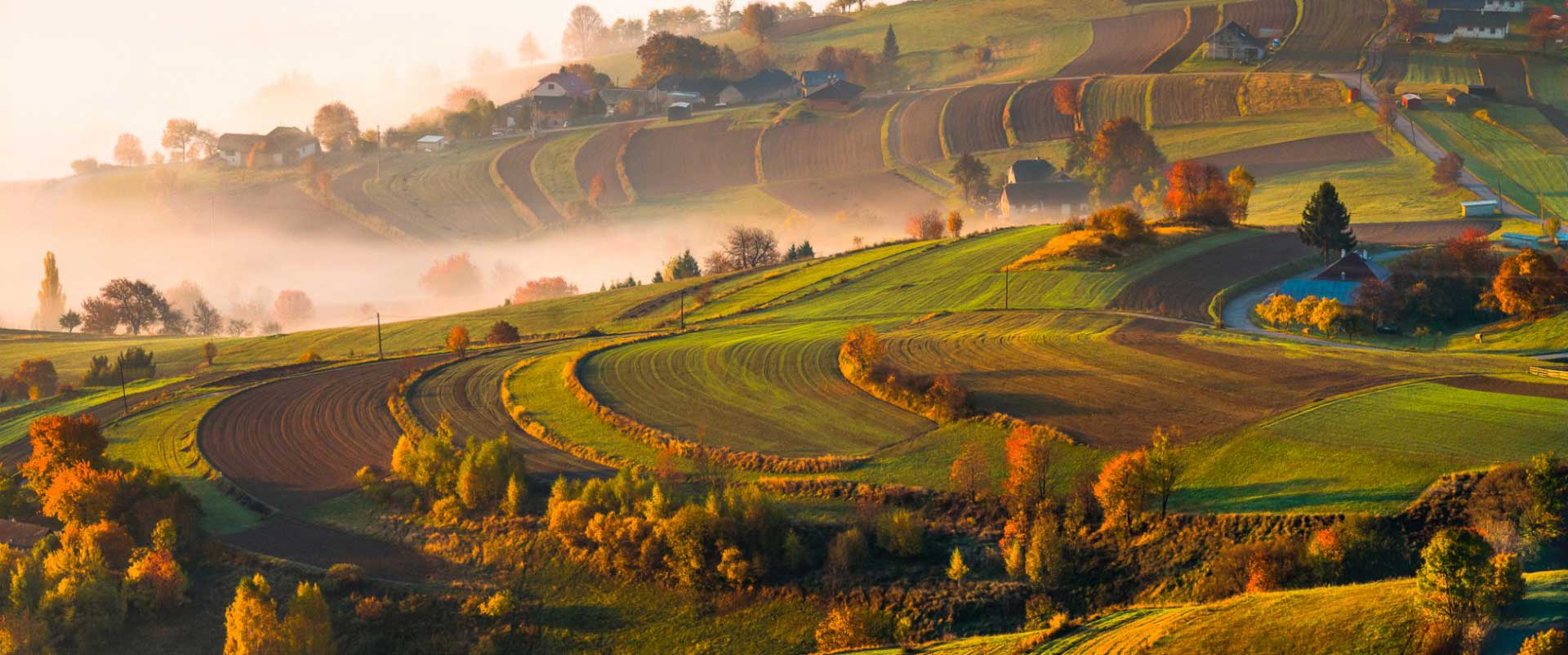
Sign the Living Country Petition
Intensive farming on large areas literally erased life from the country. This is largely due to a poorly designed agricultural policy that encourages intensive farming, which creates a huge burden on the environment. Variety disappears from the rural landscape and with it also birdsong, butterflies and pollinators. If we lose the natural diversity of the landscape, we will also lose its health and resilience.
An international project is focusing on the return of pasture
The international project LIFE PANALP is focusing on the return of grazing as a tool for nature protection. Together with its Hungarian partners, the Regional Association for Nature Conservation and Sustainable Development (BROZ) will focus on the protection of several species of endemic plants and rare animals.
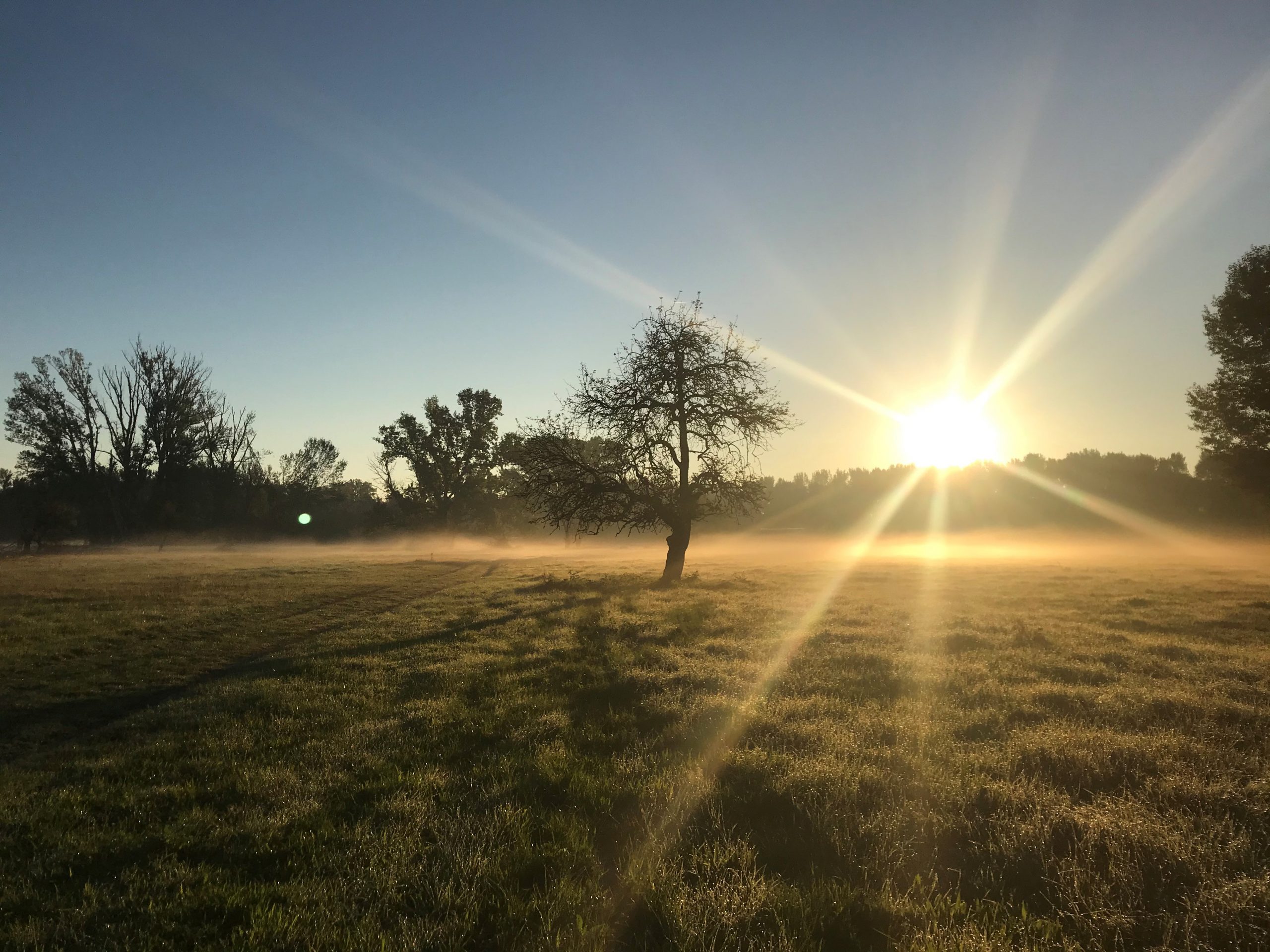
Conservationists, hunters and farmers are calling for landscaping
Conservationists, hunters, farmers, beekeepers and non-state forest owners are calling for landscaping for nature and people. In the memorandum "For a Healthy Country", they appeal to the Government of the Slovak Republic and the Ministry of Agriculture and Rural Development of the Slovak Republic appeal.
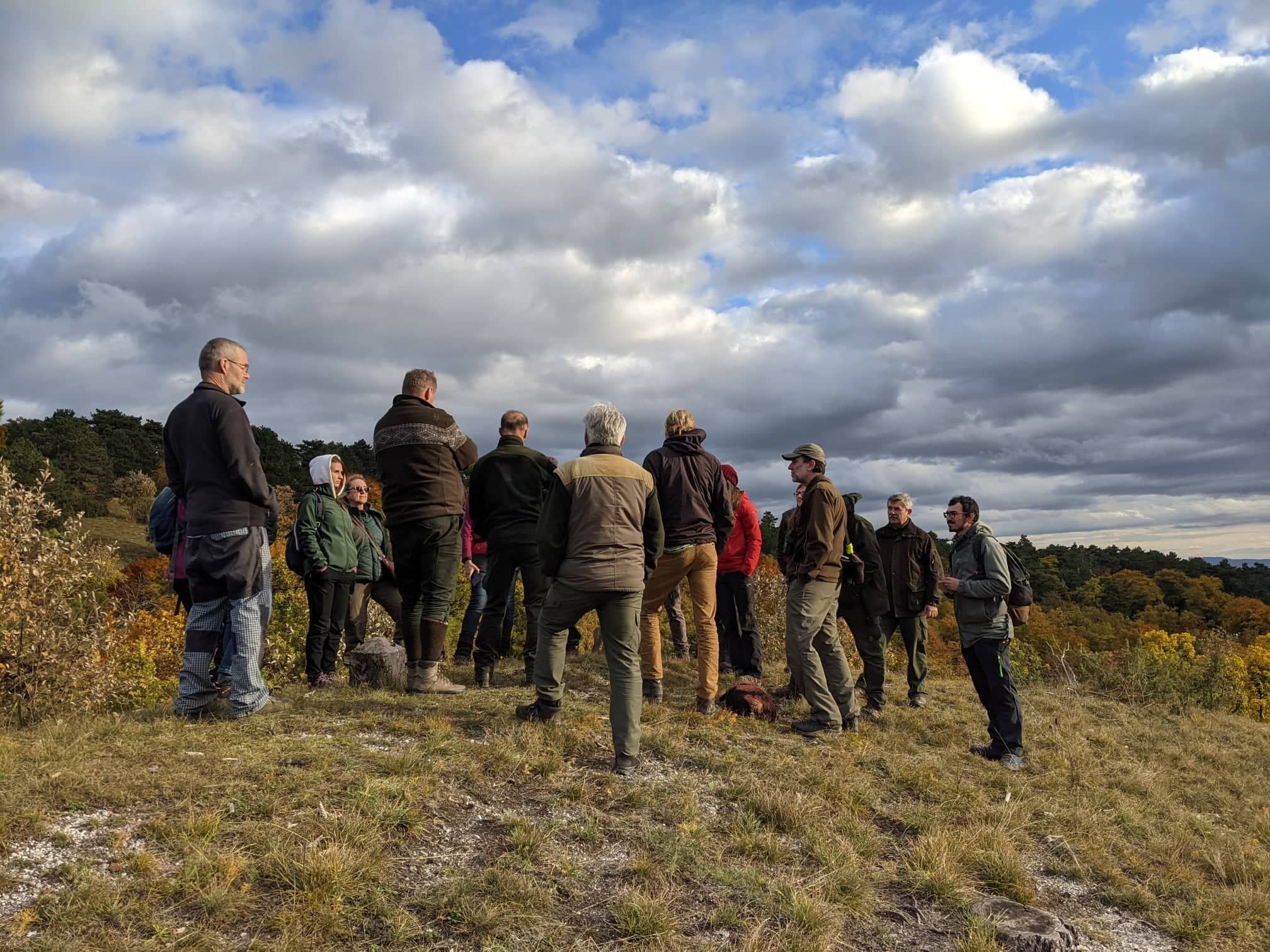
We organized a forestry excursion
At the end of last week, within the LIFE endemic PANALP project, we prepared a two-day field trip to the Duchonka forest administration, where we invited employees of the State Nature Conservancy of the Slovak Republic from the Záhorie Protected Landscape Area, Small Carpathians Protected Landscape Area, Ponitrie Protected Landscape Area and foresters from Lesy SR .
Project title: Conservation of endemic species and dry grassland habitats in the contact zone of Pannonian and Alpine bioregions
Project scheme: LIFE+, Nature and Biodiversity
Project acronym: LIFE endemic PANALP
Project code: LIFE19 NAT/SK/000895
Duration: 01/09/2020 – 28/02/2027
Budget: 5,279,511 Euro (75 % EU financial contribution)
The project is co-financed by the state budget of the Slovak Republic through the Ministry of Environment of the Slovak Republic.

Project focus: The main goal of the project is to improve the status of 3 priority habitats of European importance, 6 species of plants of European importance (of which 5 endemic) and 5 species of insects of European importance at 17 sites of the NATURA 2000 network in Slovakia and 7 sites in Hungary. At present, the project sites are threatened by overgrown trees and expansive grasses, as well as plantings and the spontaneous spread of non-native species, due to the abandonment of traditional management. Target species populations are often small and fragmented.
Through appropriate management measures, the project will significantly contribute to the construction of the NATURA 2000 network in Slovakia, to the improvement of its functionality and the preservation of the natural heritage of the regions of Slovakia. In addition to improving the condition of the habitats in question, the aim of the project is to ensure sustainable care for the restored areas and to restore ecosystem services. A substantial part of the project’s activities will be implemented in cooperation with local farmers and communities, which will also bring significant socio-economic benefits and contribute to job creation in the regions.
Specific goals:
- Restoration of grassland habitats 6210 *, 6240 * (in Hungary also habitat 6190) and securing of long-term care for them
- Improving the state of habitats and populations of Dianthus praecox lumnitzeri in Slovakia
- Improving the state of habitats and populations of Tephroseris longifolia moravica in Slovakia
- Improving the habitat and population of Crambe tataria in Hungary
- Improving the state of Ferula sadleriana habitats and populations in Hungary
- Improving the status of habitats and populations of Linum dolomiticum in Hungary
- Improving the state of Vincetoxicum pannonicum habitats and populations in Hungary
- Improvement of habitats and invertebrate populations Cerambyx cerdo, Eriogaster catax, Maculinea arion, Parnassius mnemosyne and Parnassius apollo in Slovakia
Crambe tataria
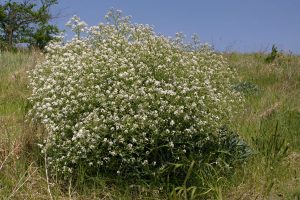
Steppe species, so-called “Steppe runner” reaching the western edge of its area in Pannonia. Endangered due to the decline of traditional management and overgrown sites. Target species in Hungary.
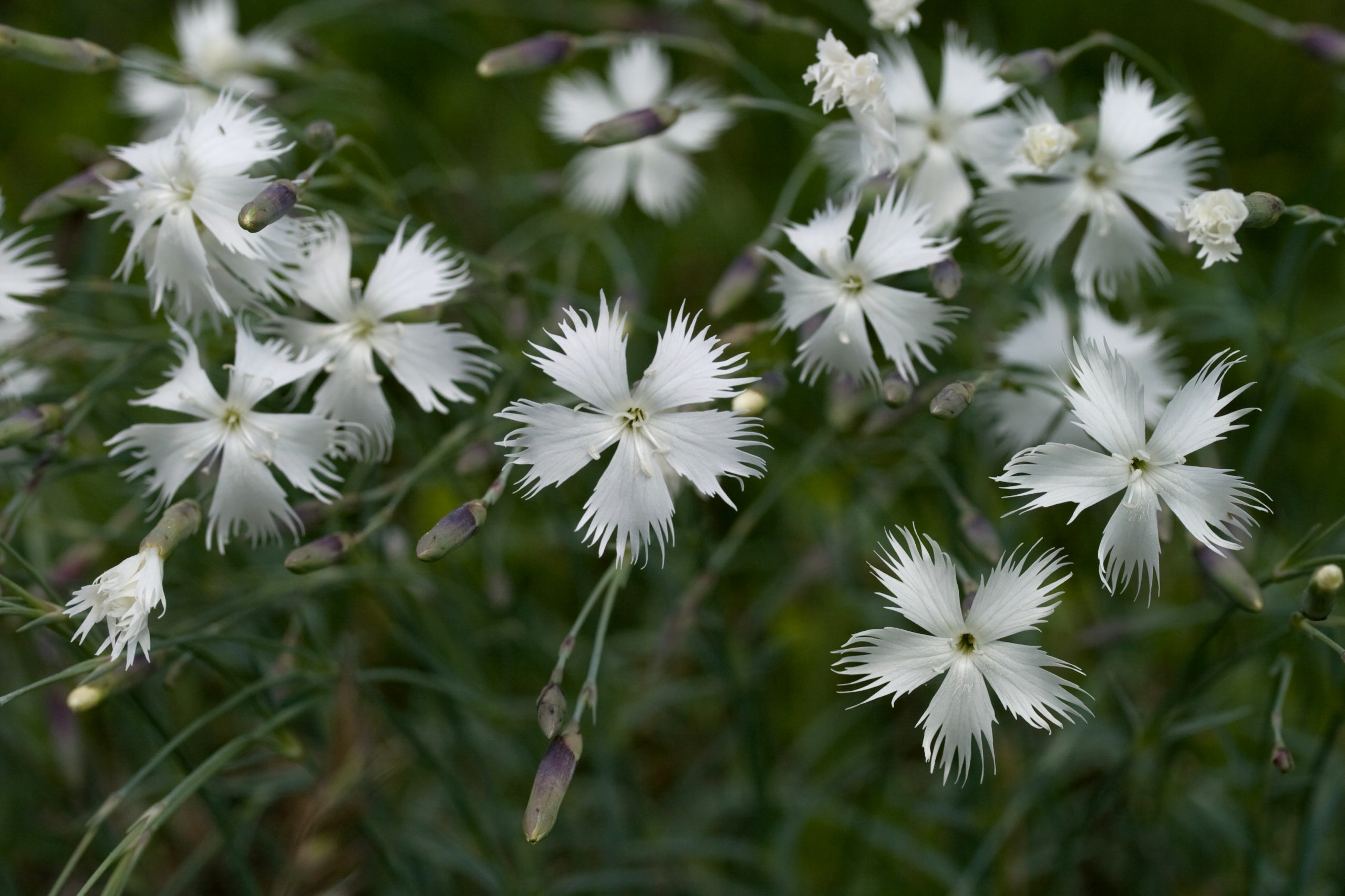
Dianthus praecox subsp. lumnitzeri
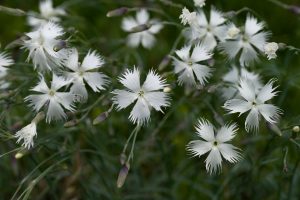
(c) Marián Mokráň
Endemic species widespread on rocky steppes on limestones, dolomites and volcanics in western Pannonia and in the foothills of the Carpathians. It is endangered especially by overgrowing of localities and the plantings of non-native trees. Target species in Slovakia.
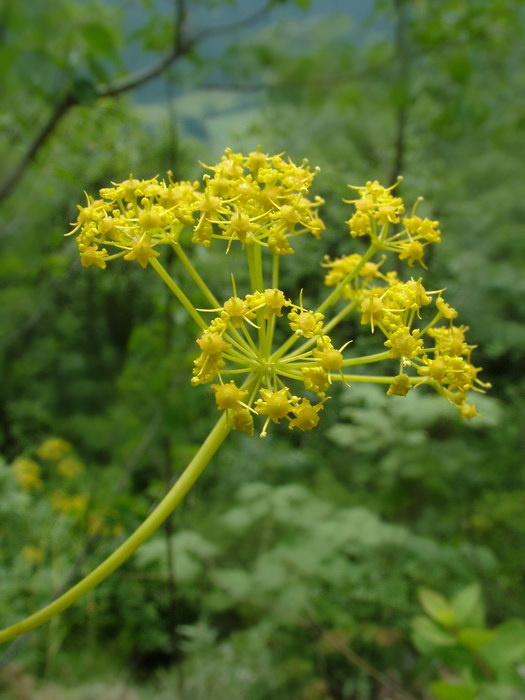
Ferula sadleriana
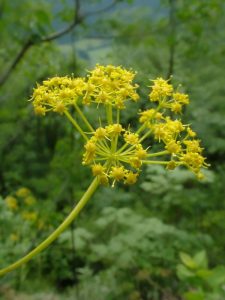
(c) Róbert Šuvada
Pannonian endemic and relict, one of the rarest plants in Europe. The locality is threatened by mass tourism and the bite of numerous mouflons. The project covers 90% of the species’ population. Target species in Hungary.
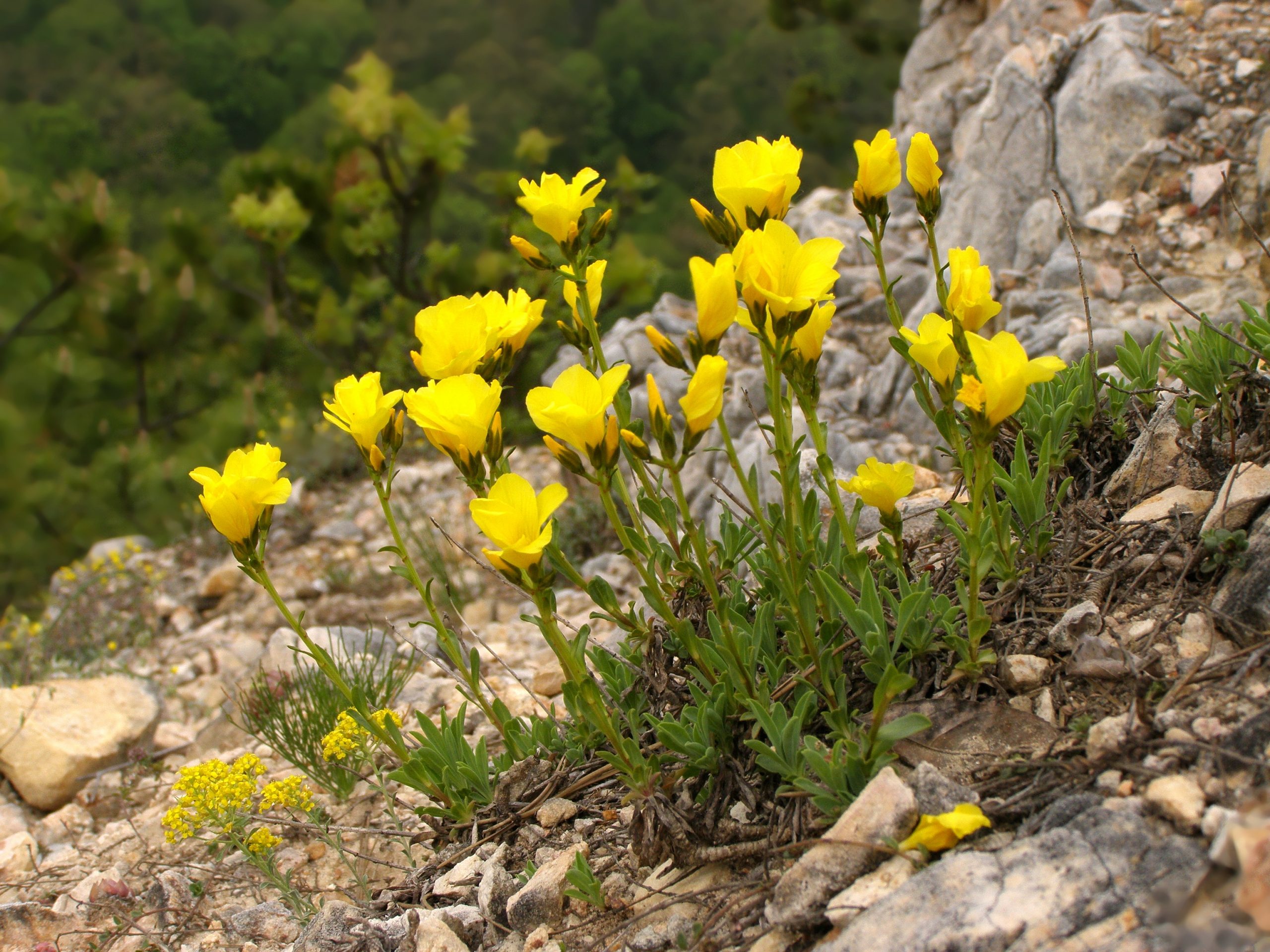
Linum dolomiticum
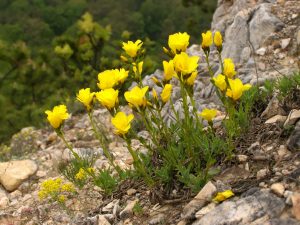
Endemic and pre-glacial relic with a limited occurrence of about 140 ha in the Szénás hills in Hungary. There has been recorded a downward trend in population size. The locality is threatened by trampling by visitors, damage by game and overgrowth by non-native black pine.
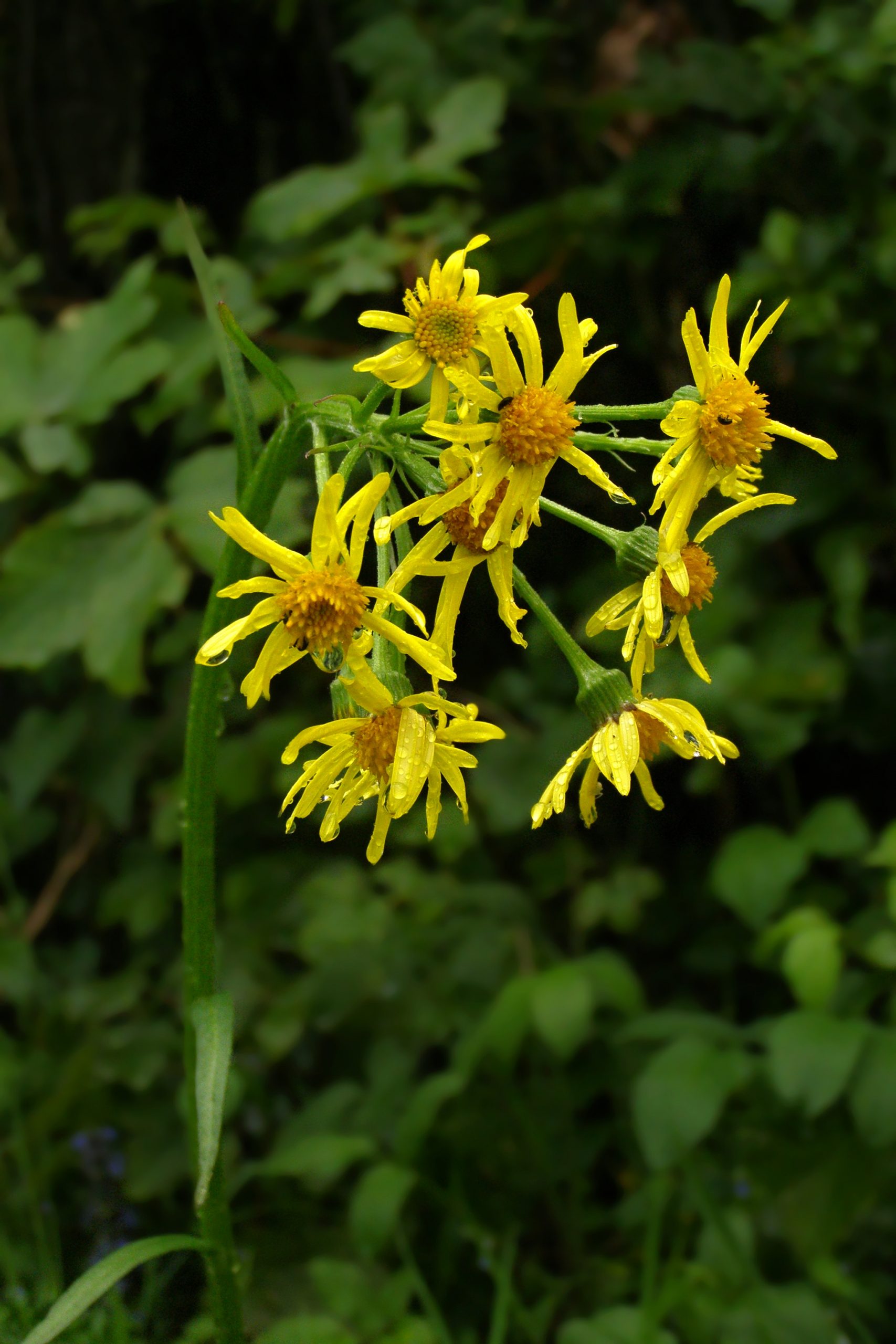
Tephroseris longifolia subsp. moravica
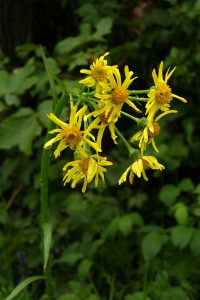
West Carpathian endemic with a small area and link to mowed meadows and forest edges, usually in steep or other not so accessible localities. Populations are declining and are threatened by the extinction of traditional farming, overgrowing of sites with woods, and partly by animal bites.
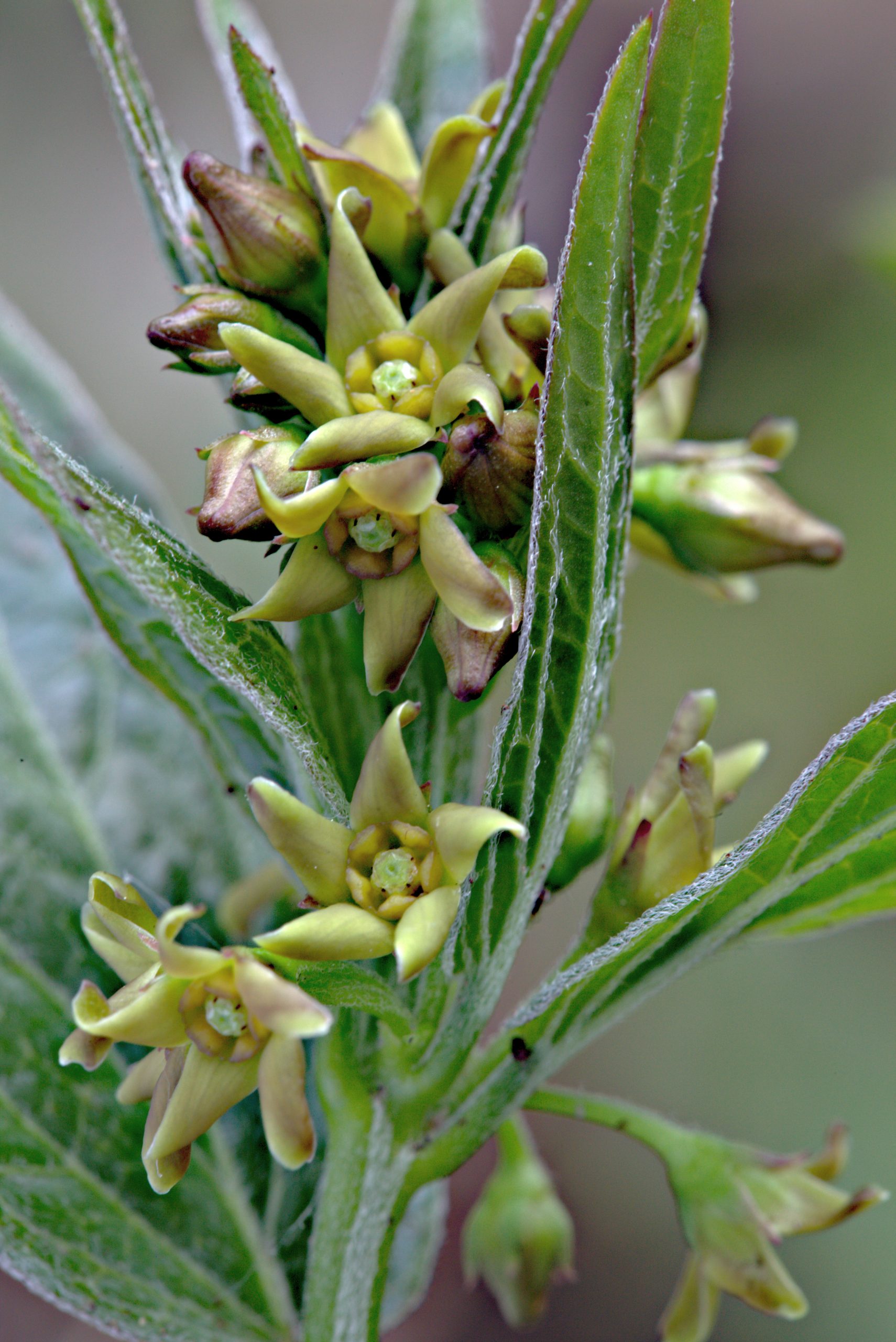
Vincetoxicum pannonicum
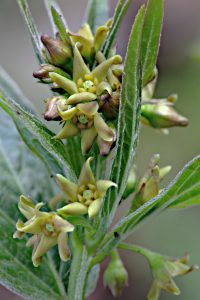
(c) Bérces Sándor
Pannonian endemic, the project will cover all of its sites in the three territories of European importance in Hungary. It is endangered by visitors, motorcyclists and overgrown sites with non-native black pine.
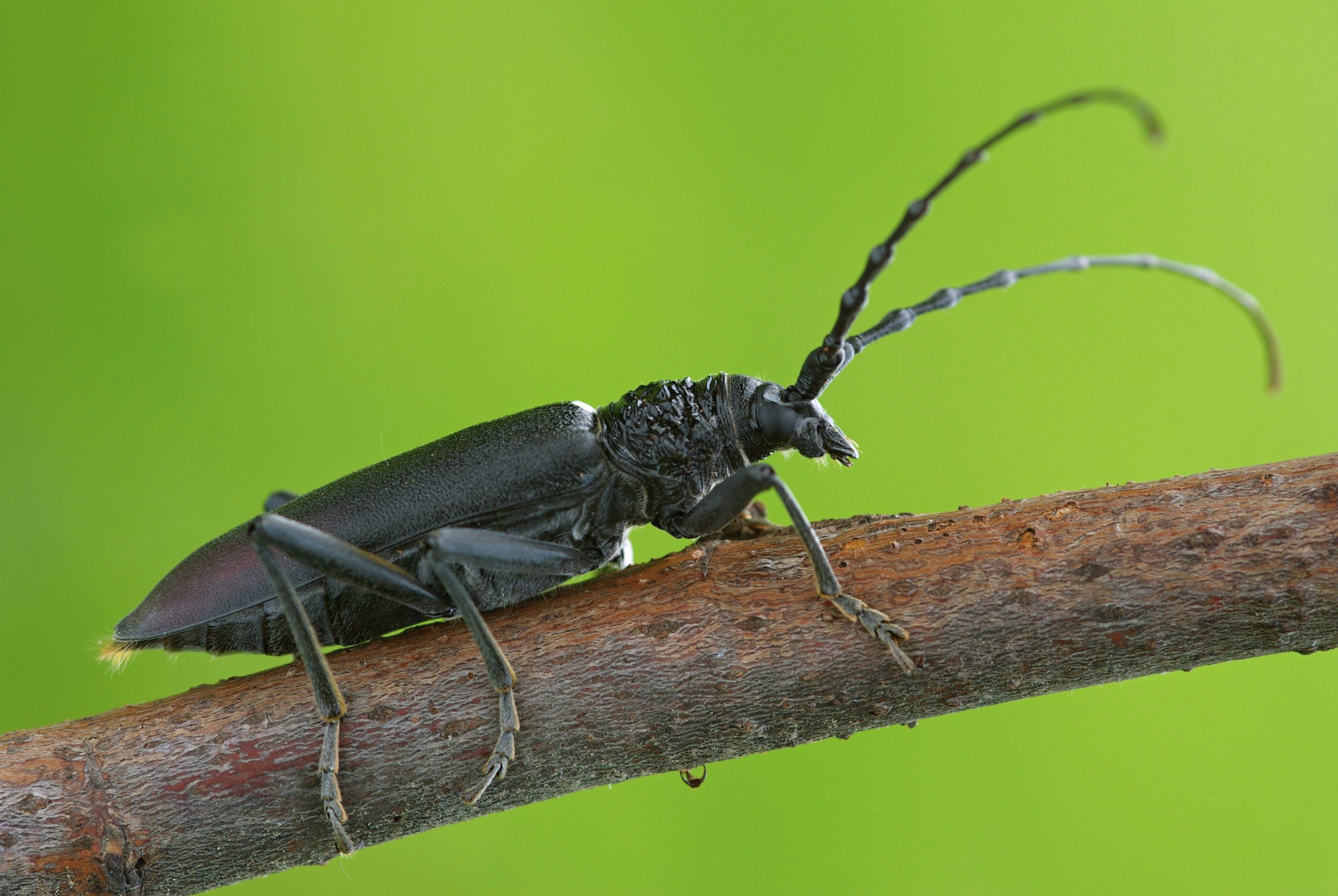
Great capricorn beetle – Cerambyx cerdo
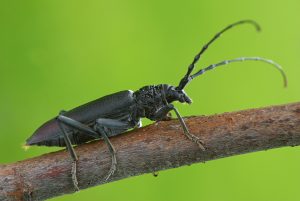
(c) Ivan Klučiar
A species tied to old solitary dazzled oaks. Its habitats are disappearing due to the overgrowth of former pastures and the planting of non-native tree species (black pine). One of our biggest bugs. Males have very long tentacles – their length is greater than the rest of the body.
Eastern eggar – Eriogaster catax
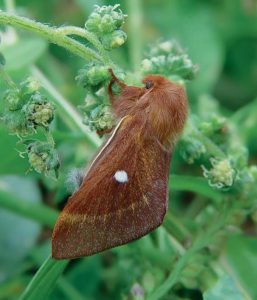
(c) Martin Jagelka
A species tied to a sparsely bushy slope and forest edges in lower, warm locations. It is especially threatened by overgrowing of localities due to the abandonment of grazing. Adult butterflies are active at night, but their presence can be detected by typical larval nests. Larvae are most common on sloes, hawthorns and wild pears.
Large blue – Maculinea arion
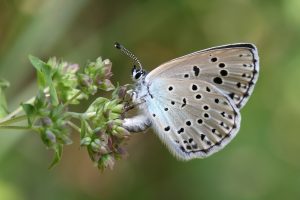
(c) Viliam Ridzoň
A species associated with dry extensively grazed steppe grasslands with scattered shrubs. It is threatened by overgrowing of habitats due to the abandonment of grazing and planting of non-native trees (black pine). The larvae are tied to the flowers of the Breckland thyme and oregano. They complete their development in the nests of ants (so-called myrmecophilia).
Mountain Apollo – Parnassius apollo
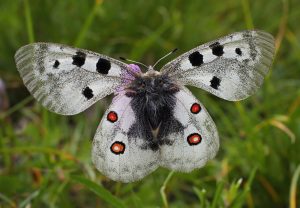
A species associated with the southern slopes with eroded, rocky areas with the occurrence of stonecrops. It is threatened by overgrowing of sites due to abandonment of grazing and secondary succession, as well as plantings of pines and other trees.
Clouded Apollo – Parnassius mnemosyne
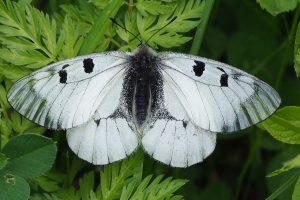
(c) Pavol Kolárik
A species of mesophilic and drier grassland habitats and pastures on the edges of forests and forest meadows. It is threatened by the extinction of small forest meadows, overgrowth of forest edges with shrubs and planting of conifers.
Target habitats
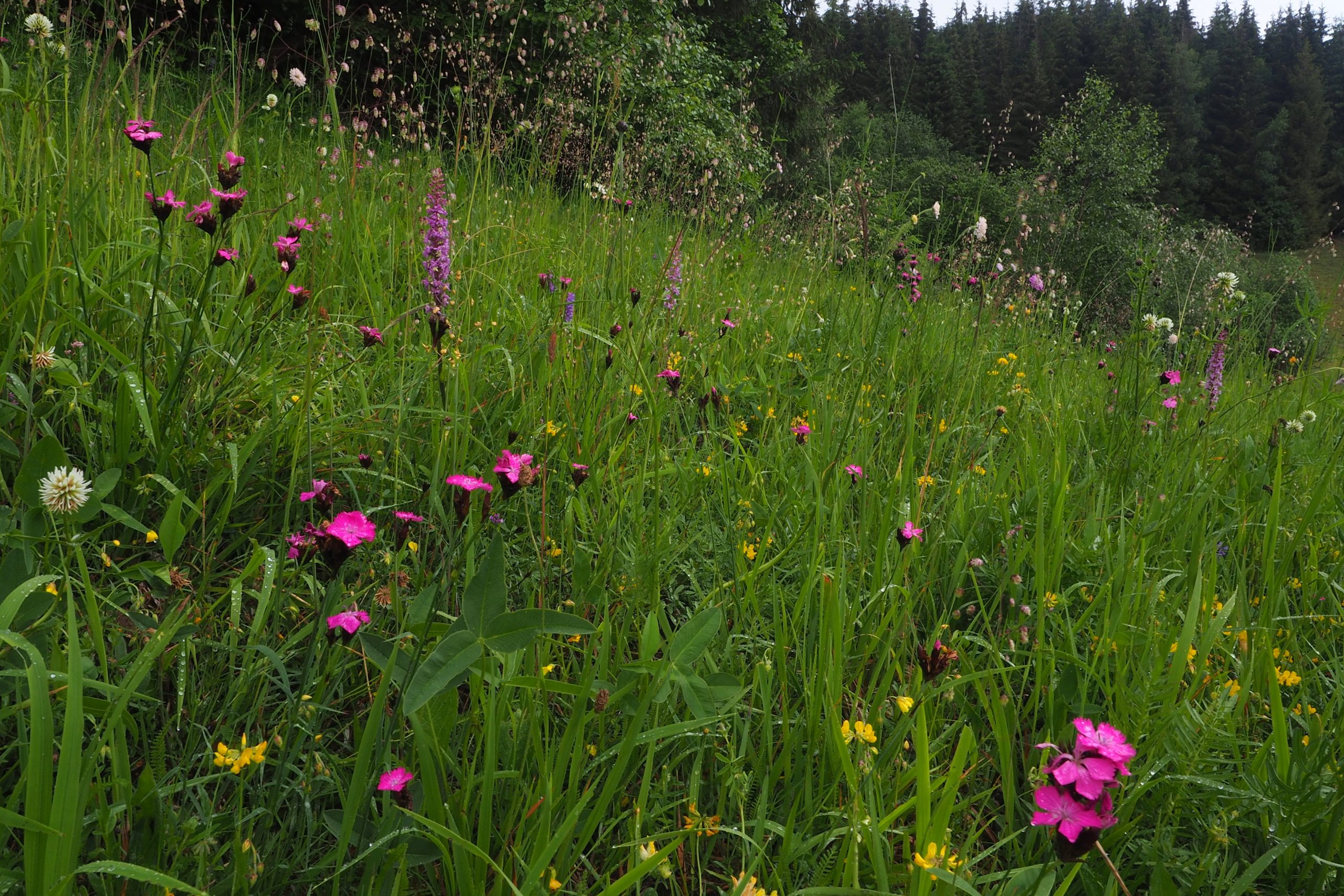
6210* – Seminatural dry grasslands and scrubland facies on calcareous substrates (*Important orchid sites)
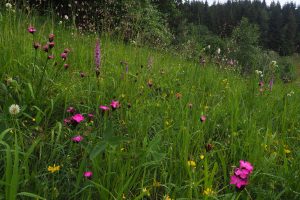
Very diverse communities with a dominance of thermophilic, xeromezophilic species of broadleaf grasses, sedges, perennial herbs, shrubs and semi-shrubs. Many localities are significant for the occurrence of species from the Orchidaceae family. In recent decades, these habitats have been gradually declining due to the cessation of traditional use, overgrown with shrubs, or monocultures of pines and other trees have been planted on them. Due to the great biodiversity of these communities, the occurrence of rare and biogeographically important species, it is necessary to maintain their sufficient representation and connectivity in the country. As relatively nutritious pastures, they are also of economic importance.
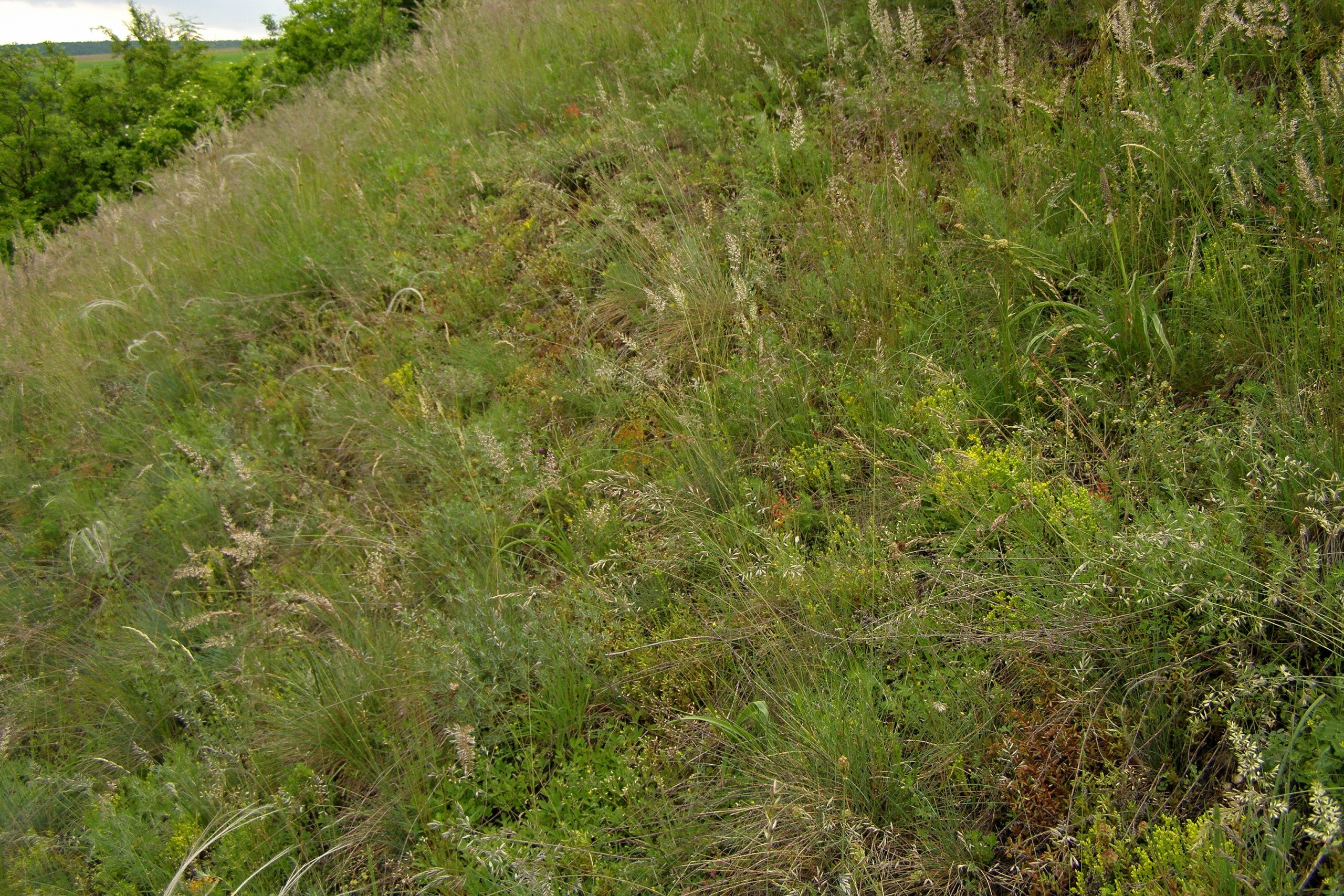
6240* – Sub-Pannonic steppic grasslands
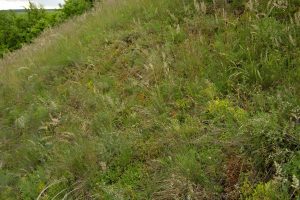
Xerophilic lawns with a predominance of narrow-leaved skeletons, perennial thermophilic herbs, shrubs, semi-shrubs and numerous spring-flowering terophytes. Typical steppe communities at the foot of the Carpathians and in Pannonia linked to drier and warmer areas or shallower and drier soils than communities of habitat type 6210 *. Due to the abandonment of grazing, secondary succession and planting of wood – often non-native black pine, habitats of these communities are gradually disappearing. They are a habitat for many rare species of plants and animals.
6190 – Rupicolous pannonic grasslands

Rocky steppe communities on limestones and especially dolomites with the occurrence of dealpine (mountain) plant species, as well as a representation of various endemic species. As less productive, rocky habitats have often been planted with Scots pine, black pine and manno ash, which has severely damaged many sites. This habitat is targeted in the project only in Hungary.
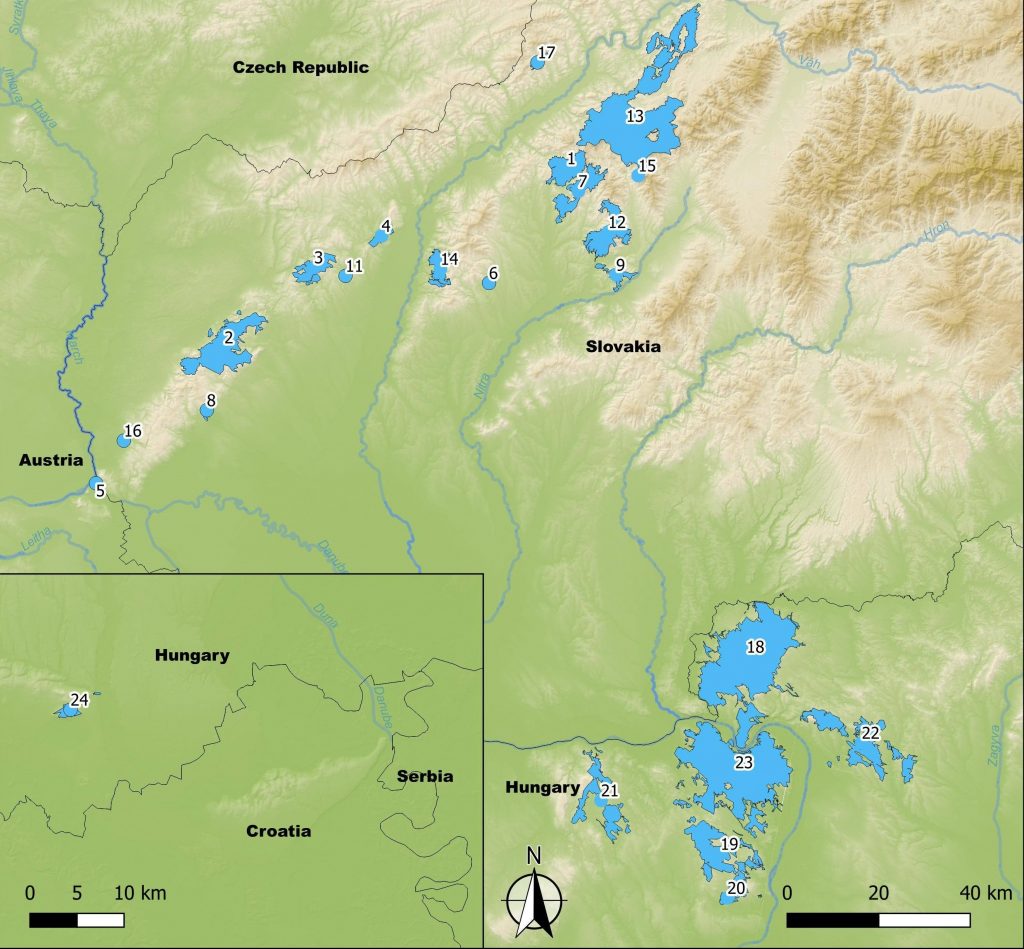
| ID | Názov ÚEV |
| 1 | Baske |
| 2 | Biele Hory |
| 3 | Brezovské Karpaty |
| 4 | Čachtické Karpaty |
| 5 | Devínska hradná skala |
| 6 | Dolné lazy |
| 7 | Kňazí stôl |
| 8 | Modransko-tŕňanské pustáky |
| 9 | Nitrické vrchy |
| 10 | Omšenská baba |
| 11 | Orlie skaly |
| 12 | Rokoš |
| 13 | Strážovské vrchy |
| 14 | Tematínske vrchy |
| 15 | Temešská skala |
| 16 | Vrchná hora |
| 17 | Vršatské bradlá |
| N1 | Hrehorkové |
| N2 | Závlačná |
| N3 | Drietomské bradlo |
| 18 | Borzsony |
| 19 | Budai hegység |
| 20 | Budaorsi kopárok |
| 21 | Kozponti-Gerecse |
| 22 | Nyugat-Cserhát és Naszály |
| 23 | Pilis és Visegrádi-hegység |
| 24 | Szársomlyó |
Activities:
A. Preparatory actions
A1 Expert study on the ecology and optimal management of Linum dolomiticum
A2 Expert study on restoration and long-term management of dry grassland habitats in Slovakia
A3 Obtaining technical documentation and necessary permissions for infrastructure for action C3
B. Purchase/lease of land and/or compensation payments for use rights
B1 Land purchase and long-term lease
C. Conservation actions
C1 Restoration management of target species and target habitats
C2 Reintroduction of extensive grazing
C3 Diverting the pressure of mass tourism and game from target species
C4 Propagation of target species on project sites
C5 Restoration of stepping stone habitats for target insect species
D. Monitoring of the impact of the project actions
D1 Monitoring of project impact on target species and habitats
D2 LIFE performance indicators monitoring
D3 Assessment of project impact on ecosystem services
D4 Assessment of projects socio-economic impacts and impact of dissemination actions
E. Public awareness and dissemination of results
E1 Awareness raising – public
E2 Awareness raising – key stakeholders
E3 Replication toolkit
E4 Networking and policies
E5 Developing of volunteer involvement
F. Project management
F1 Project management and reporting
F2 Project bookkeeping, financial management and auditing
F3 After-LIFE plan
On this page, you will find a summary of the project’s results achieved so far. In addition to the necessary preparatory, monitoring, and administrative activities, we have so far been able to carry out a large number of specific practical conservation actions (activities C and E). You can view an overview of the implemented activities at project sites on an interactive map, and in summary for each activity in the text below.
C.1 Restoration management of target species and target habitats
C.1.1 Selective removal of (non-native) tree plantations (Pinus nigra, P. sylvestris, Fraxinus ornus):
– the activity is mainly taking place in the Tematín and Strážov Mountains, where we have already restored a total of 40 ha of valuable steppe and pasture habitats,
– in Hungary, selective pine removal has so far been carried out on more than 100 ha.
C.1.2 Removal of undesirable shrubs and pioneer trees and restoration of grassland habitats
– the work has already been carried out and is ongoing at more than 15 sites, especially in the SACs Strážov Mountains, Temeš Rock, Baske, Omšenská Baba, Vršatec Cliffs, and Brezovské Carpathians, totaling over 100 ha,
– in Hungary, this activity was carried out within activity E.5 with volunteers at the project sites Budaörs, Pilis-tető, and Nagy Szénás on an area of approximately 30 ha so far.
C.1.3 Removal of invasive alien species:
– in Slovakia, several important sources of invasive trees have been identified and either removed or injected over an area of about 12 ha, mainly at project sites in the Little Carpathians. These included Ailanthus altissima, Robinia pseudoacacia, and Fallopia japonica,
– in Hungary, tree injection was carried out from June 2022 to October 2023, with 39 ha treated across two project areas – Rád and Budaörs.
C1.4 Planting of native trees on extreme dolomite habitats to create suitable microclimate and habitat conditions for *Linum dolomiticum:
– the activity is being implemented by DINPD staff and started in October 2022, and is expected to be successfully completed by the projected final date.
C.2 Restoration of extensive grazing
– in total, we have so far restored grazing on more than 240 ha in the Little and White Carpathians and the Strážov Mountains, with additional sites being prepared for grazing restoration in the final years of the project,
– the success of this activity (the minimum target of 60 ha has already been exceeded by 180 ha) has a highly positive impact on target habitats, species, and biodiversity as a whole. The restoration of pastures also brings significant socio-economic benefits to local farmers, with whom we are jointly restoring grazing, and improves awareness and the positive perception of nature conservation and the European Union in rural communities.
C.3 Diverting the pressure of mass tourism and game from target species
C3.1 Diverting the tourism pressure from *Ferula sadleriana:
– in Hungary, PP agreed with DINPD on final plans regarding the investment in building a viewing platform at the Pilis site, which was completed in 2025.
C3.2 Diverting the tourism pressure from *Linum dolomiticum:
– in 2023, a tourist shelter was built below Nagyszénás Hill, and in 2024, an educational trail was renovated.
C3.3 Diverting the pressure of game from target species in Hungary:
– at the Gerecse site, fences were repaired or newly built.
C3.4 Diverting pressure of game from Tephroseris longifolia ssp. moravica:
– protective enclosures for the endemic Moravian fleawort were placed in numbers of 70–90 at the Vršatec Cliffs and Omšenská Baba sites. Browsing by game, whose populations are currently extremely high, would otherwise have a very negative impact on both populations.
C.4 Propagation of target species on project sites
– in Slovakia, sowing plots of Tephroseris longifolia subsp. moravica were established at the SAC sites Vršatec Cliffs and Omšenská Baba,
– in Hungary, an external expert was contracted until 2026 for the sowing of Linum dolomiticum, Vincetoxicum pannonicum, Crambe tataria, and Ferula sadleriana. The first research report was submitted in December 2023.
C.5 Restoration of stepping stone habitats for target insects species
– for this action, many suitable locations were identified during the first years of the project by the project team and experts while preparing study A.2. Given the limited budget for this action, we are gradually selecting sites with the highest conservation value,
– for the conservation of Parnassius mnemosyne (Clouded Apollo butterfly), stepping stones have been restored at the Molpír, Horná Pustá Ves, and Krasín sites; for Parnassius apollo (Apollo butterfly) at Klapy, Babiná, and Mokrá Skala; and for Phengaris arion (Large Blue butterfly) in the Rajecká Valley and Beckovské Skalice.
E. Public awareness and dissemination of results
E.1 Public awareness raising:
– we created a project communication plan that is regularly updated according to current needs, and launched the project’s website, which is also regularly updated; project results are communicated through the social media channels of the project partners,
– more than 50 articles about the project have been published in online and print media, and 2 press releases have been issued,
– 17 information panels were installed on restored sites in Slovakia and another 8 by project partners in Hungary,
– we have prepared and are distributing various promotional materials about the project, such as T-shirts, canvas bags, herbal teas, chocolates, and pens,
– we organized 16 excursions for nearly 400 representatives of the local public and students, and presented the project through public lectures and information stands.
E.2 Awareness raising – key stakeholders:
– we have held dozens of personal meetings with land managers and owners,
– we organized 2 seminars for farmers focused on agricultural subsidies and environmentally friendly livestock deworming,
– we organized field seminars on the removal of invasive trees with foresters and state conservationists.
E.3 Replication toolkits:
– we selected groups of experts and contact persons to provide information and share best practices for management benefiting the restoration of non-forest habitats,
– we held consultations with 5 entities that subsequently carried out activities similar to the project’s in other areas of Slovakia (Kysuce, Ponitrie) on their own initiative, and further consultations are ongoing,
– we organized 2 field workshops for nature conservation stakeholders focused on grassland habitat restoration.
E.4 Networking and policies:
– we held numerous meetings with organizations with similar aims,
– we co-organized the For a Living Landscape campaign, which led to improved settings of the Common Agricultural Policy rules for 2023–2027 in Slovakia,
– we participated in the development of forest management plans in project areas to improve protection of target habitats, contributed to the expansion of the Natura 2000 network, and helped the Bratislava City Museum and two private companies set better grassland management practices.
E.5 Developing of volunteer involvement:
– in Slovakia, we organized more than 40 volunteer events focused on various conservation activities (mowing, raking, removing branches), during which participants learned about the importance of active management of valuable non-forest habitats,
– we organized the international conservation mission Apollo 11, with more than 70 volunteers from Slovakia, the Czech Republic, and France participating at the Vršatec Cliffs and surroundings, as well as Czech-Slovak conservation missions Apollo 24 and Apollo 25, with almost 100 volunteers from both countries in total,
– altogether, more than 900 participants have joined volunteer activities in Slovakia and Hungary.
A. Preparatory actions, elaboration of management plans and/or of action plans
A.1: Expert study on ecology and optimal management of Linum dolomiticum (Hungary):
– DINPI assembled a team of scientific experts studying the specific requirements of this extremely rare and sensitive species, ensuring that subsequent activities to halt its population decline are as effective as possible,
– based on their recommendations, DINPI acquired LIDAR layers for the entire Linum dolomiticum habitat and contracted a cenological expert in 2023,
– throughout the project, DINPI prepares annual reports on the conservation status of Linum dolomiticum, providing regular input for the expert team’s work.
A.2: Expert study on restoration and long-term management of dry grassland habitats in Slovakia:
– the study is completed and describes in detail the priority sites and suitable management for their restoration within the project areas in Slovakia,
– in addition, it includes a list of so-called “stepping stone” sites and three areas outside the project sites (SACs Hrehorkové, Závlačná, and Drietomské bradlo) that are particularly suitable for implementing project activities C.1 and C.2, and we have therefore requested their inclusion in the project.
A.3: Obtaining technical documentation and necessary permissions for infrastructure for action C.3 (Hungary):
– all necessary permits have been obtained,
– preparations also included obtaining official permissions for fieldwork related to habitat restoration, which were successfully secured, and activities proceed in accordance with the requirements of nature conservation authorities.
B: Purchase/lease of land and/or compensation payments for use rights
– in Hungary, DINPI purchased 14.7 ha of land suitable for project activities, thus fulfilling the project target,
– in Slovakia, leases were successfully concluded for land in the SACs Dolné Lazy and Vršatec Cliffs, where project activities C.1 and C.2 are being implemented, and negotiations with landowners for additional purchases and leases at other sites are ongoing.
D: Monitoring of impact of the project actions
D.1 Monitoring of project impact on target species and habitats:
– experts have been contracted, and all planned project monitoring is being carried out on selected restored or restoration-targeted areas.
D.2 LIFE performance indicators monitoring:
– LPI monitoring has been conducted regularly since the start of the project.
D.3 Assessment of project impact on ecosystem service:
– we have procured and contracted an external provider for this monitoring. The initial mapping and assessment of the current state of ecosystems and their services have been completed.
D.4 Assessment of projects socio-economic impacts and impact of dissemination actions:
– we have procured and contracted an external provider for monitoring and evaluating the impact of project activities. The design of expert interviews and online questionnaires for various public target groups was discussed and approved in spring 2022, with data collection taking place until August 2022.
F. Project management
– the mid-term project progress report was completed and submitted in May 2023,
– the project team has been fully assembled and is effectively working on the implementation of project activities.


For more information about project species, habitats, but also about means of their protection and management, eventually, if you plan to do something similar on other sites, you can consult with our colleagues:
Mário Duchoň, duchon@broz.sk, tel. number: 0915 165 677
Pavol Littera, littera@broz.sk, tel. number: 0948 177 555