



Imagine walking through the Slovak lowlands, hundreds of kilometers from the nearest sea, and coming across plants underfoot that belong on coastal beaches. Sounds impossible? The answer to this mystery lies in inland salt marshes (slaniská) – some of the most extraordinary and, at the same time, most endangered habitats in Slovakia and across Europe.
They form in places where soluble salts accumulate in the soil. When water depletion increases because evaporation exceeds rainfall, salt remains on the surface. Only specially adapted plants – halophytes – survive in this extremely salty environment. Here in the Danubian Lowland – Podunajsko, salt marshes were once full of life. Today, however, only small, isolated patches remain.
Soil plowing, the runoff of artificial nutrients from fertilizers, and especially the decline of traditional grazing have taken their toll, putting these rare salt marshes and the plants bound to them at risk. The significant drop in grazing is the most critical factor, as the area becomes overgrown with tall grass that literally smothers the rare salt-loving species.

Unexpected allies of valuable salt marshes? Grazing cows, sheep, and goats.
One of the subtle heroes facing complete extinction is the greater sea-spurrey (Spergularia media) – a critically endangered species that cannot survive anywhere outside of salt marshes.
At the BROZ conservation association, we decided to reverse this unfortunate fate. Our goal is to boost its population so that the plant can once again reproduce naturally and survive in the wild over the long term. We joined forces with botanists from the Institute of Botany of the Slovak Academy of Sciences (SAV), who cultivated these annual plants for us directly from seeds.
What followed was a hands-on rescue operation in the field:
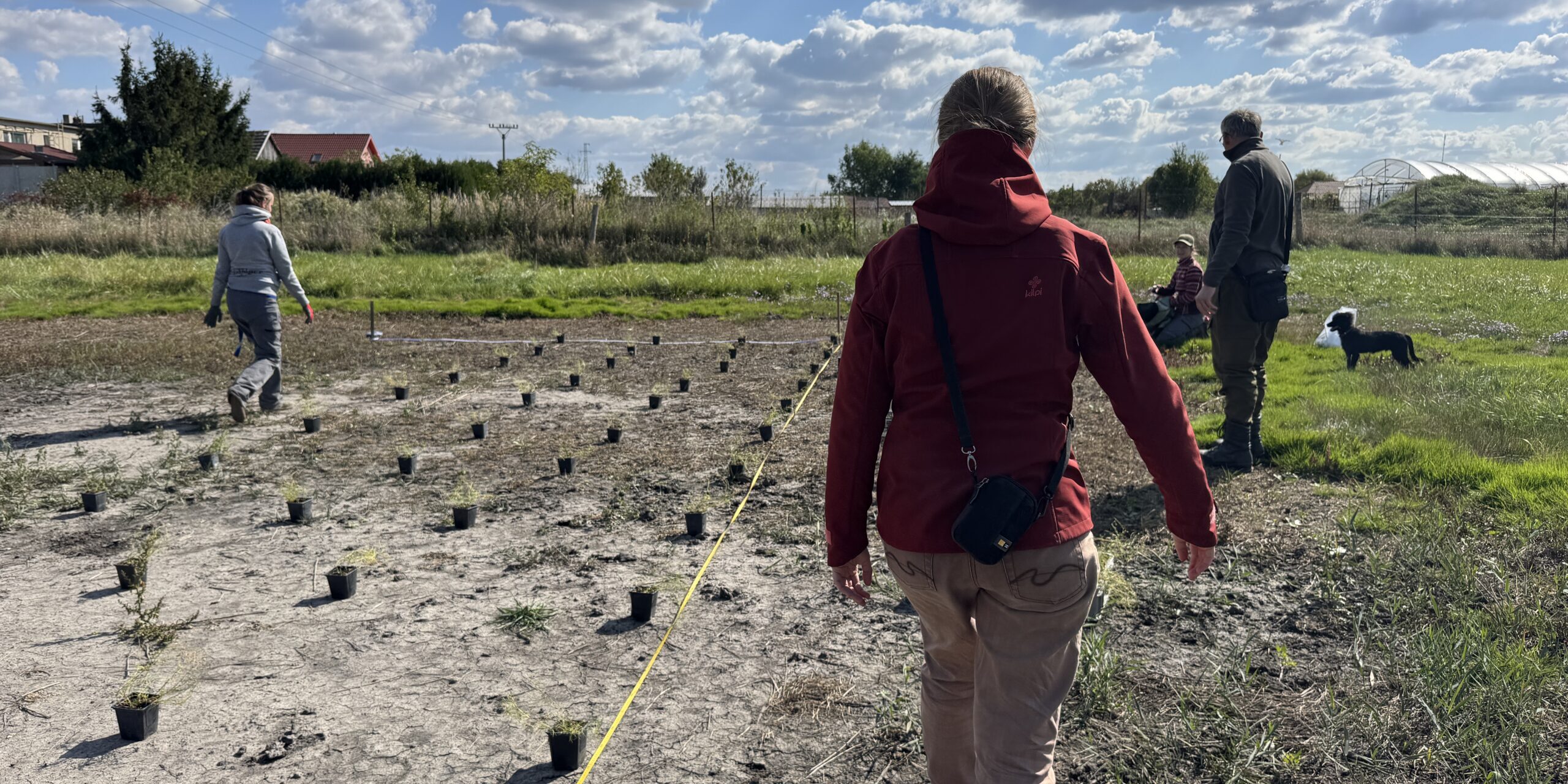
- First planting: Last October, we planted the first seedlings in the Panské lúky Site of Community Importance.
- Spring phase and seed sowing: In the spring of this year, we carried out several further rounds of planting and scattered seeds around the growing plants to help strengthen the soil seed bank.
- Comprehensive habitat restoration: To ensure the long-term success of the greater sea-spurrey, we are collaborating with farmers to implement traditional grazing management, and we are rehabilitating the hydrological regime.
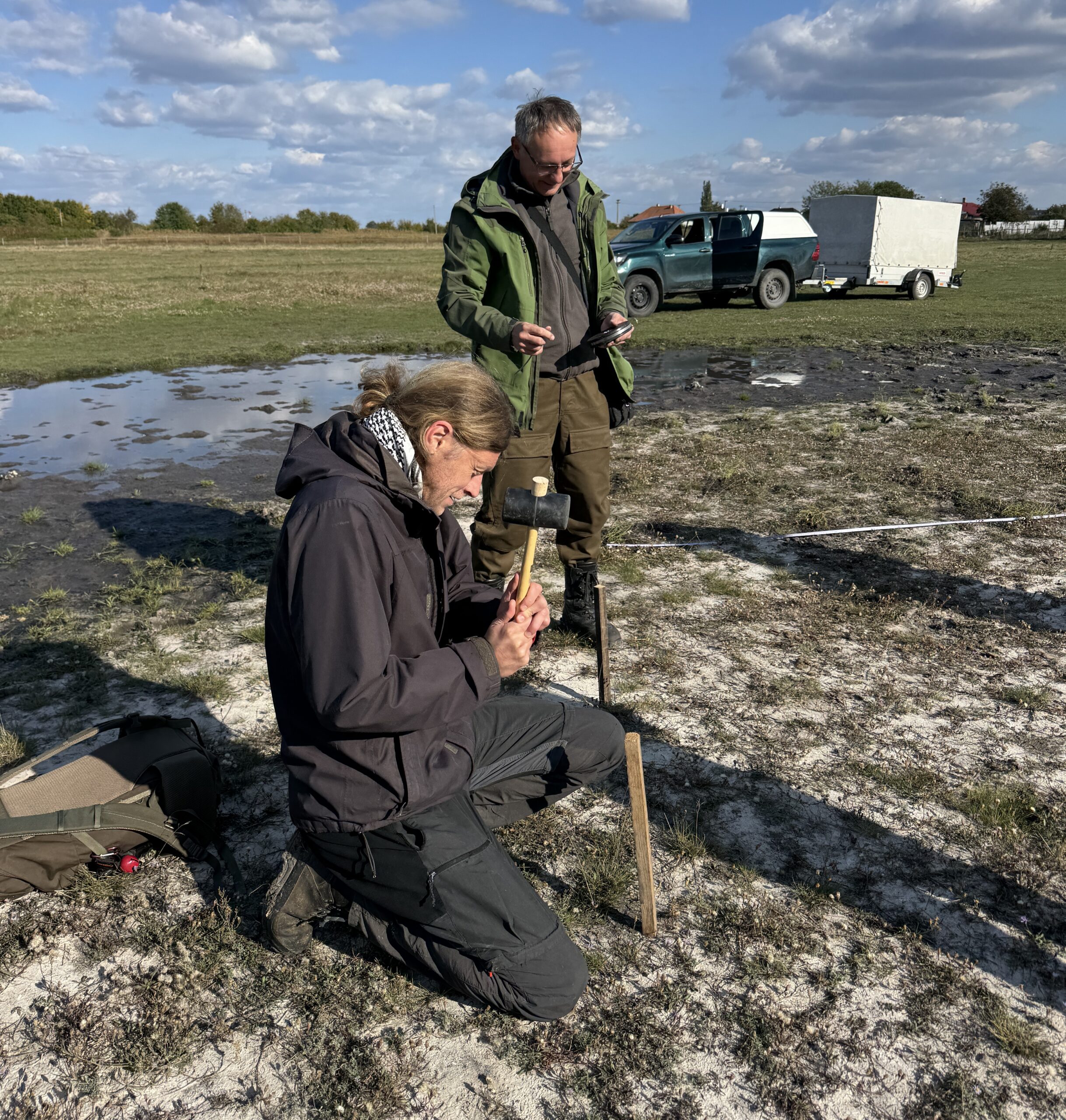
Results in numbers: A ten-fold reinforcement of the existing population
Together, we have taken a significant step toward the conservation of this species. Outplanting more than 280 seedlings boosted the local greater sea-spurrey population ten-fold, providing a critical opportunity for recovery. Over the next few years, we will carefully track seedling establishment and their long-term population sustainability.
We currently conduct routine monitoring to assess plant performance and apply appropriate habitat management to facilitate further growth.
Plants like the sea-spurrey and these salt marshes are literally the living memory of our landscape. They originated thousands of years ago under specific conditions during the retreat of ancient seas or climate shifts, and they are studied not only by biologists, but also by paleobotanists.
We are not stopping here! Encouraged by this success, we are pushing forward – later this year, we plan to plant other rare salt-loving species with unusual names: milk-vetches (kozince) and sea kales (katrány). Stay tuned!
