



LIFE21-NAT-SK-LIFE 4 STEPPE BIRDS/101074480
The aim of the project is the protection and restoration of habitats that represent potentially suitable habitats for selected ten bird species of European importance: black-tailed godwit, european roller, red-footed falcon, common redshank, garganey, lesser grey shrike, red-backed shrike, tawny pipit, scops owl, and pied avocet. The project areas are predominantly wet and dry steppe biotopes with shallow wetlands degraded either by intensive agriculture, inappropriate management or, on the other hand by the lack of appropriate management. Currently, unfavorable conditions of selected biotopes persist for a long time, which led to a decrease in the number of populations of selected bird species or their complete abandonment of habitats. The key objective of the project is to reduce the strong negative impact on the target species and their habitats by setting appropriate managements such as: restoration of extensive pastures, restoration of the water regime and wetlands, as well as the creation of nesting opportunities.

Co-funded by the European Union. Views and opinions expressed are however those of the author(s) only and do not necessarily reflect those of the European Union or CINEA. Neither the European Union nor the granting authority can be held responsible for them.
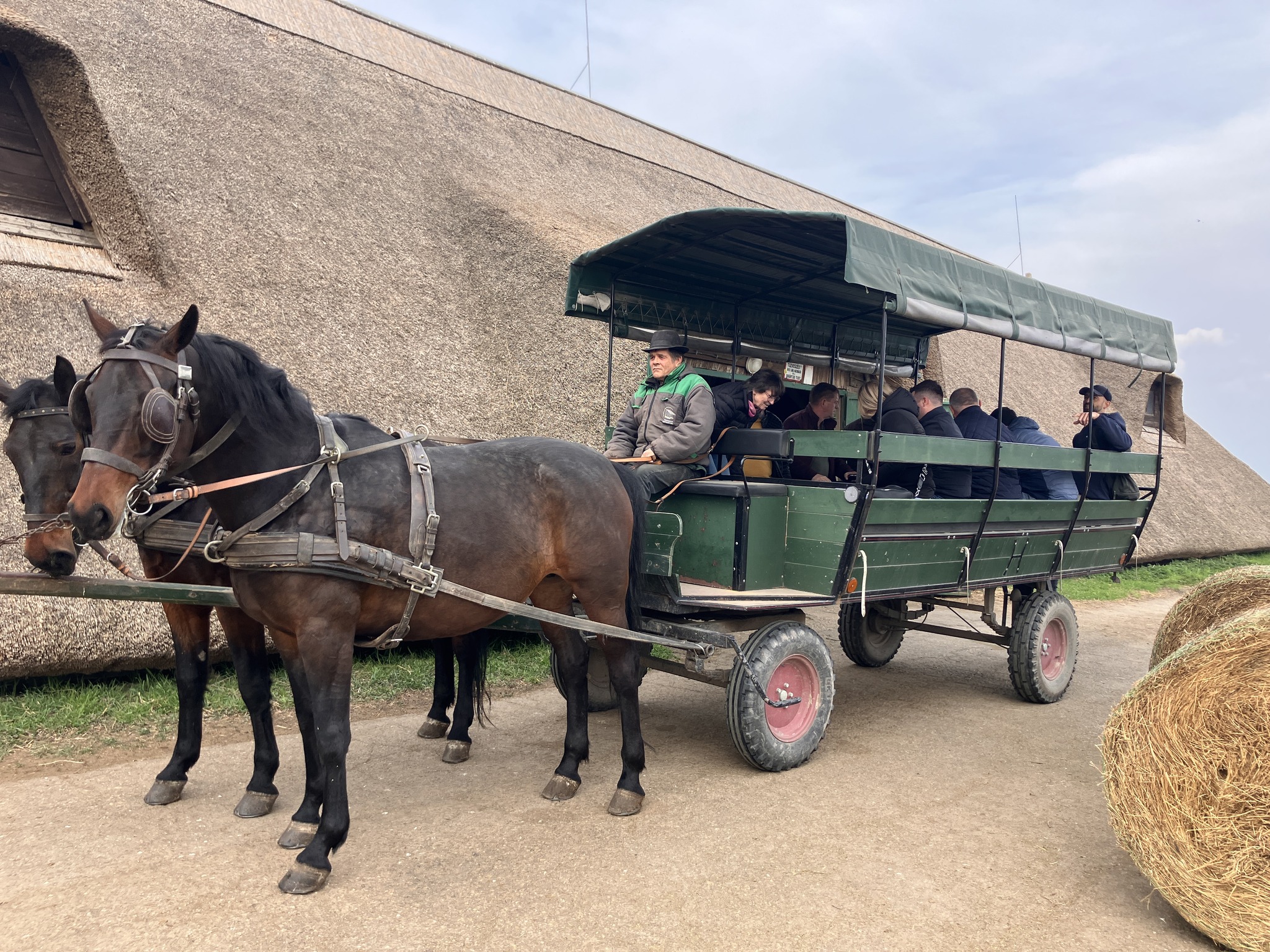
Inspiration from the Hungarian Puszta: Where Tradition and Organic Farming Protect the Land
Just across our border lies the unique region of Hortobágy, inscribed on the UNESCO World Heritage List. In April, we travelled there together with farmers and mayors from southern western and eastern Slovakia, to see firsthand what a successful integration of agriculture and nature conservation looks like in this iconic steppe landscape.

Pollarded Willows: The Traditional “Apartments” for Rollers and Falcons Need Our Help
In the open landscape of Slovakia's lowlands, where the LIFE Steppe Birds project operates, rows of ancient pollarded willows are truly irreplaceable. To us they are a beautiful part of the scenery, but for the European roller and the red-footed falcon, they are strategic sites for life itself. To ensure these trees continue to serve their purpose in 2026 and beyond, we need to give them their characteristic "crown".

The European Roller: A Species Once Facing Extinction in Slovakia Is Coming Back
The results of the 2025 breeding season came as a very welcome surprise. This year we recorded 38 territories and 36 breeding pairs, the highest number in the past quarter century! Thanks to systematic monitoring, we have now confirmed a positive trend in the number of breeding pairs for the fifth consecutive season. One of the most colourful birds in our landscape is making a remarkable comeback.

Spring migration brings rare black-tailed godwits
During their traditional migratory stopover, a flock of black-tailed godwits landed at the Ostrovik meadow in the SPA Senianske rybníky.

The European roller becomes Bird of the Year 2025
The European roller is the flagship species for nature conservation in Slovakia’s steppes—rare cultural landscape habitats whose fate lies in human hands. The future of this species and others like it depends on the actions of farmers, conservationists, and policymakers.

LIFE 4 STEPPE BIRDS at CEE InterLIFE Platform Meeting
From March 24–27, 2025, we participated in the CEE InterLIFE Platform Meeting in Balmazújváros, Hungary.

Join this year’s volunteer actions for steppe birds
SOS/BirdLife Slovakia invites you to take part in upcoming volunteer events within the LIFE 4 STEPPE BIRDS project focused on monitoring and helping steppe birds.

70 new nest boxes for rollers in eastern Slovakia
Currently, 70 new nest boxes are being installed on power line poles in the SPA Medzibodrožie area. The European roller didn’t nest in Slovakia for a full decade after 2010.

21st volunteer camp on Bird Island in the Danube floodplains
Last weekend, SOS/BirdLife Slovakia organized the 21st volunteer camp to mow Bird Island in the SPA Dunajské luhy. Despite the heat and hard work, 45 participants mowed and raked nearly the entire island.

A rare sighting: European roller near Bratislava!
The roller has appeared in western Slovakia—this time near Bratislava. This increases the chances of its return as a breeding species in the region. This is clear proof that our conservation activities, including those under LIFE 4 STEPPE BIRDS, are working.

Slovakia is the only country to bring back the roller
Among the countries where the European roller went extinct, only Slovakia has successfully brought it back. The LIFE 4 STEPPE BIRDS project plays a vital role in this story.

Roller spotted near Šoporňa during breeding season
A European roller was seen hunting above a biostrip near Šoporňa. The sighting during the breeding season shows there’s hope it could return as a nesting species—if we help with targeted conservation measures.

Red-footed falcon is Bird of the Year 2024
The red-footed falcon has been chosen by SOS/BirdLife Slovakia as Bird of the Year 2024 to raise awareness about the importance of its protection. These falcons travel over 7,000 kilometers from Africa to their breeding grounds—facing many dangers along the way.

We had the honor of participating in a discussion with European Commissioner for Environment, Oceans and Fisheries
We had the honor of participating in a roundtable discussion with European Commissioner for Environment, Oceans and Fisheries, Virginijus Sinkevičius, and fellow nature conservation NGOs at the Representation of the European Commission in Slovakia.

European Roller (Coracias garrulus) has returned to breed after being locally extinct for 10 years
Slovakia is the only country in Europe where the European Roller (Coracias garrulus) has returned to breed after being locally extinct for 10 years—thanks largely to dedicated conservation efforts.

Installing nest boxes
Installing nest boxes, artificial nests, and platforms is a well-established conservation practice supported by both science and experience. Across Europe and in Slovakia, such interventions have helped secure breeding sites for rare bird species that otherwise lack suitable natural options due to habitat loss or degradation.

Our summer volunteer camp has come to an end!
Despite the intense summer heat, 39 dedicated volunteers—members and supporters—joined us once again to lend a hand. A heartfelt thank you to everyone who contributed under such challenging conditions.

Networking at Hortobágy
We exchanged knowledge with experienced colleagues from the administration of the Hortobágy National Park and NGO: Hortobágyi Környezetvédelmi Egyesület-Hortobágy Environmental Association.

Launching the LIFE 4 STEPPE BIRDS Project!
"LIFE21-NAT-SK-LIFE 4 STEPPE BIRDS: Conservation and Return of Steppe Bird Species to the Lowlands of Slovakia" is the name of our newest LIFE project, which sets ambitious conservation goals and will help reverse the poor protection status of bird species by restoring traditional land management and grazing practices.
Basic information about the project
Project Title: Conservation and Return of Steppe Bird Species to the Lowlands of Slovakia
Project Scheme: LIFE+, Nature and Biodiversity
Project Acronym: LIFE 4 STEPPE BIRDS
Project Code: LIFE21-NAT-SK-LIFE 4 STEPPE BIRDS/101074480
Duration: 1 December 2022 – 30 November 2028
Budget: Total budget for all partners: €6,657,659.55, of which EU co-financing: €4,460,630.00
Coordinating Beneficiary:
- SOS/BirdLife Slovakia
Associated Partner:
- BROZ – conservation association
Link to the Coordinating Beneficiary’s Website:
http://vtaky.sk/stranka/344-Ochrana-a-navrat-stepnych-druhov-vtakov-na-niziny-Slovenska.html
Link to the EC Project Page:


Project objectives
The LIFE 4 STEPPE BIRDS project focuses on the conservation and restoration of habitats that represent potentially suitable breeding sites for ten selected bird species of European importance. Five of these are priority species for the project’s objectives: European roller (Coracias garrulus), Red-footed falcon (Falco vespertinus), Common redshank (Tringa totanus), Black-tailed godwit (Limosa limosa), and Garganey (Spatula querquedula). The remaining five – Eurasian scops owl (Otus scops), Tawny pipit (Anthus campestris), Lesser grey shrike (Lanius minor), Red-backed shrike (Lanius collurio), and Pied avocet (Recurvirostra avosetta) – are listed in Annex I of the Birds Directive.
The project sites are mainly wet and dry steppe habitats with shallow wetlands, which have been degraded either by intensive agriculture, inappropriate management, or, conversely, by abandonment and lack of management. Many of these habitats are in an unfavourable state and are expected to deteriorate further without intervention. The main aim of the project is to introduce appropriate habitat management measures that will enable the return or significant population growth of the target bird species.
A key objective is to reduce the strong negative impact of human activities on the target species and their habitats—mainly through restoring extensive pastures, revitalizing wetland systems, creating suitable nesting opportunities, and increasing awareness and public support for the Natura 2000 network.
Specific Project Objectives
1. Restoration of habitats potentially suitable for the return of two target species: European roller (Coracias garrulus) and Black-tailed godwit (Limosa limosa)
The natural habitat of the European roller consists of a mosaic of agricultural landscape with grasslands, scattered trees, and river meanders. This type of landscape has nearly or completely disappeared from Slovakia. The last recorded breeding sites were in the Special Protection Areas (SPAs) Dolné Považie and Medzibodrožie. The project aims to restore grassland habitats and establish appropriate grassland management such as mowing, extensive grazing, and planting of scattered vegetation to recreate suitable conditions for the roller’s return. As rollers nest in tree cavities, and natural nesting sites are now scarce, artificial nest boxes will be used as a suitable substitute. Successful results from neighbouring countries (e.g., LIFE Roller – LIFE13_NAT/HU/000081) show promising potential for the roller’s reestablishment as a breeding species.
The nest boxes will follow the methodology developed under the LIFE Roller project and will be installed primarily in SPA Dolné Považie, where the roller is a qualifying species, and also in SPA Medzibodrožie, which has great potential to support a stable population after project implementation.
The Black-tailed godwit is among the most endangered target species in Slovakia and the EU. SPA Senianske rybníky likely represents the last suitable breeding site in the country. Its natural habitats include extensive wet meadows, grassy marshes, and peaty wetlands. Godwits nest on the ground, typically in grass tussocks in areas trampled by grazing animals. The project aims to connect the “Veľký rybník” pond (the site of the last godwit sightings) with the Chrenovka stream to improve habitat conditions. Knowledge exchange with experts involved in similar habitat restoration projects (e.g., LIFE Sodic Wetland System – LIFE21_NAT/HU/101074474) will support the success of this objective. The project will also promote eco-schemes as tools to establish biocorridors, boosting biodiversity and improving food availability for target species.
2. Reversing the population decline of the following target species: Red-footed falcon (Falco vespertinus), Common redshank (Tringa totanus), Garganey (Spatula querquedula), Eurasian scops owl (Otus scops), Tawny pipit (Anthus campestris), Lesser grey shrike (Lanius minor), Red-backed shrike (Lanius collurio), and Pied avocet (Recurvirostra avosetta)
These species depend on a mosaic agricultural landscape composed of grasslands, wet meadows, scattered vegetation, and areas managed by extensive grazing. Restoration and appropriate management of grasslands (mowing, grazing, planting scattered trees and shrubs) will provide suitable conditions for these birds to maintain or increase their populations. Promoting eco-schemes will also support the development of ecological corridors, enhancing overall biodiversity and food availability.
The project includes specific activities to stabilize the population of the Red-footed falcon, such as installing artificial nest boxes, providing nesting support material in known colonies, and setting up acoustic devices to play mating calls and encourage nesting.
3. Restoration of Grasslands
Due to the abandonment of many areas and lack of management, large areas have become overgrown with shrubs and invasive plant species, altering the ecological conditions. The project will purchase or lease priority areas suitable for habitat restoration, particularly those with high potential for the return of target bird species.
On overgrown sites, restoration management will include the removal of shrubs and invasive plants, followed by mulching and stump grinding. Restoration will only be carried out where long-term sustainable mowing or grazing is feasible. In some cases, establishing grazing infrastructure will be necessary, including fencing and the introduction of innovative Smart Eco Shepherd (SES) systems.
Ultimately, the project aims to restore 175 ha of grasslands, using seed mixtures rich in flowering grasses and herbs to support pollinators and improve ecosystem functioning.
4. Planting of Trees, Scattered Vegetation and Installation of Nest Boxes
Scattered vegetation is critical for many steppe bird species, providing nesting, perching, and feeding opportunities. The project will plant native trees and shrubs, particularly in degraded or intensively used agricultural areas, to reintroduce habitat structure and nesting opportunities.
Nest boxes will be installed for species like the European roller, Red-footed falcon, Eurasian scops owl, and shrikes, based on species-specific requirements. The combination of habitat restoration, artificial nesting support, and increased food availability aims to enable long-term population recovery of target species across project sites.
5. Increasing awareness among stakeholders and the public to prevent disturbance of target species
A Communication Plan will serve as the strategic document for all activities under this objective. A bilingual (SK/EN) website will be created, featuring essential information about the project, its budget, implementers, target species, sites, and activities. The project and its milestones will be promoted in the media. Key in-person meetings will be held with authorities, stakeholders, and local leaders; field excursions and exchange trips with other LIFE project implementers will also be organized. Public engagement will be ensured through volunteer events, offering hands-on experience with selected project activities in the field. Visitor infrastructure will be built, including birdwatching towers to enable observation without disturbing birds during the breeding season, rest areas, and bilingual (SK/EN) informational boards. Communication with the public and stakeholders will also be supported by producing educational promotional materials (e.g. T-shirts, caps, bags, chocolate bars, tea boxes, calendars), distributed during events and meetings.
The introduction of grazing in SPAs also presents an opportunity to showcase the “Farm to Fork” strategy. The project will support the development of Gedra farm as a practical example, offering small-scale cheese production and agrotourism suitable for project excursions.
6. Increasing biodiversity in intensively farmed landscapes through the application of appropriate eco-schemes in cooperation with local farmers
In project sites and their surroundings, biocorridors will be created in cooperation with local farmers and agricultural entities as part of eco-schemes (e.g. permanent strips of flowering plants, tree lines, rows of perennial shrubs). These will serve as habitat and feeding niches for insects and target bird species. The aim is to enhance biodiversity in intensively used agricultural landscapes. Zoological and botanical experts will monitor the benefits and changes resulting from the eco-schemes throughout the project using a unified methodology developed under Activity 2.4.
7. Developing appropriate eco-schemes for agricultural landscapes for the next programming period 2028–2035
Awareness and promotion of eco-schemes will be supported through direct engagement with local stakeholders. Results from expert monitoring and reporting will provide data and arguments to inform eco-scheme development in the upcoming CAP programming period (2028–2035). Project team members will be ready to cooperate with representatives of the Ministry of Environment and the Ministry of Agriculture of the Slovak Republic to promote nature-based eco-schemes for lowland regions.
8. Developing national species action plans for the European Roller (Coracias garrulus) and the Black-tailed Godwit (Limosa limosa), and preparing a proposal to update SPA decrees and include new qualifying species
Based on the knowledge gained during implementation, National Species Action Plans will be developed and submitted for official approval for two critically endangered species and project targets: the European Roller (Coracias garrulus) and the Black-tailed Godwit (Limosa limosa). In addition, the project will prepare a proposal to update SPA (Special Protection Area) decrees by including new qualifying species.
By implementing proper management of project sites and restoring steppe habitats to a more natural state, the project aims not only to halt but to reverse the declining population trends of 10 rare steppe bird species in southern Slovakia. These species are currently experiencing negative population trends both nationally and across the EU. The project sites are located within 9 SPAs and represent rare and endangered steppe habitats, such as salt steppes and grasslands. In addition to the target bird species, positive impacts are also expected for other species of European importance (e.g. Osmoderma eremita, Apium repens, Marsilea quadrifolia), as well as habitats of European importance (e.g. 1340, 6120, 6210, 6260).
Project activities also aim to increase the abundance and diversity of pollinators in intensively farmed landscapes. The project will restore 700 ha of steppe habitats. Sustainable management of restored grasslands will be maintained through extensive grazing or mowing. For the European Roller (Coracias garrulus) and the Red-footed Falcon (Falco vespertinus), 1600 nest boxes will be installed to enhance breeding opportunities for these rare species.
The project will restore 30 ha of wetlands by improving water retention conditions by 30,000 m³ each spring. Wetland restoration, combined with the planting of 1,000 regionally native or local-origin trees, will increase carbon sequestration by 169.7 tC/year.
Communication and awareness-raising activities aim to reach more than 500,000 people, including key stakeholders. Active participation and cooperation with local farmers, communities, and volunteers will foster community engagement. The project will leverage CAP 2023–2027 funds by promoting effective use of eco-schemes and creating 10 km of biocorridors (permanent flowering strips, rows of trees and shrubs).
A robust monitoring program will support the assessment of eco-scheme impacts on biodiversity. Monitoring results, along with feedback from participating farmers, will inform eco-scheme policy design in the 2028–2035 programming period.
A breakthrough activity of the project is the preparation of a restoration plan for 1500 ha of wetlands in the Medzibodrožie SPA, serving as a catalyst for effective use of EU REPOWER funding for Slovakia.
Target species:
European Roller (Coracias garrulus)
The European roller inhabits open landscapes, forest steppes, and forest edges. It nests in tree cavities, but also favors nest boxes. During winter, it migrates to sub-Saharan Africa, preferring dry savannas and bushy areas. Its diet mainly consists of large insects such as grasshoppers, locusts, and crickets, but it also hunts small vertebrates like lizards. This species is threatened by habitat loss and the decline of pasture lands.
European Roller is a LIFE priority species breeding in steppes of south and east Europe with a globally decreasing population trend (102,000-208,000 individuals). In the Slovak Red List, it is considered strongly endangered (EN). The long-term population trend shows a significant decline of up to 50%, and the breeding range has shrunk by up to 80%. The species did not breed in Slovakia for 10 years. In 2020, the species returned to breed in Slovakia, but its survival remains uncertain.

Red-footed Falcon (Falco vespertinus)
The red-footed falcon inhabits open grasslands, agricultural areas, and savannas. It nests in colonies, often using abandoned rook nests. During winter, it migrates to southern Africa. Its diet mainly consists of insects, but it also hunts small vertebrates. This species is threatened by habitat loss and the decline of rook colonies in the open land.
Red-footed Falcon is a LIFE priority species breeding in steppes of south and east Europe, Africa, and Asia, globally classified as Vulnerable (VU) because it is experiencing a moderately rapid population decline due to habitat loss and degradation. In the European Red List, it is classified as Vulnerable (VU). The Slovak population of 10-20 breeding pairs has increased in recent years thanks to conservation efforts, but the long-term population has decreased by up to 80%, and the breeding range has shrunk by up to 90%. According to SK-RL, it is considered critically endangered (CR).

Black-tailed Godwit (Limosa limosa)
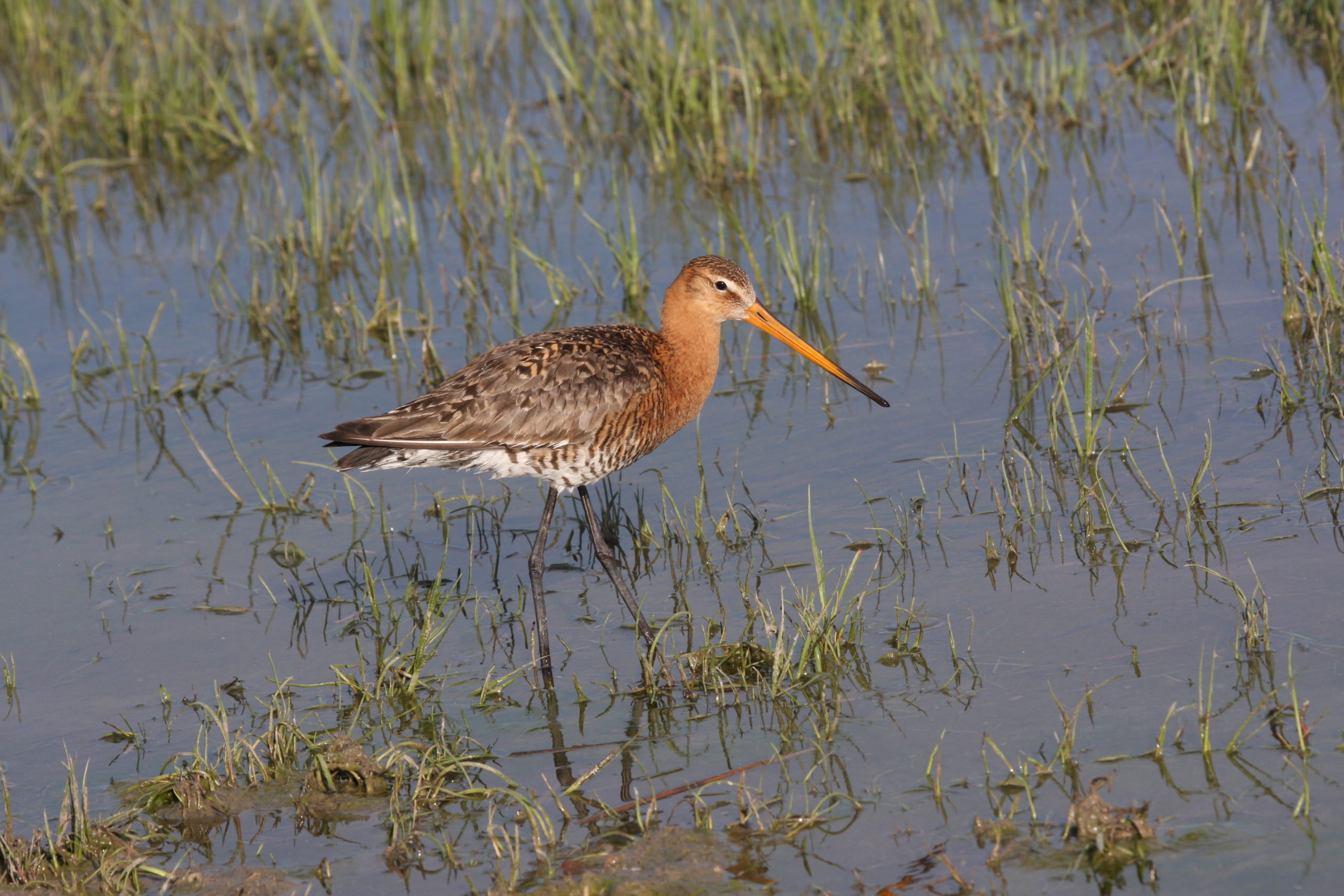
The black-tailed godwit inhabits wetlands, wet meadows, and coastal areas. It nests on the ground in grassy vegetation. During winter, it migrates to Western Europe, Africa, and South Asia. Its diet consists of insects, worms, and mollusks. This species is threatened by habitat loss and agricultural intensification. The population of the black-tailed godwit has globally declined rapidly due to changes in agricultural practices. According to the European Red List, it is classified as Near Threatened (NT) and even Critically Endangered (CR) according to SK-RL. The European population was estimated at 102,000-149,000 individuals with a decreasing trend. The Slovak population was estimated at 0-2 breeding pairs with a 50-100% decrease in the long-term perspective. Since 2007, only sporadic attempts at nesting have been recorded at two locations. However, the species is regularly observed during migrations in Slovakia.
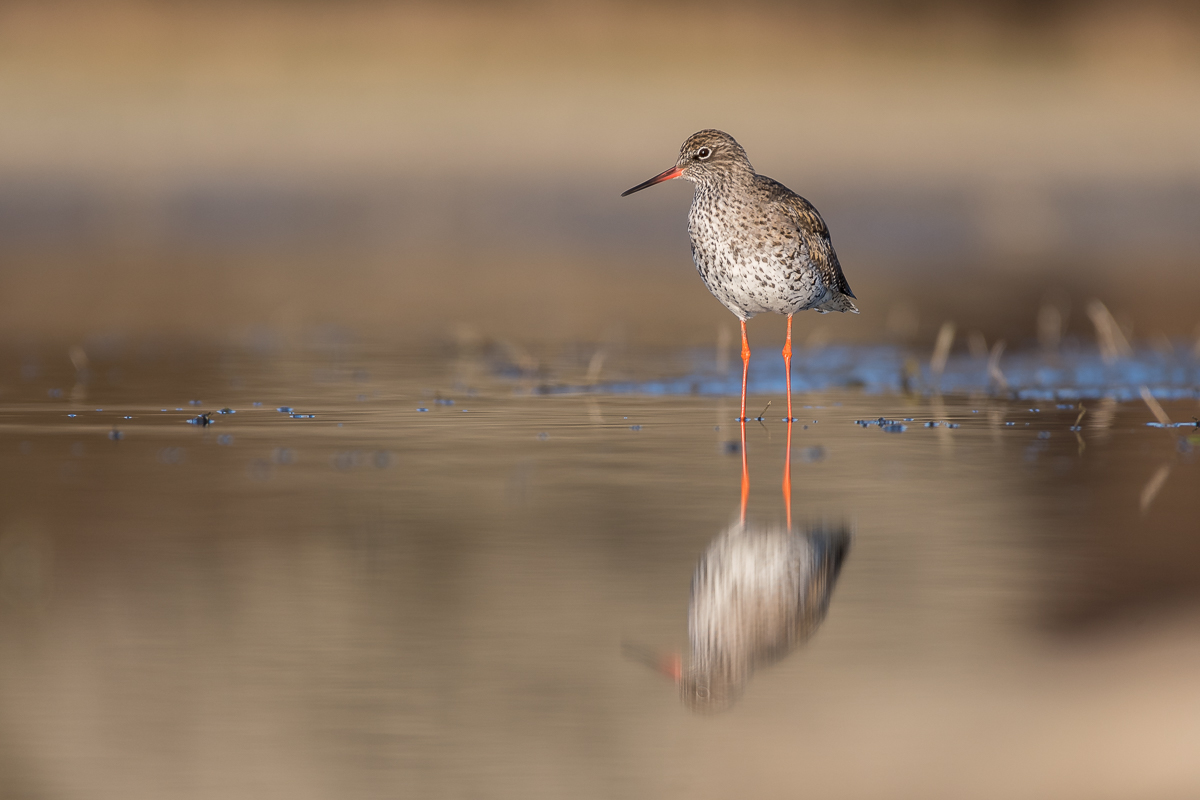
Common Redshank (Tringa totanus)
The common redshank inhabits coastal areas, wetlands, and river floodplains. It nests on the ground in low vegetation. During winter, it migrates to Southern Europe, Africa, and South Asia. Its diet consists of insects, worms, and small crustaceans. This species is threatened by habitat loss, especially due to agricultural intensification and inappropriate water management.
Common Redshank is widespread in Europe with a decreasing population trend. According to the European Red List, it is considered Vulnerable (VU). The Slovak population was estimated at 20-40 breeding pairs with a decreasing short-term population trend (10-20%) and a strong decline in the long-term perspective (50-70%). According to SK-RL, it is classified as Endangered (EN).
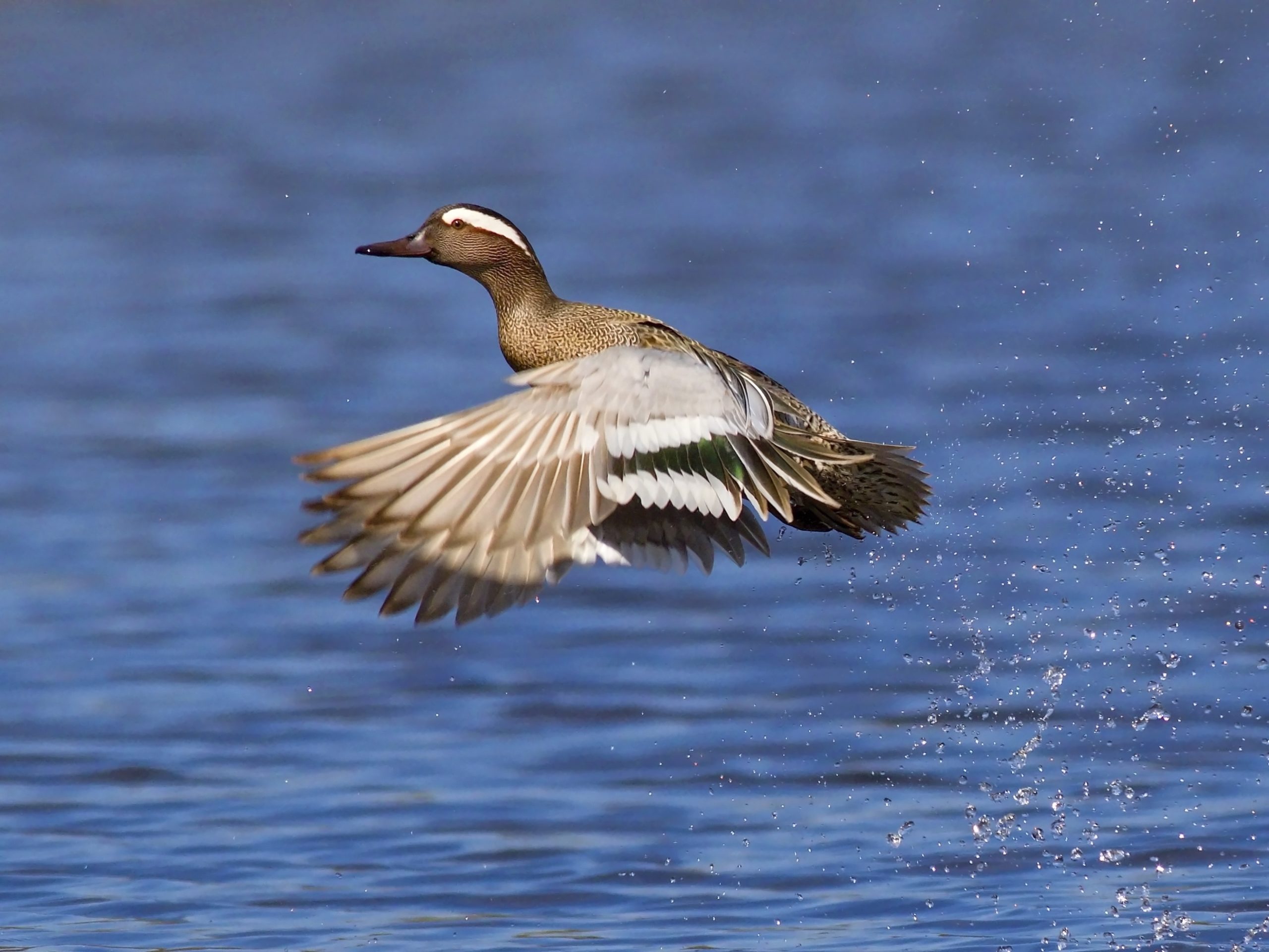
Garganey (Spatula querquedula)
The garganey inhabits freshwater wetlands, lakes, and ponds. It nests in dense vegetation near water. During winter, it migrates to sub-Saharan Africa. Its diet consists of insects, mollusks, and plant material. This species is threatened by habitat loss, especially due to negative interventions in wetlands and their inappropriate management.
The decreasing European population of the garganey was estimated at 352,000-524,000 pairs. According to the Slovak Red List, it is classified as Vulnerable (VU), which also applies to its classification in the European Red List. The Slovak population was estimated at 50-100 breeding pairs with a decreasing trend in both population size and range.
Scops Owl (Otus scops)
The scops owl inhabits semi-open landscapes, forests, and parks. It nests in tree cavities or old buildings. During winter, it migrates to sub-Saharan Africa. Its diet consists of insects and small vertebrates. This species is threatened by habitat loss, especially due to the removal of old trees and the decline of food availability due to agricultural intensification.
The Eurasian Scops Owl has a mainly Mediterranean range in Europe with a stable trend but a very uncertain population size estimated at 447,000-749,000 individuals. Slovakia is among the northernmost areas of its distribution, where the population has even increased in recent decades. The national population is low and was estimated at 40-80 breeding pairs. The Scops Owl is not considered endangered in Europe or Slovakia and is classified as Least Concern (LC).

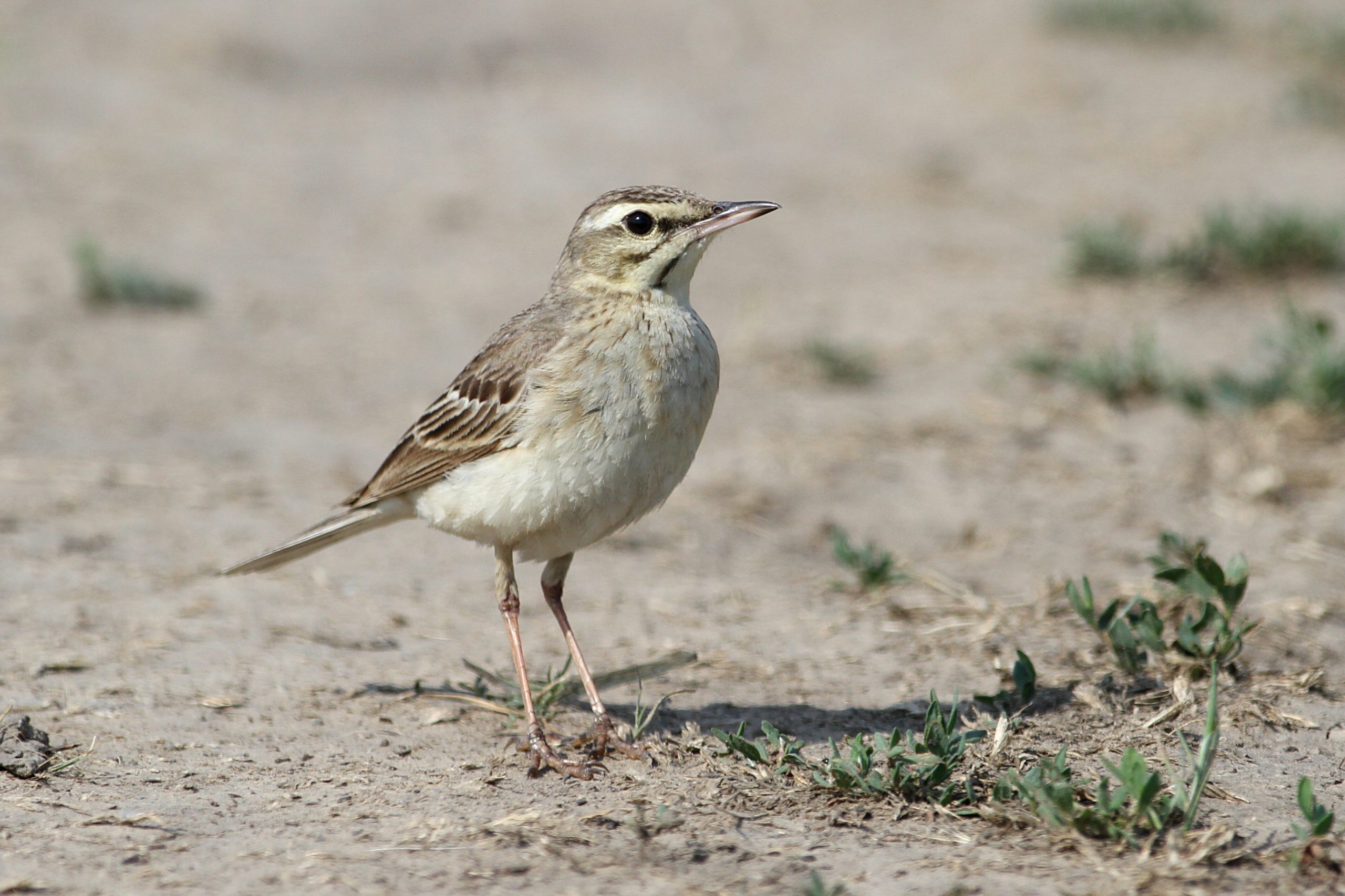
Tawny Pipit (Anthus campestris)
The tawny pipit inhabits dry open landscapes, fields, and sand dunes. It nests on the ground in low and sparse vegetation. During winter, it migrates to tropical Africa and the Indian subcontinent. Its diet consists of insects and seeds. This species is threatened by habitat loss, especially due to large-scale intensive agriculture.
The tawny pipit has a large distribution range and is estimated to have more than 1 million pairs in Europe. The Slovak population, however, has only 100-120 breeding pairs with a negative trend in population size and a reduction in its distribution range by one-third. In the Slovak Red List, it is considered Vulnerable (VU).
Lesser Grey Shrike (Lanius minor)
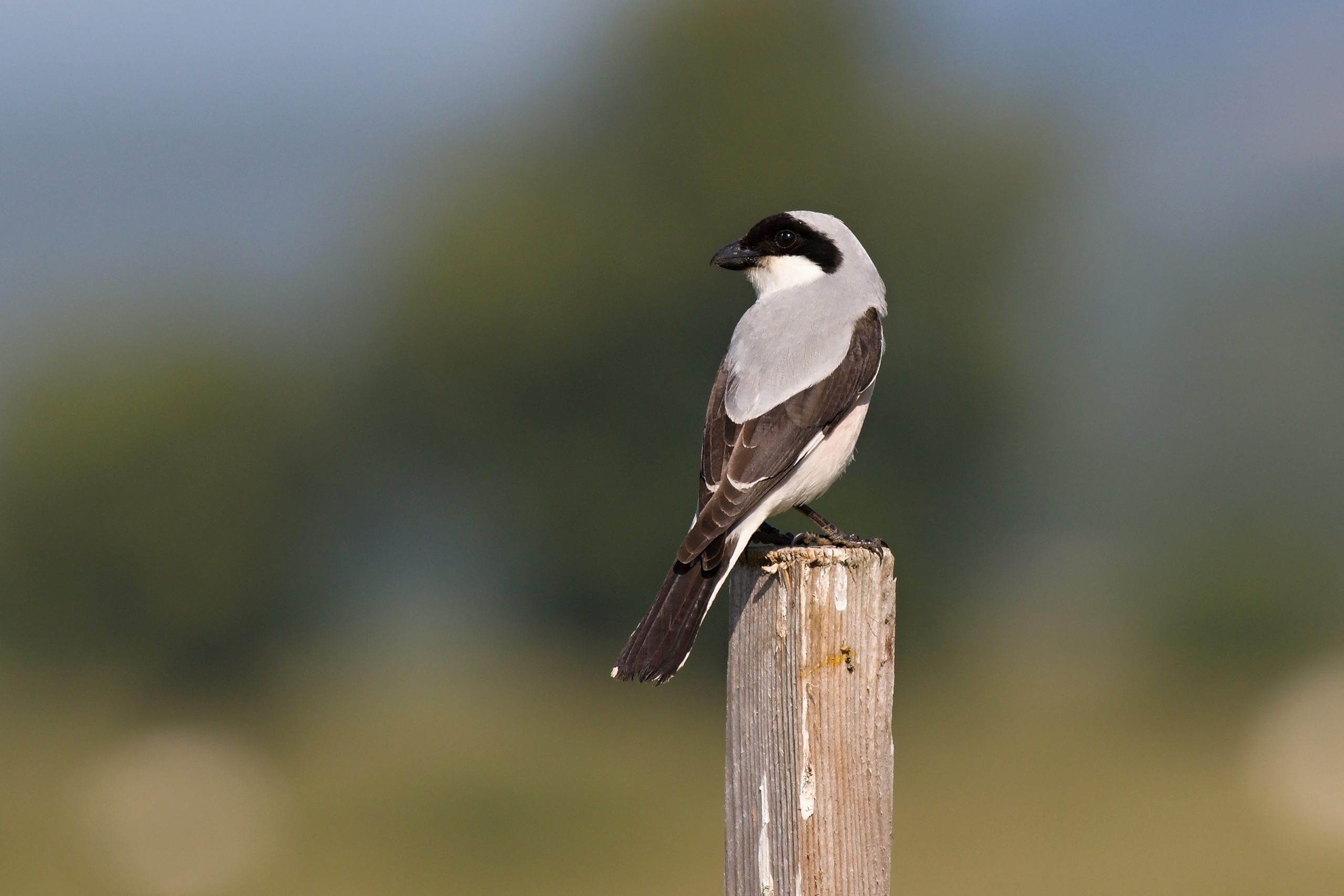
The lesser grey shrike inhabits open agricultural landscapes with scattered trees and their groups, mainly in lowlands and warmer areas. It nests in taller trees in mosaic agricultural landscapes and larger fruit trees near settlements. During winter, it migrates to southern Africa. Its diet consists of large insects and small vertebrates. This species is threatened mainly by large-scale agriculture, the removal of scattered tree vegetation, and the loss of food availability due to environmental chemicalization.
The lesser grey shrike is widespread in southern and eastern Europe with a decreasing population estimated at 331,000-896,000 individuals. The Slovak population has 200-300 breeding pairs with a decreasing trend in population size by approximately 50%, and its distribution range has similarly shrunk. According to the Slovak Red List, it is considered strongly endangered (EN).
Pied Avocet (Recurvirostra avosetta)
The pied avocet inhabits shallow brackish waters, coastal areas, and muddy flats. It nests on open ground, often in colonies. During winter, it migrates to Africa. Its diet consists of worms, crustaceans, and small fish. This species is threatened by the disappearance of suitable habitats due to drying or overgrowth of wetlands caused by inappropriate water management (ponds) or climatic extremes and intensive agriculture (field wetlands).
The pied avocet is globally widespread, but the breeding range is discontinuous in Europe with a decreasing population estimated at 58,000-74,000 pairs. The Slovak population fluctuates between 0-15 breeding pairs, and the species is considered strongly endangered (EN).

Red-backed shrike (Lanius collurio)
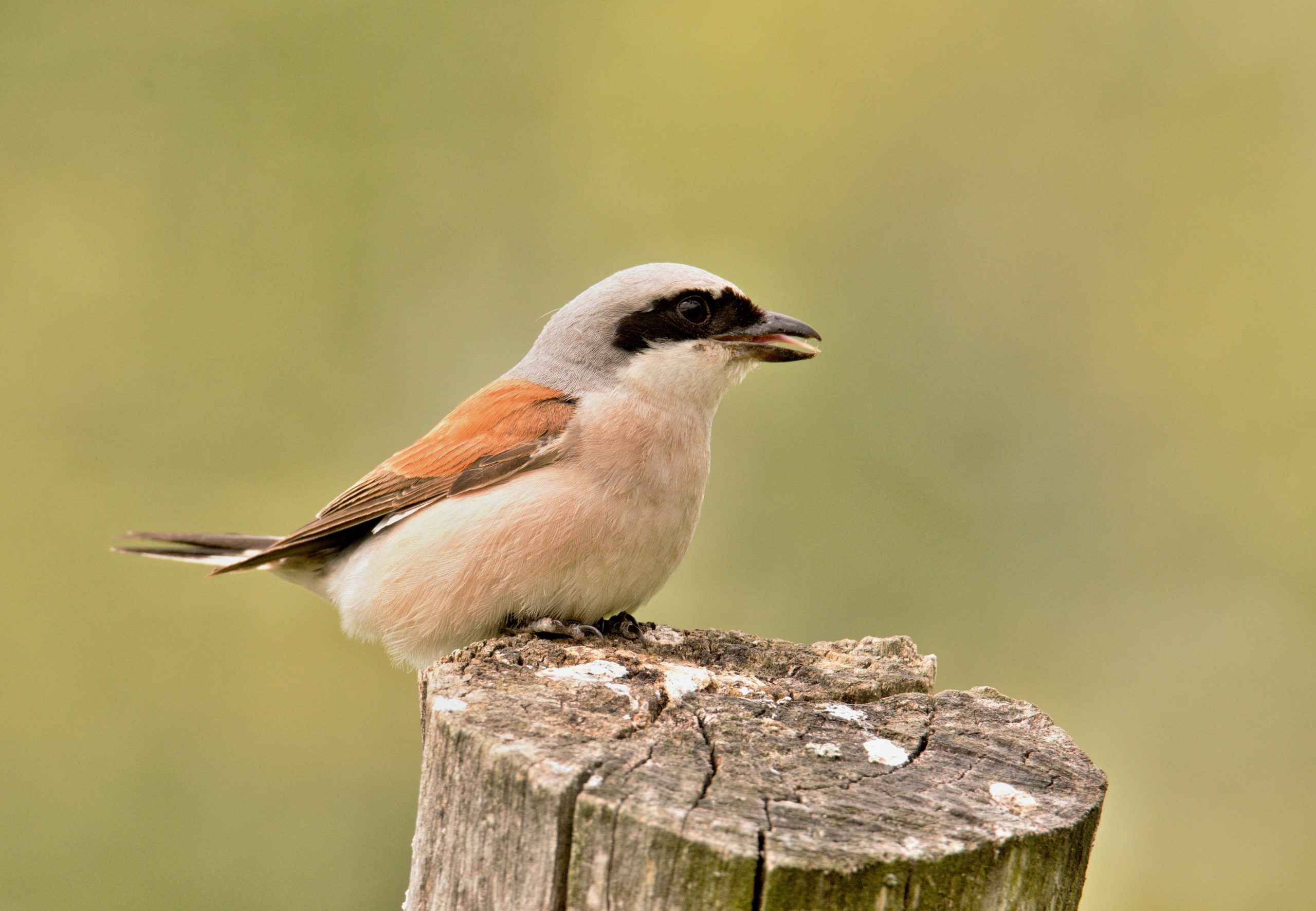
The Red-backed Shrike inhabits open landscapes with scattered woody vegetation, especially dry meadows, field margins, and shrubland habitats. In Slovakia, it is a common breeding species found across most of the country, primarily in rural areas with less intensive land use. It prefers grasslands with thorny bushes, forest edges, field margins with shrubs, as well as clear-cuts and young forests.
It breeds from May to August, typically placing its nest in shrubs, most often up to 2 meters high. Both the male and female participate in building the nest. In winter, it migrates southward to its wintering grounds in eastern and southern Africa. Males return to the breeding grounds a few days to a week earlier than females.
The Red-backed Shrike feeds mainly on insects—especially beetles and orthopterans.
Its distribution is primarily European, with extensions into the northern part of Central Asia. It breeds from lowlands up to alpine zones at elevations of up to 2000 meters above sea level. The largest populations are found in Romania, Poland, Bulgaria, and Russia. Since the 1970s, its numbers have significantly declined in western and northern Europe, although recent years have seen slight recoveries in some areas.
In Slovakia, an estimated 65,000 to 130,000 pairs breed, with a stable population trend observed between 2005 and 2020. Slight increases have been recorded in the Czech Republic, while declines have been noted in Hungary and Austria.
Thanks to its wide distribution and still relatively large population, the Red-backed Shrike is not currently considered a threatened species in Slovakia.
BirdLife International (2025) IUCN Red List for birds. Downloaded from https://datazone.birdlife.org on 16/04/2025
Černecký J., Lešo P., Ridzoň J., Krištín A., Karaska D., Darolová A., Fulín M., Chavko J., Bohuš M., Krajniak D., Ďuricová V., Lešová A., Čuláková J., Saxa A., Durkošová J., Andráš P. 2021: Stav ochrany vtáctva na Slovensku v rokoch 2013 – 2018. Štátna ochrana prírody SR, Banská Bystrica.
Lešo P., Demko M., Krištín A., Ridzoň J., Karaska D., Chavko J., Slobodník R., Lešová A., Kropil R. 2023: Červená kniha ohrozených druhov vtákov Slovenska. Štátna ochrana prírody SR, Banská Bystrica (in press).
Project Areas
The project sites are located in 9 protected bird areas in southern Slovakia. The target species for these 9 SPAs are the project’s focal species.
SPA Senianske Fishponds
The Senianske Ponds SPA is situated in eastern Slovakia, in the northeastern part of the East Slovak Lowland, within the East Slovak Plain. The SPA includes aquatic habitats, mainly ponds and wetlands, as well as steppe-like habitats such as wet meadows and pastures. The SPA was designated to ensure the favorable status and protection of 11 criterion bird species: Purple Heron (Ardea purpurea), Great Egret (Egretta alba), Little Egret (Egretta garzetta), Eurasian Spoonbill (Platalea leucorodia), Black-crowned Night Heron (Nycticorax nycticorax), Great Bittern (Botaurus stellaris), Western Marsh Harrier (Circus aeruginosus), Whiskered Tern (Chlidonias hybrida), Pied Avocet (Recurvirostra avosetta), Black-tailed Godwit (Limosa limosa), and Common Redshank (Tringa totanus). Despite the high level of protection in parts of the area, some of the endangered bird species have insufficient protection status, requiring further improvement. Therefore, three bird species inhabiting the wet steppe habitats in the area – Pied Avocet, Black-tailed Godwit, and Common Redshank – were chosen as the project’s target species.


SPA Medzibodrožie
Medzibodrožie spans an area bordered by the rivers Bodrog, Tisa, and Latorica. It is characterized by the intermingling of various types of lowland habitats and communities. A significant portion consists of aquatic habitats – the rivers Latorica, Bodrog, and Laborec, along with a system of oxbow lakes, canals, and material pits. The area includes meadow and pasture communities with periodically waterlogged depressions and permanent marshes, which serve as nesting sites for water bird species. Currently, 37 bird species are protected in the Medzibodrožie SPA. A total of 254 bird species have been observed in the area. The SPA hosts the largest Slovak populations of Purple Heron (Ardea purpurea), Black-crowned Night Heron (Nycticorax nycticorax), Great Bittern (Botaurus stellaris), Little Bittern (Ixobrychus minutus), Black Tern (Chlidonias niger), Western Marsh Harrier (Circus aeroginosus), White Stork (Ciconia ciconia), and Little Crake (Porzana parva). Despite legislation, it is necessary to enhance the protection of the area and ensure satisfactory protection status for the endangered target bird species. The project focuses on 6 of them: Common Redshank, Garganey, Eurasian Skylark, Red-backed Shrike, Lesser Grey Shrike, and Eurasian Scops Owl.


SPA Porimavie – Cerová vrchovina
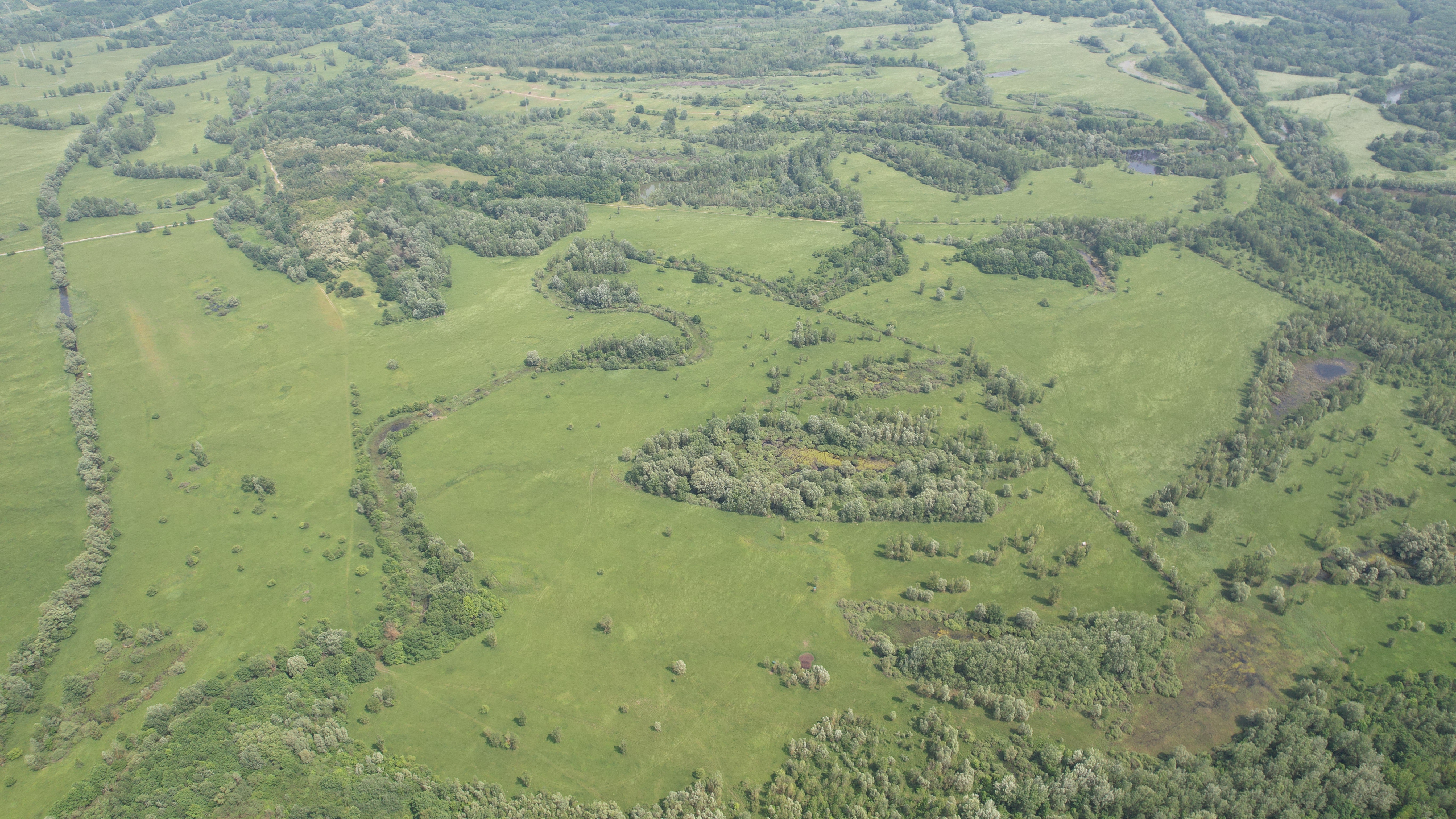
The Cerová vrchovina – Porimavie SPA is characterized by a rolling hilly landscape in the southern part of central Slovakia. The western part is predominantly composed of volcanic rocks (andesite, basalt, tuff), which in some cases form steep rock formations (Steblová skala, Pohanský hrad, Soví hrad, Šomoška). The eastern part is composed of sandstone, creating a rolling hilly landscape with dry, nutrient-poor soils. The landscape is mainly covered by oak-hornbeam forests, interspersed with grasslands, orchards, and arable land. Large parts of the SPA were historically used for cattle and sheep grazing. Due to socio-economic changes, the amount of grazed land has significantly decreased, and many valuable grasslands and original orchards are overgrown with dense shrubs and invasive trees. The project in the Cerová vrchovina – Porimavie SPA primarily focuses on two bird species: Red-backed Shrike and Eurasian Scops Owl.


SPA Žitavský luh
The Žitavský luh SPA is characterized by flooded wetlands and alluvial meadows. The area represents a richly structured habitat of tall grasses, sedges, and managed wet meadows (grazing, mowing). Significant feeding habitats for many bird species are provided by open shallow water areas alternating with patches of tall grasses and meadows. The selected species for protection in the area are Garganey (Anas querquedula), Spotted Crake (Porzana porzana), and Western Marsh Harrier (Circus aeroginosus). This area is the last regular nesting site for Garganey in Slovakia and serves as an important migratory stopover for the species during spring and autumn migration.


SPA Parížske močiare
The Parížske močiare SPA represents an extensive marsh, which, due to its reed bed extent, ranks among the largest wetlands of this type in Slovakia, thus being classified as a wetland of international importance. The reed bed covers approximately 90% of the marsh, creating limited conditions for species that prefer richly structured habitats. The criterion species for the Parížske močiare SPA are: Western Marsh Harrier (Circus aeroginosus), Spotted Crake (Porzana porzana), European Bee-eater (Merops apiaster), Garganey (Anas querquedula), Moustached Warbler (Acrocephalus melanopogon), and Great Bittern (Botaurus stellaris). The project’s target species for this location is Garganey, which has been recorded during migration and occasionally nests here.


SPA Dolné Považie
The Dolné Považie SPA is one of the largest bird areas situated predominantly in agricultural landscapes in Slovakia. The area has a partly steppe character. The lowland landscape is interwoven with rivers, canals, wetlands, tree lines with small forests, sand dunes, and salt marshes. The higher diversity of the landscape was the reason for declaring the area of European importance for the protection of rare plant species and habitats. In the Dolné Považie SPA, 239 bird species have been recorded, of which 111 are breeding. Until 1950, the SPA was covered by a diverse mosaic of agricultural land with low-intensity farming, ample grasslands, pastures, wetlands, river meanders, scattered trees, and pollarded willows with cavities. Such conditions were favorable for the target bird species and supported biodiversity. However, due to massive collectivization, wetland drainage, conversion of grasslands to arable land, and a decline in grazing, conditions for the target species have drastically deteriorated, resulting in a significant population decline. The project in this area focuses on 4 bird species that typically indicate species-rich agricultural landscapes: European Roller, Red-footed Falcon, Eurasian Skylark, and Red-backed Shrike.


SPA Ostrovné lúky
The Ostrovné lúky SPA is located in the warmer region of southwestern Slovakia. It belongs to warm and very dry areas with mild winters. It covers an area of 8,297.7 hectares and spans eleven cadastral territories. The current landscape structure has the character of agricultural steppe, predominantly composed of fields, with smaller areas of meadows and pastures, remnants of forests, or groups of willows. Despite legislative protection, the protection status of some endangered target bird species is unsatisfactory. Therefore, 3 bird species inhabiting the habitats of the Ostrovné lúky SPA were selected for the project: Eurasian Skylark, Red-backed Shrike, and Red-footed Falcon.


SPA Dunajské luhy
The Dunajské luhy SPA spans a vast area of the inland delta of the Danube in Slovakia. The area is an important biocenter and represents an international biocorridor for the migration of fish, birds, and other biota elements. Historically, it was shaped by the dynamics of the Danube River, resulting in a diverse mosaic of river branches, oxbow lakes, wetlands, reed beds, floodplain forests, as well as habitats typical of extensive land use (alluvial meadows, pastures, pollarded willows). Due to river regulation and especially after the construction of the Gabčíkovo reservoir, the river dynamics were significantly altered, and extensive areas of the Danube delta were practically destroyed. Other threats include intensive forestry, loss of connectivity of river branches, wetland drainage, and loss of traditional management of grassland habitats (mowing or extensive grazing), as well as the loss of traditional pollarding of willows. As a result, populations of species dependent on grassland habitats (Common Redshank, Eurasian Skylark) have significantly declined. The project focuses on 3 bird species that utilize grassland or wetland habitats: Common Redshank, Garganey, and Eurasian Skylark.


SPA Lehnice
The Lehnice SPA was established to preserve habitats for bird species of European importance and migratory bird species, ensuring the conditions for their survival and reproduction. The criterion species of the area are the Great Bustard (Otis tarda), Common Quail (Coturnix coturnix), and Red-footed Falcon (Falco vespertinus). The area is located in the Dunajská Streda district and consists of an intensively farmed agricultural landscape with patches of grasslands. The project’s target species is the Red-footed Falcon.
